
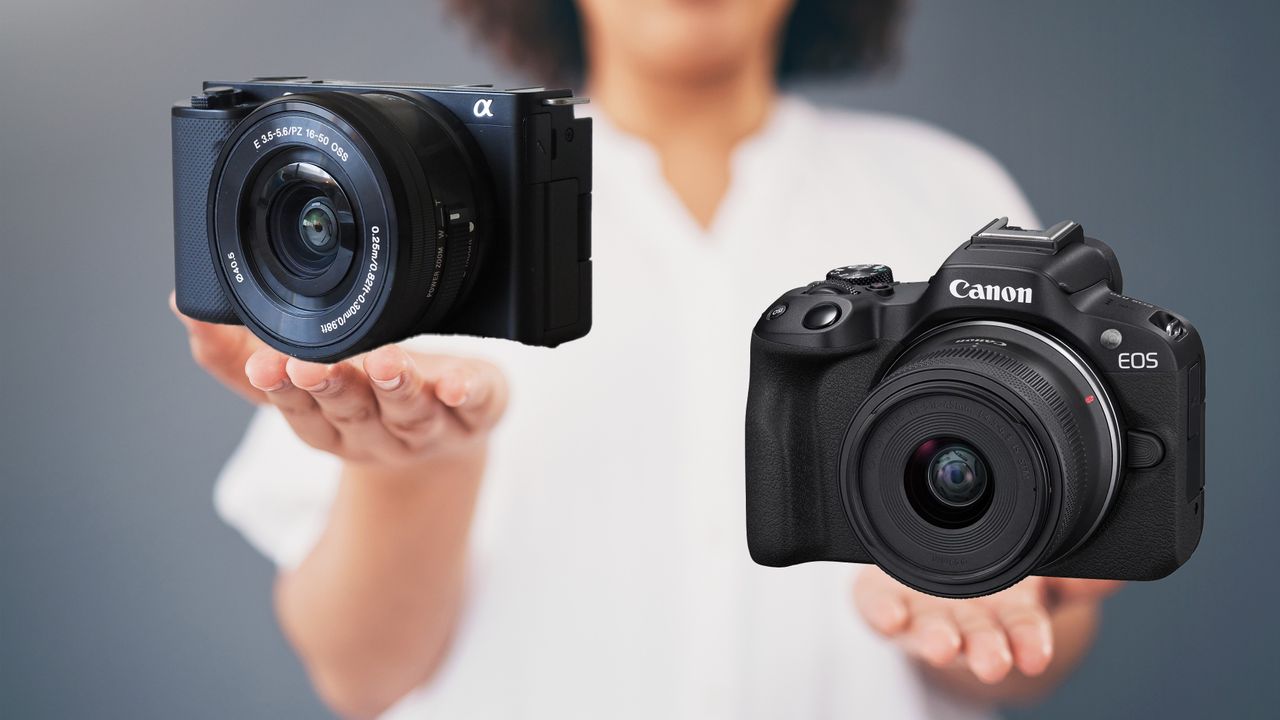
The vlogger-oriented Sony ZV-E10 cameras have gone largely unchallenged since the original was released in 2021. Any search for the best cameras for vlogging, content creation or travel photography now seems to bring up these models, and justly so.
However, I also think that a certain competitor camera, the Canon EOS R50, which came out in 2023, subsequently gets overlooked in this debate – and it’s actually a pretty solid rival to the ZV-E10.

These cameras boast similar specs and cost around the same. So if you’re looking for a small, nimble, creator camera, I want to make the decision easier for you.
The big question, then: which one would I choose? I’d go with Sony, simply because it's more versatile.
While both cameras pack a decent but respectable 24MP APS-C CMOS sensor, can record 4K 30p and FullHD 120p, and have a 3.0-inch fully articulating touchscreen, the Sony E-mount system has a much wider array of compatible lenses and better battery life.
There are over 80 native Sony E-mount lenses compatible with its cameras, whereas Canon can has over 50 native RF and RF-S lenses.
You’re sure to find the Canon lens you need from that range, but it’s the third-party options that boost Sony's appeal – swelling the total catalog to over 300. With Canon restricting third-party manufacturers' ability to release RF / RF-S glass, there are far fewer to choose from.
The Sony camera battery, the NP-FW50, also significantly outperforms Canon’s LP-E17 battery, powering approximately 440 still shots versus 310 on a full charge.
Of course, there are things about the Sony I don’t like, notably the lack of an electronic viewfinder. I get that this is because the ZV series is aimed at video, but it’s annoying if you shoot stills as well.
I also give the ergonomics points to the Canon. Its grip has more depth and, in general, the camera seems to fit in your hand more snugly. The Sony is way too thin for that snug feel, which is a criticism I’ve had of all Sony Alpha cameras – even my beloved Sony A7 III.
Still, the ZV-E10 is the winner for me – but not by a country mile. It's smaller and lighter, has a better selection of lenses and more juice in the battery – though I still wish it had an EVF for stills.
The Sony ZV-E10 II is also available, which brings a few extra megapixels of resolution and almost double the battery life thanks to the new NP-FZ100 (though it will set you back around $300 more than its predecessor).
And there's also the Canon EOS R50 V, a vlogging-oriented version of the R50 that's more of a direct competitor to the Sony options… but again you lose the viewfinder…
You might also like…
Here’s our selection of the best cheap cameras that are great for beginners and which won't break the bank.