
Get all your news in one place.
100's of premium titles.
One app.
Start reading
Space
Space
Science
Anthony Wood

Look for Mercury in the morning sky as it hits peak distance from the sun on Aug. 19

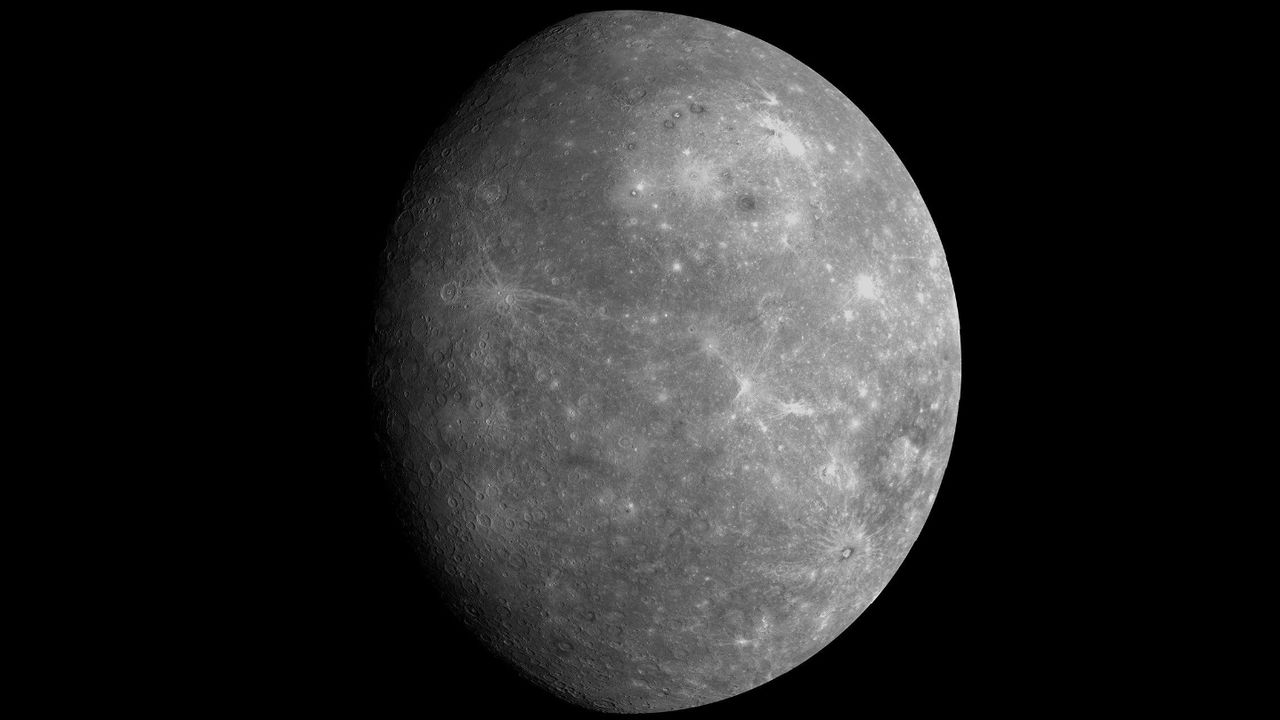
A picture of a grey, rocky, cratered planet against a black background. The left extreme of the world is bathed in shadow and white spots are visible on the surface where bright material has been thrown out by recent asteroid impacts.

Mercury will be farthest from the sun on Tuesday (Aug. 19), granting early risers a perfect opportunity to spot the fleet-footed world somewhat separated from the glare of our parent star.

Mercury treads such a tight orbit around the sun that it never strays far from the horizon. This makes it one of the trickiest planets to see, especially compared to Mars, Jupiter, Saturn, Uranus and Neptune, whose distant orbits beyond Earth allow them to appear high in the night sky depending on the time of year.

Sign up to read this article
Read news from 100's of titles, curated specifically for you.
Already a member? Sign in here
Related Stories
Top stories on inkl right now
One subscription that gives you access to news from hundreds of sites
Already a member? Sign in here
Our Picks
Fourteen days free
Download the app
One app. One membership.
100+ trusted global sources.







