
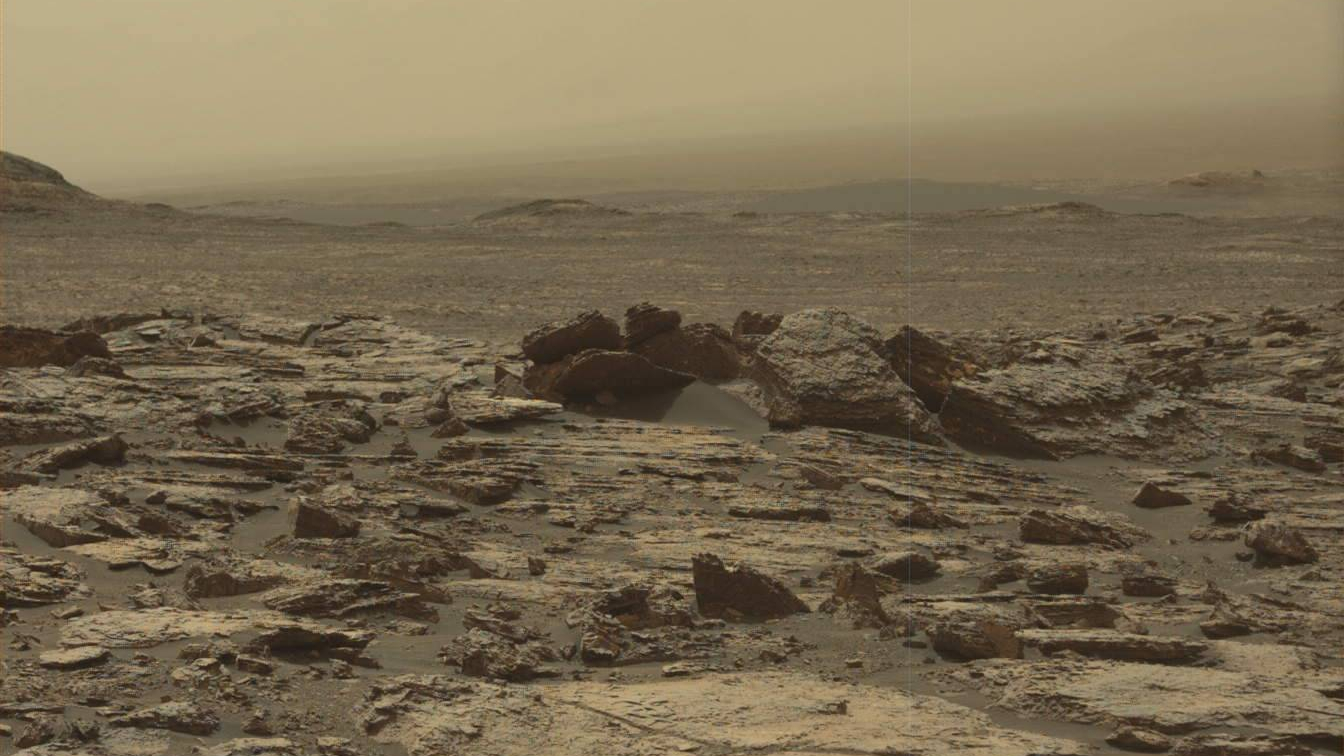
The Curiosity Mars rover has detected intriguing chemical evidence, in the form of anomalous amounts of manganese oxide, which points to Mars having had not only a habitable environment billions of years ago, but also one possibly inhabited by microbes.
NASA's Curiosity is exploring the giant 154-kilometer (about 96-mile) diameter Gale crater, where the rover landed in 2012. Curiosity's discoveries have already established that the crater was at least partially flooded long ago, although the evidence for this has been contested. However, the rover's latest findings not only strengthen the argument for an ancient lake, but also suggest that conditions within the lake were conducive to life.




