
Get all your news in one place.
100’s of premium titles.
One app.
Start reading
Tom’s Hardware
Tom’s Hardware
Technology
Mark Tyson

Living neurons integrated into modern AI processing, claims SF startup — biological computing power used to boost computer vision, generative video, and more

The Biological Computing Company .

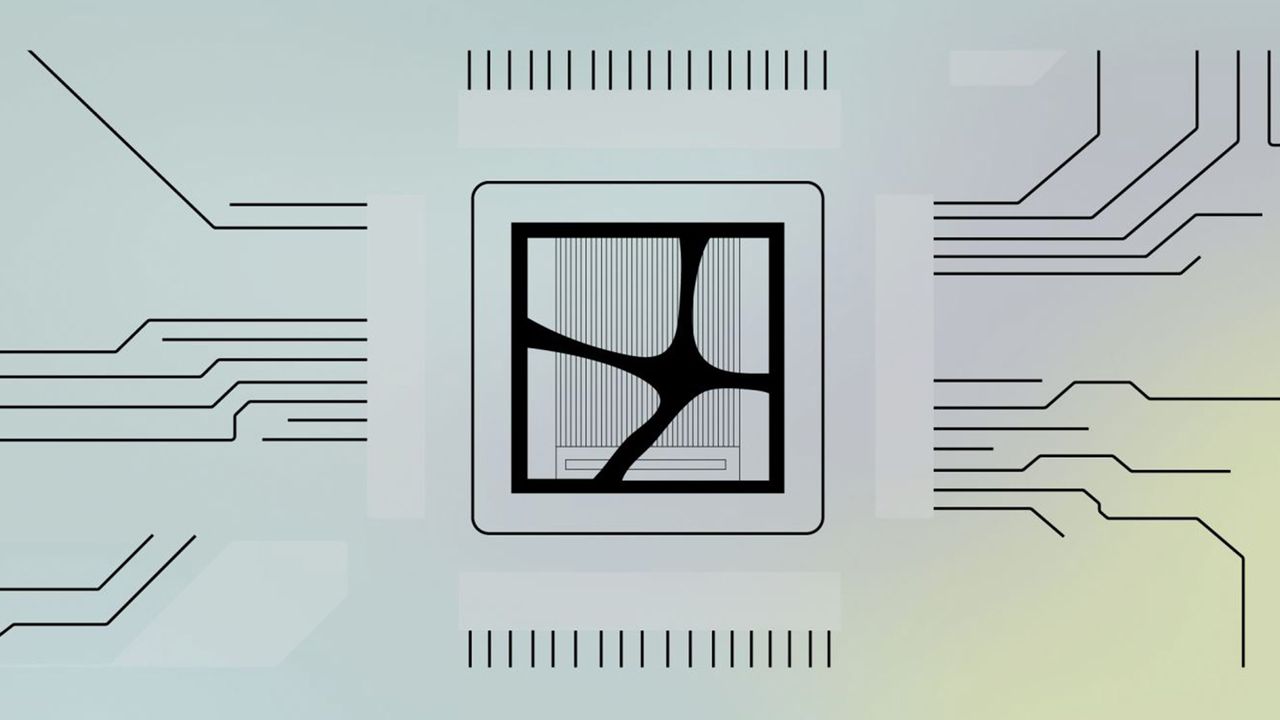
A San Francisco-based startup claims to be the first to have created a biological computing platform built from living neurons, purposed to accelerate artificial intelligence-based tasks. The Biological Computing Company (TBC) reckons this is a credible pathway to replace, or augment, silicon compute in AI, with support for processes like “computer vision, generative video, and AI infrastructure.” Alongside the bold claims, it is revealed that TBC has secured $25m in funding from its initial seed round and will open a new flagship lab in the city.

(Image credit: The Biological Computing Company)

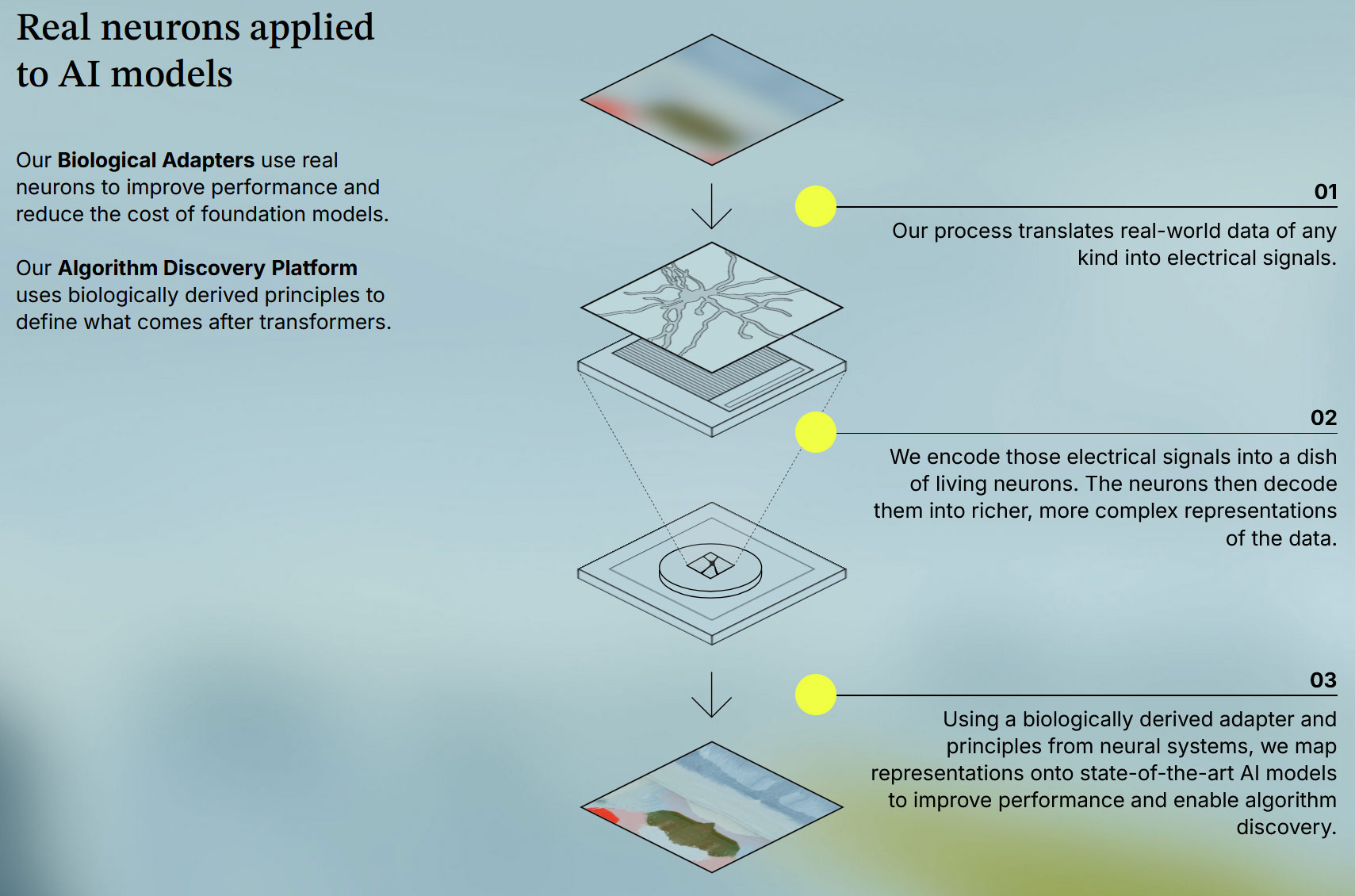
TBC was founded by two neuroscientists who are seeking to use “the most elusive, yet obvious idea in computer science – using the real brain for computing,” notes an email received by Tom’s Hardware. Moreover, the communication boasts that “biological computing can process foundational AI models 5x faster than silicon-based chips alone, requiring less power, generating greater accuracy, and reaching the scale that today’s AI ecosystem requires.”

It is this kind of bold vision for a new class of AI infrastructure that has inspired the delivery of $25m in funding. However, at this early stage, we note that little of real substance has been publicly revealed to satisfy the curious minds of Tom’s Hardware readers. We did enjoy looking at some of the computer vision, generative video, and algorithm discovery results found in the ‘Today’ section of TBC’s home page, though.

"Biologically inspired software enables AI videos to stay coherent for longer. Without our biologically derived adapter, AI-generated videos gradually fall apart as they get longer (left). With the adapter, the videos stay clearer and more consistent over time (right)." (Image credit: The Biological Computing Company)

The details we have about TBC’s work say that the firm “encodes real-world data (e.g., images, video) into living neurons, then decodes neural activity into richer representations mapped onto state-of-the-art AI models through modular adapters.” This is piped through TBC's Algorithm Discovery platform to bolster the AI compute layer. Thus, in effect, the TBC wetware and software works on the intersection of neuroscience and AI. That seems fitting, as TBC co-founders Alex Ksendsovsky, MD, PhD, and Jon Pomeraniec, MD, MBA, are both neurosurgeon-neuroscientists.

“We're at the ground level of paradigm shift, of what comes next, after language, after silicon," says Pomeraniec. The promise of "building infrastructure to understand and interact with the world in a fundamentally new way" is tantalizing, but the details publicly shared by the company so far are too vague to properly assess. This concern is magnified by the very bold claims of TBC. Moreover, we’ve seen some interviews with the co-founders talk about a ten-to-20-year plan for its neurons in real-time compute integration. So, please stay tuned for a decade or two.

Follow Tom's Hardware on Google News, or add us as a preferred source, to get our latest news, analysis, & reviews in your feeds.

Sign up to read this article
Read news from 100’s of titles, curated specifically for you.
Already a member? Sign in here
Related Stories
Top stories on inkl right now
One subscription that gives you access to news from hundreds of sites
Already a member? Sign in here
Our Picks
Fourteen days free
Download the app
One app. One membership.
100+ trusted global sources.