
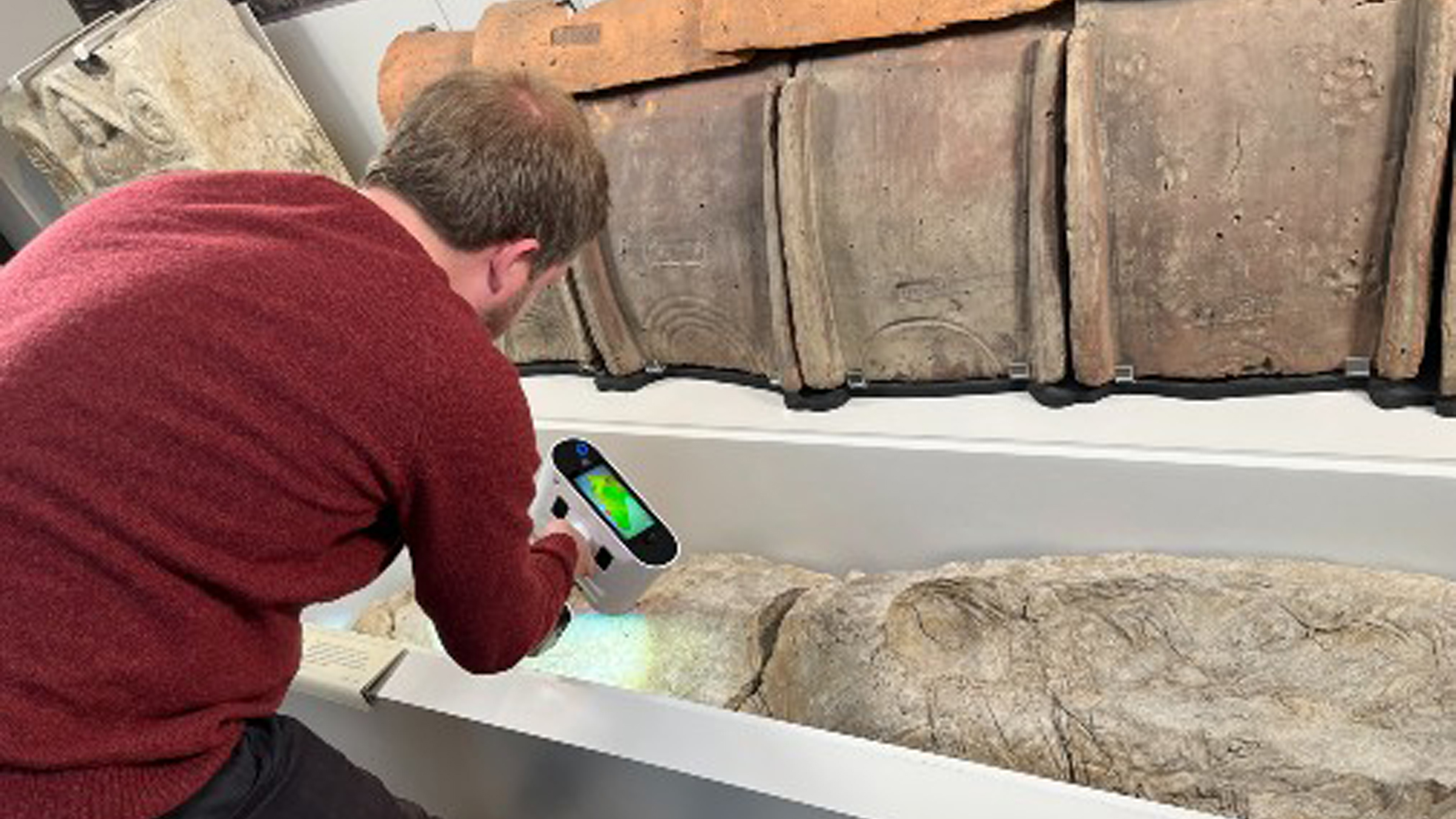
About 1,700 years ago, a wealthy Roman family was buried with a bizarre material — liquid gypsum — poured over their corpses. Now, a noninvasive 3D scan of this burial has revealed the insides of their burial cocoon.
Gypsum is a mineral and key ingredient in cement and plaster that, on rare occasions, Roman-era people used in burials. Once the deceased were placed in lead or stone coffins, liquid gypsum was poured over the bodies, which then hardened into protective shells. After that, the coffins were buried in the ground. Most of the coffins' contents eventually decayed, leaving behind plaster casts with cavities similar to those of the victims discovered at Pompeii.