
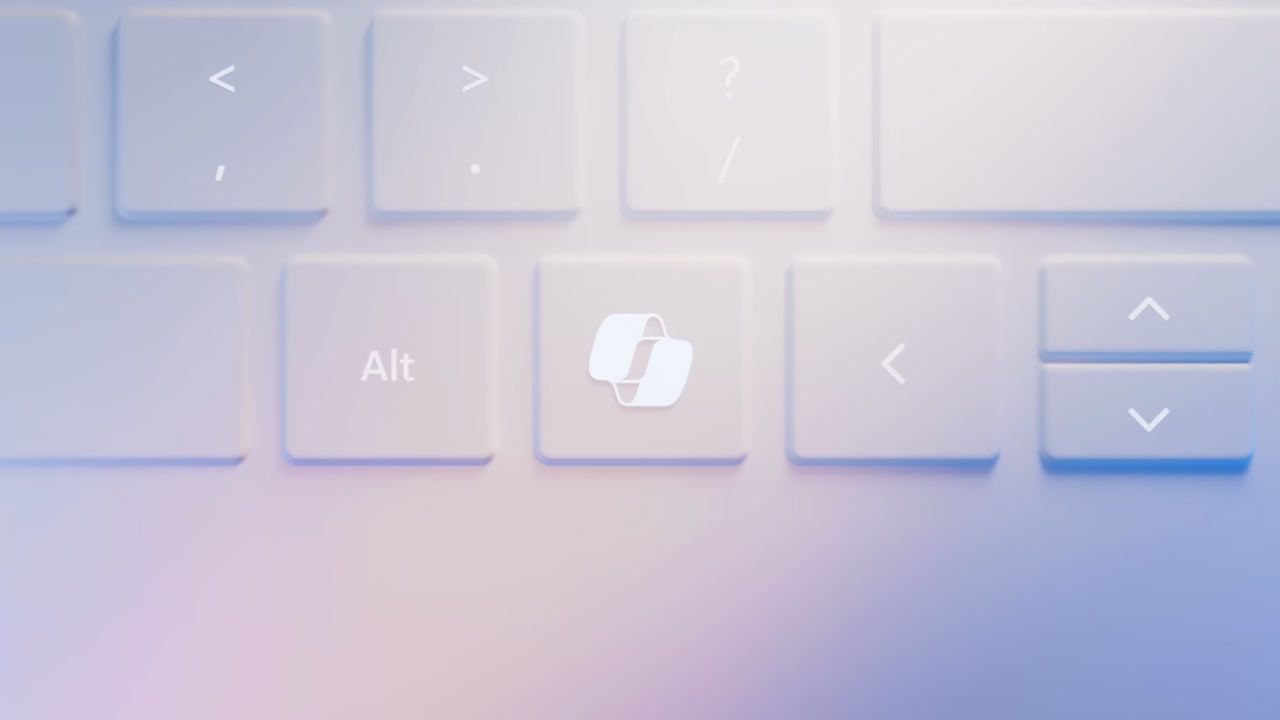
The Linux 7.0 kernel has merged support for three new keycodes intended for a coming wave of laptops with dedicated AI agent keys, Phoronix has reported, meaning that three new keys with dedicated AI functions, much like the Microsoft Copilot button on newer laptops, could be coming to a keyboard near you soon.
Arriving through the HID fixes pull request for 7.0, the additions recognize The additions arrived through the HID fixes pull request for 7.0 and recognize KEY_ACTION_ON_SELECTION (0x254), KEY_CONTEXTUAL_INSERT (0x255), and KEY_CONTEXTUAL_QUERY (0x256), all defined on the USB HID Application Launch usage page.
These are new, recently-approved entries to the usage page, defined specifically for in-context AI agent interactions and routed through the USB-IF specification process, potentially marking a step beyond how the existing Microsoft Copilot key works on shipping Copilot+ PCs. According to Phoronix, Google authored both the HID specification proposal and the kernel patch wiring the new codes into Linux input.
Just over two years ago, we established that the Copilot button doesn’t transmit a new scan code at all, and instead reports as Left Shift + Windows + F23, a 1980s IBM function key repurposed by firmware. The 0x254, 0x255, and 0x256 entries, however, replace that workaround with first-class HID values that operating systems can map directly.
Per the descriptions, Action on Selection is meant to fire an AI action against whatever the user currently has highlighted, whether text or an image, with example flows including explain, summarize, or search the selection. Contextual Insertion calls up an overlay that lets the user retrieve or generate content and drop it straight into the focused field, while Contextual Query finds suggestions tied to the selected element.
None of the three replicates the Copilot key's job of launching a standalone assistant app; they target inline, in-context interactions instead.
The fact that it’s Google that authored the HID specification and kernel patch is interesting, given that Microsoft drove the original Copilot key push in early 2024 and Intel co-defined the AI PC certification around the presence of that button.
Google, meanwhile, shipped a physical Quick Insert Key on the Samsung Galaxy Chromebook Plus in October 2024, rolled the underlying function out to all Chromebooks in ChromeOS 130 a few weeks later under a Launcher + F shortcut, and has now taken the button class to USB-IF and landed the kernel implementation.
KEY_CONTEXTUAL_INSERT, as defined in the merged Linux header, describes a contextual overlay for retrieving or generating content into the focused field, which is functionally what Quick Insert already does on ChromeOS. The 0x254 to 0x256 entries sit on the HID Application Launch page, the same usage range that already covers dedicated keys for browser, calculator, mail, and media player launches.
The keycodes themselves seem to be agent-agnostic; nothing in the kernel definitions ties them to a particular vendor's assistant, which leaves OEMs free to wire them to Gemini, Copilot, or a local model, so you can expect to see them on upcoming laptops and PCs.