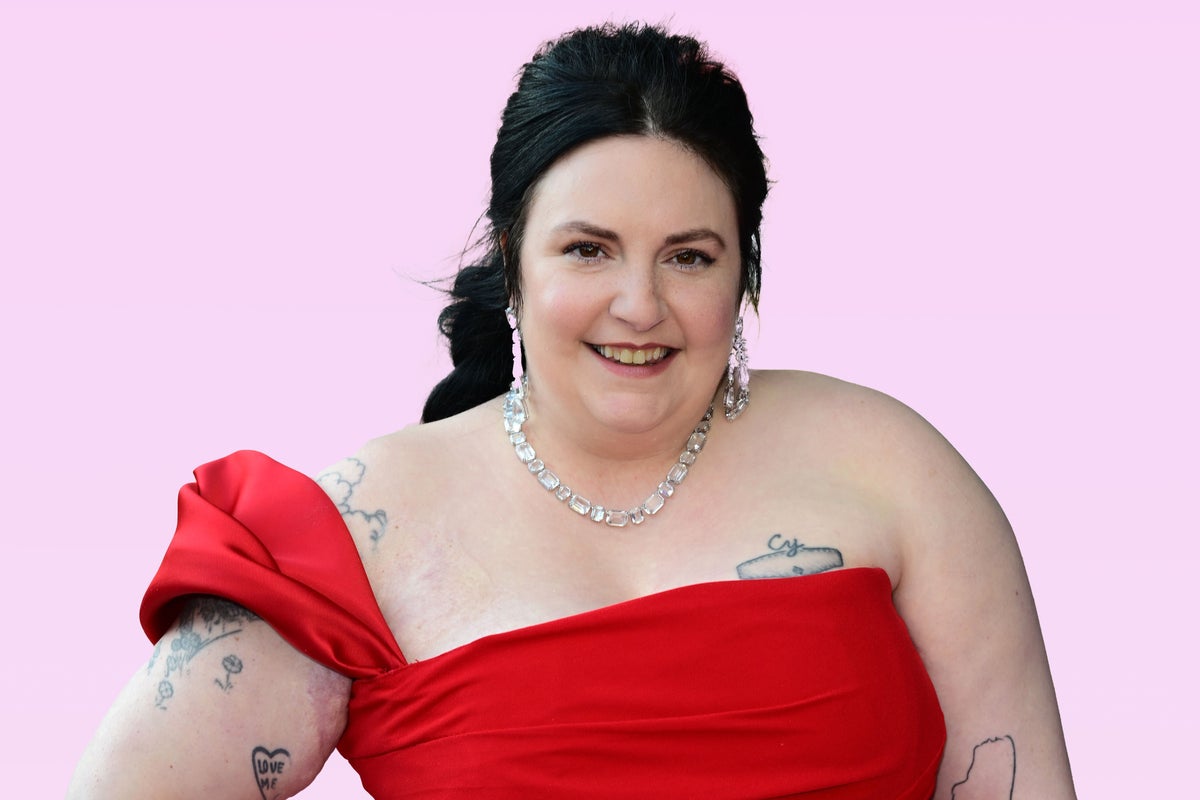
Lena Dunham’s parents were telling her to be quiet long before the rest of the world was. “Bless them,” she says, “they didn’t want to say, ‘Can you please shut up?’ So they would say sotto voce because they thought it sounded nicer in Italian, which, to be fair, it did.”
Later, 23 and scarcely an adult, Dunham conceived Girls, the era-defining HBO comedy about a quartet of dysfunctional friends in Brooklyn who were stumbling through their twenties and trying to find themselves. At the centre of it all was Dunham’s aspiring writer Hannah Horvath. “I have work, then a dinner thing, and then I am busy trying to become who I am,” she’d tell her parents in the very first episode. The show was unflinchingly interested in the mess of youth: the arrogance, the terrible sex, the first abortions, the health anxiety – the lot. And because of its honesty, it was adored and attacked with equal zeal. Some tried to silence Dunham then, too. She was too vulgar, too candid, too naked. Simultaneously too woke and too narrow-minded.