Lebanon has been pulled into the war with Iran after Hezbollah – weakened by months of confrontation and under pressure to disarm – fired long-range missiles and drones into northern Israel on Monday. Within hours, Israeli forces launched heavy air raids across the country, killing dozens and triggering a large-scale flight of civilians.
The escalation marks a decisive step for the Shiite political and military movement. When Israel and the United States launched military action against Iran on Saturday morning, Hezbollah faced a crucial choice – remain on the sidelines or get involved. By dawn on Monday, it had made its choice.
Hezbollah said in a statement that it had fired a salvo of long-range missiles and sent a squadron of drones towards targets south of the city of Haifa. The operation, it added, was carried out to avenge the killing of Iran’s Supreme Leader Ali Khamenei.
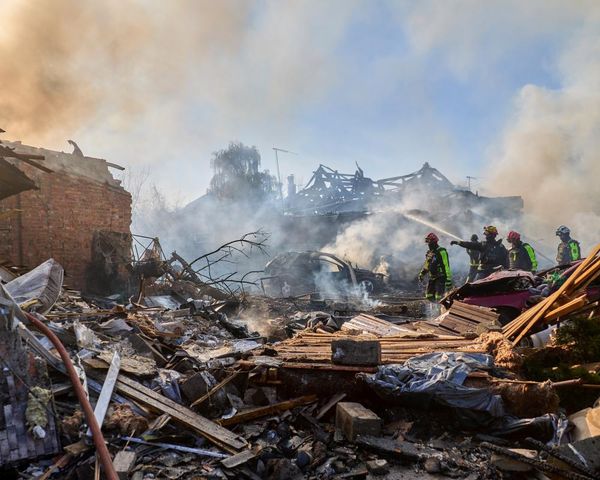
The Israeli offensive began around two hours later. The heaviest strikes hit Beirut’s southern suburbs at dawn, RFI's correspondent in the capital Paul Khalifeh reported. Numerous air-to-ground missiles struck the area, while powerful explosions echoed across the city.
Lebanon’s health ministry said at least 31 people were killed and 149 wounded. Around 15 towns and villages both south and north of the Litani river were also hit by air raids or artillery and tank fire.
Hezbollah, an armed movement founded in 1982 with backing from Iran, has maintained close ties with Tehran since its creation. Giant portraits of Khamenei have been displayed for decades in Hezbollah strongholds across Lebanon.
From protector to onlooker: how France lost its influence in Lebanon
Israel signals escalation
Israel’s military issued evacuation orders to residents of around 50 villages in southern Lebanon and in the eastern Bekaa valley.
Overnight from Sunday to Monday, Israeli Chief of Staff Eyal Zamir said residents in northern Israel had been informed that the strikes on Lebanon would continue for at least several days.

“The strikes are continuing and their intensity will increase,” Rafi Milo, head of Israel’s northern command, wrote in an army statement on Telegram. He said Hezbollah would “pay a heavy price” for its support for Tehran.
The movement is widely seen as severely weakened after its military confrontation with Israel since 2024. It has suffered heavy losses and its main leaders have been killed. Since last year, Lebanon’s authorities have been engaged in a process aimed at disarming Hezbollah. Despite its historic weakening, it has refused to lay down its weapons.
Tens of thousands displaced
The raids and evacuation calls triggered a large and chaotic movement of people fleeing their homes. The exodus began at dawn and intensified in the early hours of Monday.
Hundreds of families who fled Beirut’s southern suburbs spent the night in freezing cold conditions under bridges or in parks in the capital. As Israeli calls to evacuate villages spread, tens of thousands more people left southern Lebanon.
Many headed further north, causing heavy traffic along the coastal highway.
Macron hosts Lebanon's PM to discuss ceasefire, Hezbollah disarmament
Schools and universities remained closed on Monday. Motorists rushed to petrol stations to fill up their tanks, and supermarkets were crowded as residents stocked up on food in anticipation of a long war.
The authorities said Lebanon has enough fuel and food reserves to last two months. Around a dozen public schools in Beirut and its suburbs were converted into shelters for displaced families.
Prime Minister Nawaf Salam described the developments as "an irresponsible act". President Joseph Aoun said he regretted that Lebanon was once again being used as “a platform for wars that do not concern it".
Speaking at a press conference in Paris on Monday, French Foreign Minister Jean-Noël Barrot called for "Lebanon to be spared from this regional escalation".