
Get all your news in one place.
100's of premium titles.
One app.
Start reading
Tom’s Hardware
Tom’s Hardware
Technology
Kunal Khullar

Laser wireless charging could keep drones airborne indefinitely — improved receiver converts at 38.49% efficiency and uses nanocrystalline material for thermals

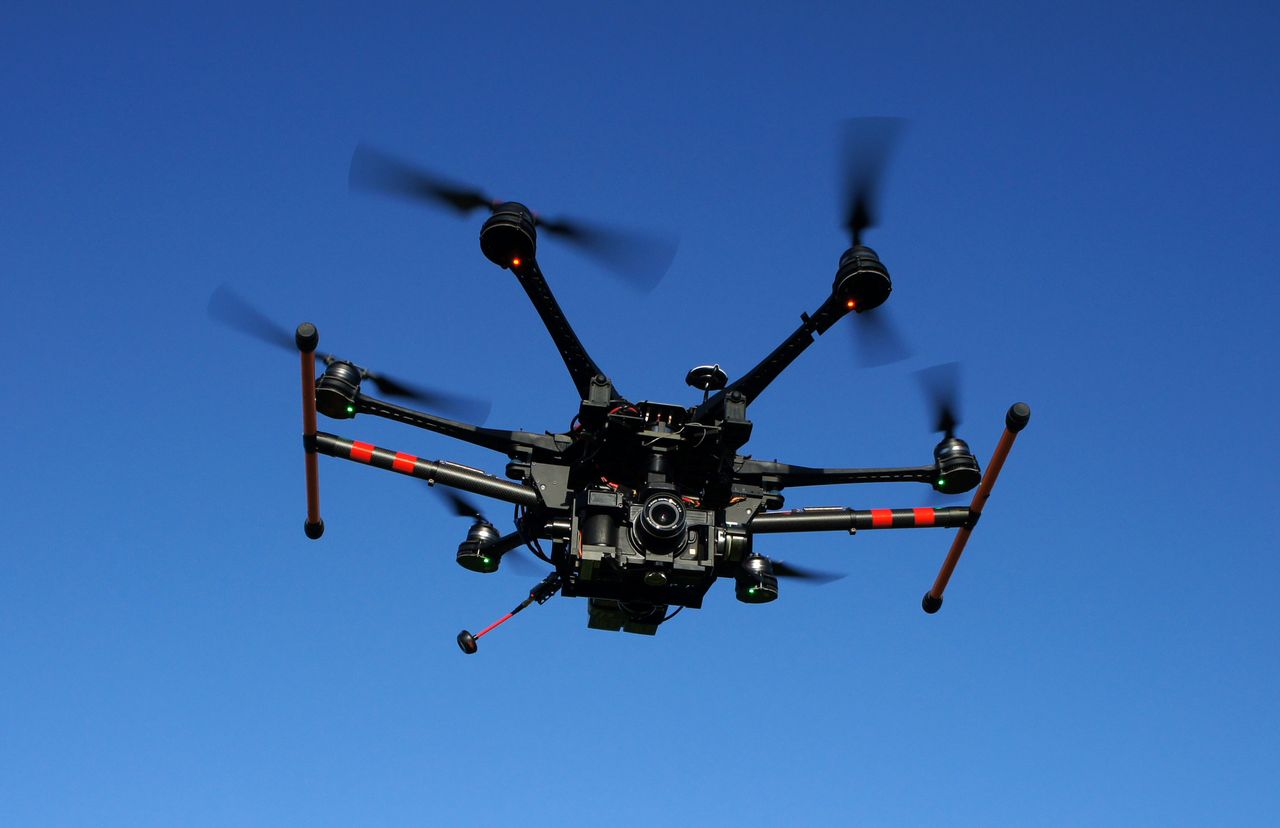
SONY DSC.

Reducing (or completely eliminating) the charge time for drones has been a continual area of research, with some advancements, such as quantum batteries showcased earlier this year, showing a lot of promise. Researchers at the Civil Aviation University of China have made a major breakthrough in laser-based OTA (Over The Air) charging that can convert energy at 38.94% efficiency.

According to a study published in Matter & Light, scientists from the Civil Aviation University of China are testing a lightweight receiver that can harvest energy from a laser beam sent from the ground. The system uses a perovskite laser cell-thermoelectric (PLC-TE) tandem device, which combines two methods of generating electricity. The perovskite layer converts laser energy into electricity, while the thermoelectric layer recovers some of the resulting heat and turns it into additional power. Its output increases as the temperature difference between the laser-facing side and the cooler side grows.

(Image credit: Matter & light)

The major challenge with this setup is that intense laser beams heat up the receivers to a blistering 80 to 90 degrees Celsius, degrading efficiency and causing damage to the aircraft itself. “That was much higher than we expected and made us realize that heat buildup was a far more serious problem than we had imagined,” explained Jianhua Han, the study's senior author.

To overcome this challenge, Han's team added special nanocrystals to the receiver. As the nanocrystals are poor heat conductors, it allows them to act as a thermal barrier and protect the perovskite and thermoelectric layers. The team also added air channels to the drone's wings. As the propellers spin, airflow passes through these channels and carries excess heat away, helping to keep the system cool. The combination of nanomaterials and aerodynamic cooling resulted in a respectable 38.49% energy conversion efficiency during testing, which is one of the highest reported for this class of technology.

While the system is yet to undergo outdoor flight tests, this breakthrough alone is a significant step toward practical continuous flight for drones. As Han noted, going from 1 to 100 will require solving complex tracking and safety challenges, but this research establishes an important starting point for the future of drones and UAVs.

Sign up to read this article
Read news from 100's of titles, curated specifically for you.
Already a member? Sign in here
Related Stories
Top stories on inkl right now
One subscription that gives you access to news from hundreds of sites
Already a member? Sign in here
Our Picks
Fourteen days free
Download the app
One app. One membership.
100+ trusted global sources.