
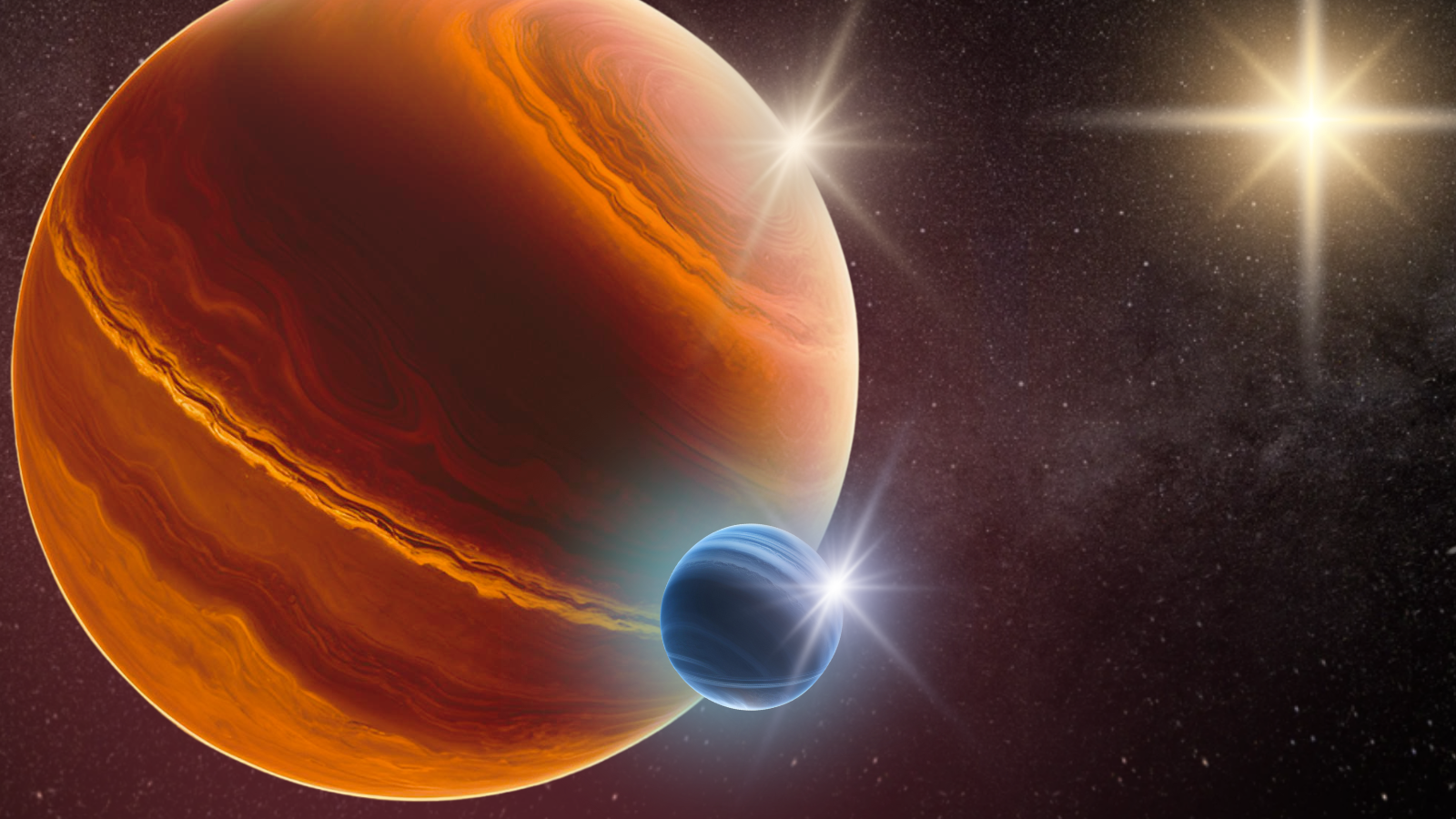
Scientists have used data from NASA's retired planet-hunting space telescope 'Kepler' to discover that small and large worlds have very different upbringings. The team found that larger planets on non-circular orbits are more likely to have grown in more turbulent home systems.
To reach this conclusion, the team studied the orbits of thousands of extrasolar planets, or "exoplanets." The team, consisting of researchers from the University of California, Los Angeles (UCLA), measured the orbits of exoplanets ranging in mass from that of Jupiter to that of Mars.
Smaller planets, it was revealed, tended to have nearly circular orbits, while larger giant planets have flattened, or elliptical, orbits. This would have been an important finding in isolation, but because scientists can tell a lot about a planet from its orbit, the discovery also reveals information about how planets of different sizes form.