
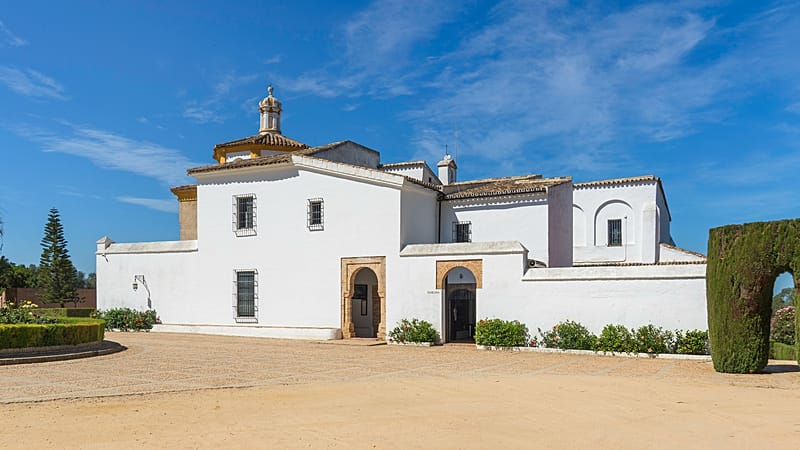
On a low hill outside Huelva, at the point where the Río Tinto meets the Odiel before they flow into the Atlantic, stands one of the most decisive sites in world history: the monastery of Santa María de La Rábida. Without its walls, its friars and the faith invested there, it is quite possible that Christopher Columbus's great enterprise would never have set sail from the nearby shores of Palos de la Frontera bound for the New World.
The Franciscan presence here dates back to the early 13th century, when the first friars settled in this early hermitage on the Huelva estuary. For decades, La Rábida was a place of retreat and prayer, far from the bustle, until destiny – and the persistence of a navigator – turned it into the epicentre of one of the most momentous episodes in history: the encounter between two worlds that until then were strangers to one another.














