Ninety percent of Kyrgyzstan is covered by mountains, and you notice it the moment you leave the capital. Within an hour of Bishkek, the road climbs into valleys where horses graze freely, shepherds move their flocks to summer pastures, and the snow-capped Kyrgyzstan mountains of the Tian Shan range fill the horizon. It is no surprise that Kyrgyzstan tourism is growing year after year – and, just as importantly, that more of that growth is reaching local families in villages and yurt camps.
For travelers looking for wide-open landscapes, warm hospitality and a sense of discovery, Kyrgyzstan travel offers something increasingly rare: a destination that still feels unhurried and authentic.
Issyk-Kul Lake: The "Pearl" of Central Asia
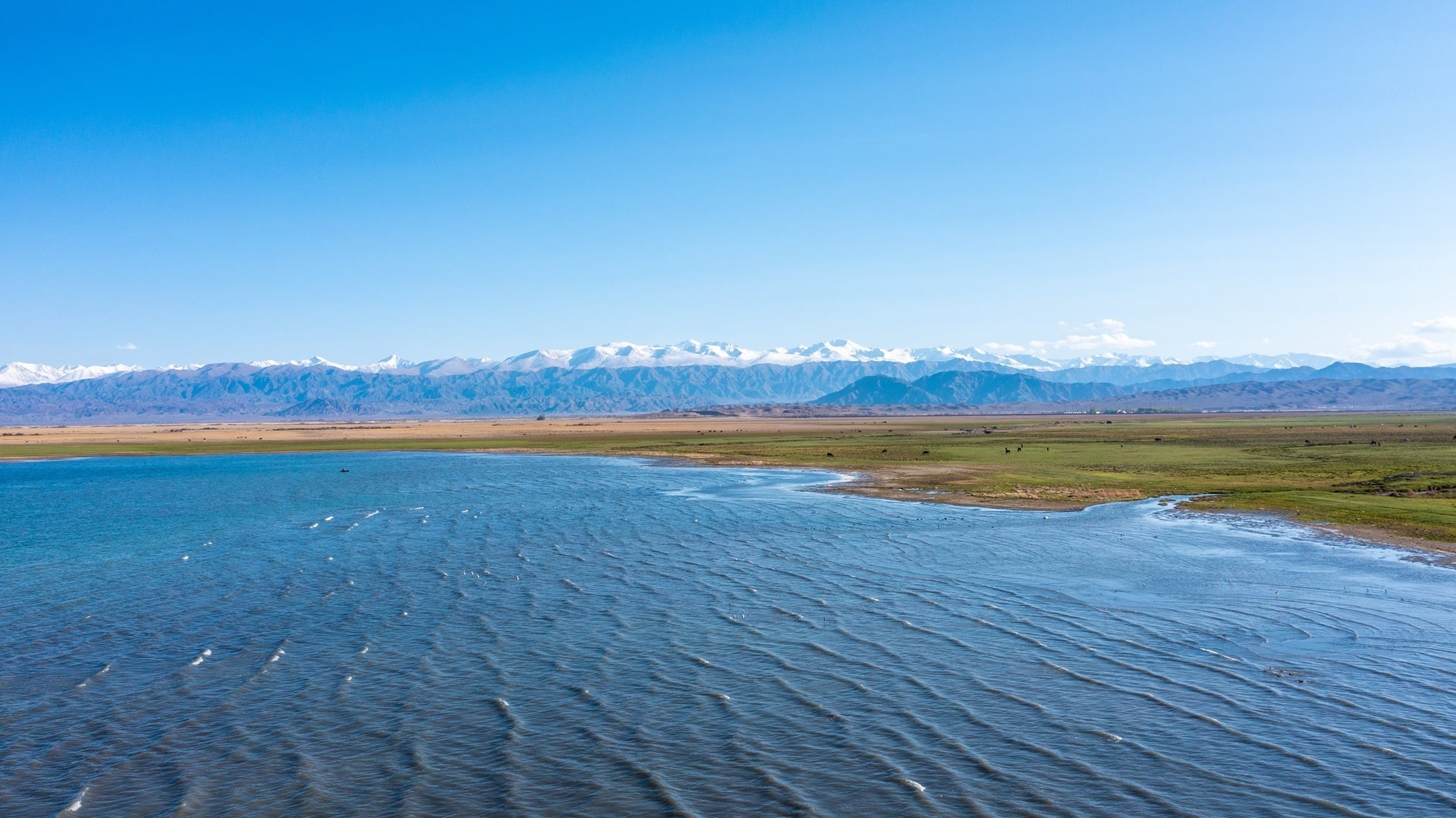
Issyk-Kul Lake and the Tian Shan mountains. Photo: Travel Land (trvlland.com)
Almost every Kyrgyzstan itinerary includes Issyk-Kul, and for good reason. Stretching about 180 kilometers between two mountain ranges, Issyk-Kul Lake is one of the largest alpine lakes in the world. Its slightly salty water never freezes, even in winter, which is how it earned its name – "warm lake" in Kyrgyz.
The northern shore is known for sandy beaches and summer resorts, while the southern shore stays quiet and wild, with small villages, apricot orchards and views of snowy peaks rising straight from the water. Local families increasingly run guesthouses here, giving visitors a chance to taste homemade jam, fresh bread and fish from the lake while supporting the community directly.
Jeti-Oguz: The Red Rocks of the Tian Shan
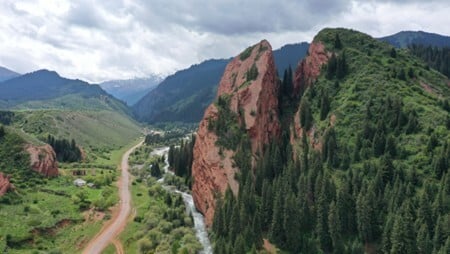
Jeti-Oguz Gorge. Photo: Travel Land (trvlland.com)
A short drive from the eastern end of the lake, Jeti-Oguz is one of the most photographed places in the country. The name means "Seven Bulls," after a row of red sandstone cliffs that local legend links to a tale of seven bulls. Nearby stands the "Broken Heart" rock, split down the middle and surrounded by stories of lost love.
Above the red cliffs, the valley opens into spruce forests and alpine meadows – a perfect introduction to Kyrgyzstan nature for easy hiking, horseback riding or simply a picnic by the river. In summer, herders set up yurts in the upper valley, and visitors are often invited in for a bowl of kymyz, the traditional fermented mare's milk.
Karakol: A Town of Wooden Churches and Mountain Trails
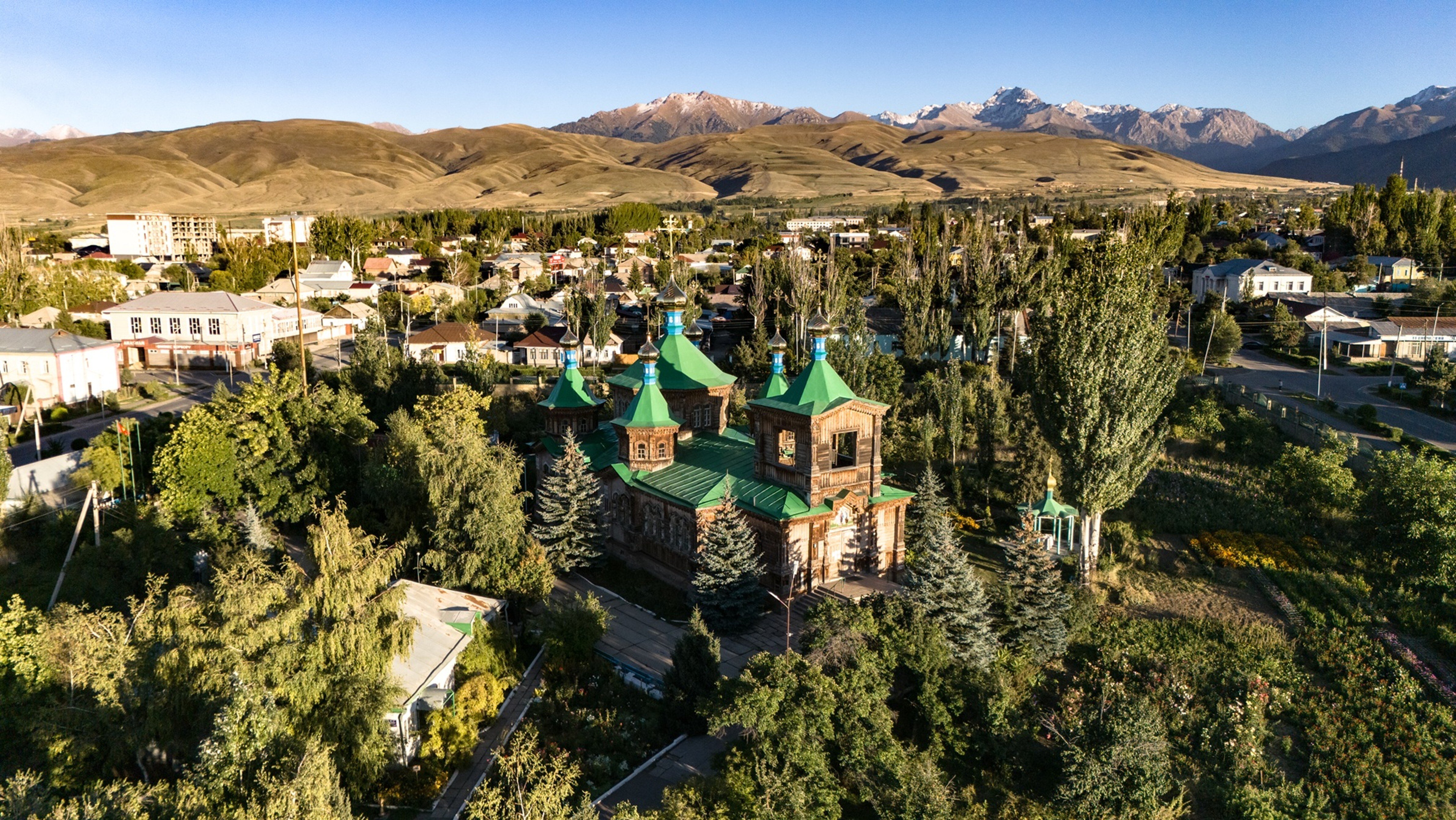
Holy Trinity Cathedral, Karakol. Photo: Travel Land (trvlland.com)
Karakol, the main town at the eastern end of Issyk-Kul, is the natural base for exploring the region. Its best-known landmark is the Holy Trinity Cathedral, a wooden Orthodox church with bright green roofs, built at the end of the 19th century and surrounded by a quiet garden. A few streets away, the colorful Dungan Mosque, built by Chinese Muslim settlers, shows how many cultures have shaped this Silk Road crossroads.
Karakol is also the gateway to some of the best trekking in Central Asia, including routes to the turquoise Ala-Kul Lake and the hot springs of Altyn-Arashan. In the evenings, the town's cafés serve ashlan-fu, a cold noodle soup that has become Karakol's signature dish.
Naryn and the Road to the Heart of the Country
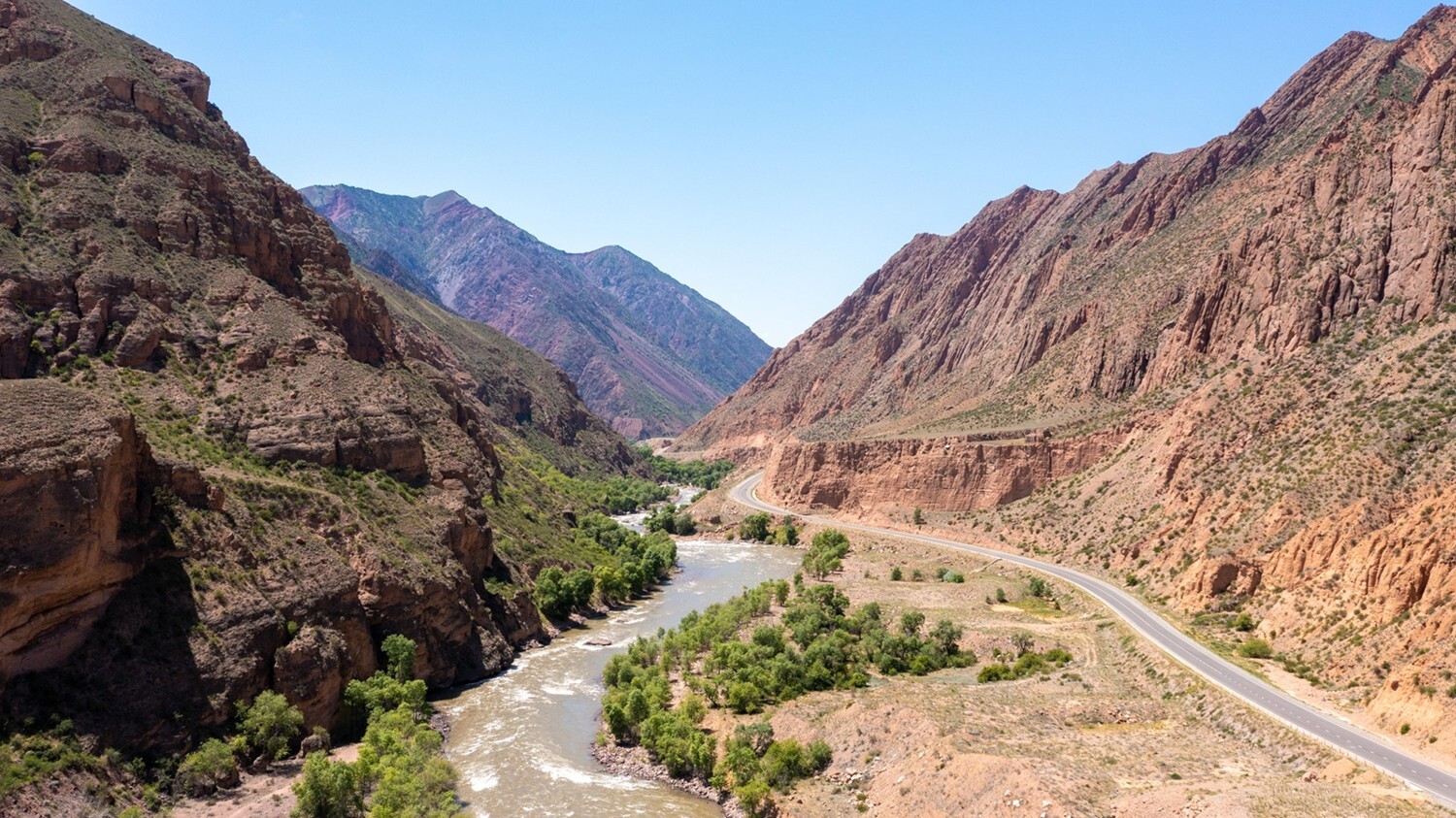
Naryn River gorge. Photo: Travel Land (trvlland.com)
Head south from the lake and the landscapes change dramatically. The Naryn River, the longest river in Kyrgyzstan and one of the main sources of the Syr Darya, cuts through red and ochre canyons along modern mountain roads. This part of the country leads to some of the most memorable things to do in Kyrgyzstan: staying in a Kyrgyzstan yurt camp on the shores of high-altitude Song-Kul Lake, visiting the 15th-century Tash Rabat caravanserai, and meeting shepherd families who still follow a seasonal nomadic lifestyle.
More Places to Visit in Kyrgyzstan
If you have more time, consider adding:
- Ala-Archa National Park – alpine hiking less than an hour from Bishkek.
- Burana Tower – an 11th-century minaret from the ancient city of Balasagun.
- Skazka (Fairy Tale) Canyon – colorful rock formations on the southern shore of Issyk-Kul.
- Song-Kul Lake – summer pastures at around 3,000 meters, famous for starry nights.
Best Time to Visit Kyrgyzstan
The best time to visit Kyrgyzstan for most travelers is from late May to early October. June and July bring green valleys and wildflowers, August is ideal for high mountain lakes and trekking, and September offers golden colors and fewer visitors. Most yurt camps operate from June to September, when herders move up to the summer pastures. Winter is quieter but attracts skiers to Karakol's ski resort.
Is Kyrgyzstan Safe for Travelers?
Many first-time visitors ask whether Kyrgyzstan is safe, and travelers regularly describe it as welcoming and easygoing. Hospitality is a deep-rooted tradition, and guests are often invited for tea by people they have just met. Citizens of dozens of countries, including the United States, the United Kingdom and most of the European Union, can visit visa-free for a short stay. As in any mountain destination, the main things to plan for are road conditions, altitude and weather – another reason many people prefer traveling with an experienced local guide.
Kyrgyzstan Tours: Traveling the Easy Way
Distances in Kyrgyzstan are not huge on the map, but mountain roads, remote yurt camps and limited public transport can make independent planning time-consuming. That is why many visitors choose organized Kyrgyzstan tours with a local guide and driver.
Small-group trips have become especially popular. A typical 9- to 11-day Kyrgyzstan trip combines Issyk-Kul, Jeti-Oguz, Karakol and Song-Kul, with nights in guesthouses and traditional yurts. Travel Land, a Kyrgyzstan travel agency based in Bishkek, runs Kyrgyzstan group tours with fixed departure dates from spring to autumn, so solo travelers and couples can join a small group without having to organize everything themselves.
For those who want to see more of the region, a Kyrgyzstan tour package can also be combined with neighboring countries. Central Asia group tours often pair Kyrgyzstan's mountains with the canyons of Kazakhstan and the Silk Road cities of Uzbekistan – Samarkand, Bukhara and Khiva – in a single journey.
Good News for Travelers and Local Communities
What makes Kyrgyzstan travel special is not only its scenery but also the way tourism supports people living in remote areas. Guesthouses, yurt stays, felt-making workshops and horse-riding trips provide income for rural families and help keep nomadic traditions alive for the next generation. Every visitor who sleeps in a yurt, buys a handmade shyrdak carpet or shares a meal with a host family becomes part of that story.
With its mountains, lakes and open-hearted people, Kyrgyzstan is ready to welcome travelers who want to slow down and experience something truly different.