Get all your news in one place.
100's of premium titles.
One app.
Start reading
The Economic Times
The Economic Times
Debaroti Adhikary

Kospi crashes 44% in a month but Nomura sees 109% upside in South Korea's stock market. Here's why

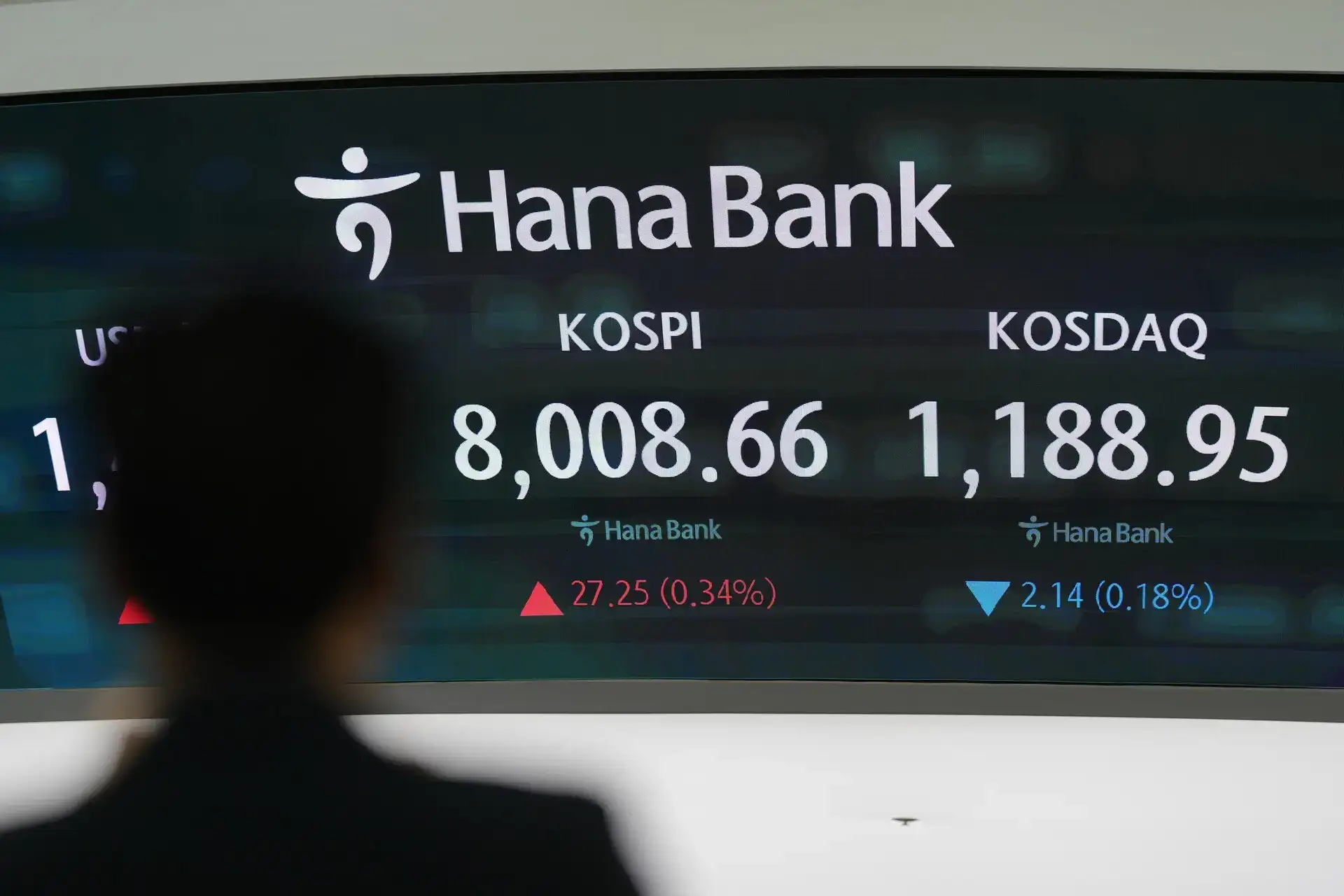
South Korea's Kospi has seen a massive 44% crash from its June peak as the country’s stock market appeared to be the face of the global AI rout after a skyrocketing rally. While the AI bubble worries spook investors, Nomura has an ambitious target of 10,000-11,000 for Kospi, implying a whopping 109% upside from current levels.

Kospi crashed nearly 13% to 5,263 on Wednesday, marking a 44% plunge from its June peak of 9,386 to comfortably remain in technical bear market territory. Despite the recent crash, South Korea’s stock market continues to be Asia's best performer in 2026 so far.

Nomura in its latest note highlighted that the sharp selloff in South Korea’s stock market was driven by heavy selling by foreign investors as Korea's benchmark weight exceeded portfolio limits, slowing institutional support, alongside rapid growth in leveraged ETFs and newly launched single-stock leveraged products sparking massive volatility.

What will drive South Korean market's next leg of rally?

As market “deleveraging” progresses and foreign selling pressure eases, Nomura believes that the next leg of South Korean market’s rerating is likely to be supported by corporate share buybacks and treasury-share cancellations, particularly from large-cap companies. The international brokerage estimates 90% of Korea’s share buybacks to stem from the two large semiconductor companies Samsung and SK Hynix, including buybacks for employee bonuses and shareholder return.

This should become a new structural source of demand and help the Kospi re-rate toward its 10,000-11,000 target, according to Nomura. This implies 90-109% upside potential from the 5,262.77 level at which Kospi is trading today.

Also read | Is Korean stock market turning into open casino? How retail leverage is fueling wild swings

What are the key catalysts for Kospi?

“We see the following as key catalysts for the Kospi: 1) AI-driven earnings (including memory/ HBM, power equipment, ESS, and nuclear) to generate sustainable ROE for the next five years; 2) listed companies’ shift toward better capital efficiency, shareholder return, and optimal leverage to support higher P/E and PBV; 3) active stewardship or activist campaigns; and 4) government enforcement for better target ROE disclosure and regulatory measures to facilitate non-core asset holdings, stricter listing requirements and governance structure,” Nomura said.

However, corporate stock buybacks falling short of expectations, foreign investors’ mechanical selling exacerbating once the KOSPI reaches above 7,500-9,000, and retail investors’ rebuilding of steep leverage were listed as the key downside risks to Nomura’s bullish view.

The international brokerage believes that key policy developments could include tighter regulations of single-stock leveraged ETFs (than what was announced on 16 July), publication of a low-PBR company list, incentives for higher dividends, stricter duplicate-listing rules and KOSDAQ reform.

Also read | Kospi crashes 12% after SK Hynix earnings; best performing Asian market of 2026 plunges 43% in a month. What’s ahead?

Disclaimer: Recommendations, suggestions, views and opinions given by the experts are their own. These do not represent the views of The Economic Times.

Sign up to read this article
Read news from 100's of titles, curated specifically for you.
Already a member? Sign in here
Related Stories
Top stories on inkl right now
One subscription that gives you access to news from hundreds of sites
Already a member? Sign in here
Our Picks
Fourteen days free
Download the app
One app. One membership.
100+ trusted global sources.