
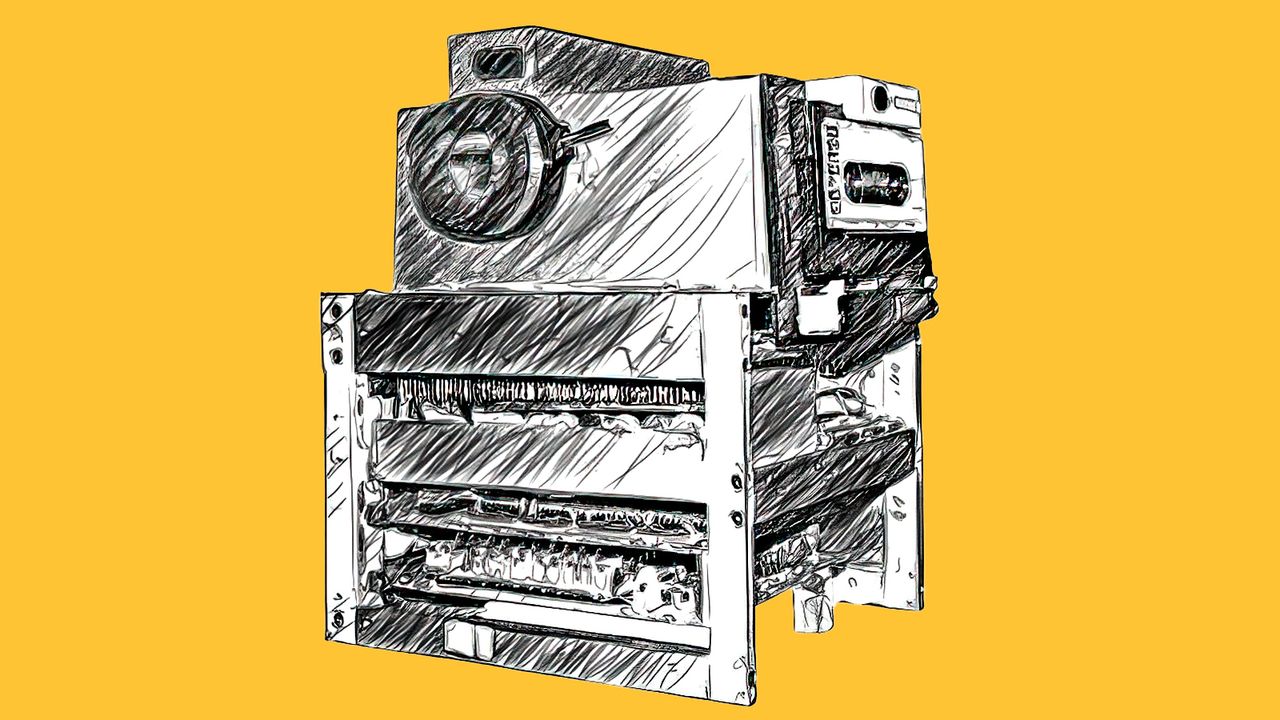
Early in 1975, 24-year-old Kodak electrical engineer, Steven Sasson, was handed a newly developed CCD (Charge Coupled Device) by his supervisor and asked to “see what he could do” with it.
The conversion likely lasted less than a minute, and the word “digital” was never mentioned. But, with the help of two very talented technicians, Bob DeYager and Jim Schueckler, he designed and built the world’s first working, self-contained digital camera in less than a year.
It was no easy task, for the CCD, from Fairchild Semiconductor, required twelve different voltages and came with a handwritten sheet, detailing the voltage required on each pin. Below was a note from the engineer who’d calibrated the chip. It simply said “Good luck!”
16 AA batteries provided the necessary power, but power consumption was high, so battery life was short. The lens was scavenged from a used Kodak Super 8 cine camera, as the entire project was a low-budget affair. The camera was painted blue, simply to prevent fingerprints marring the aluminum housing and because a can of blue paint happened to be at hand.
The camera weighed 3.6kg (about eight pounds) and recorded a whopping 0.01 megapixel (100 x 100 pixels) black-and-white image on a Philips-style data cassette.