Get all your news in one place.
100's of premium titles.
One app.
Start reading
Tom’s Hardware
Tom’s Hardware
Technology
Anton Shilov

Kioxia discontinues 2D NAND products, last shipments to be made in 2028 — 1980s planar NAND memory reaches end of life

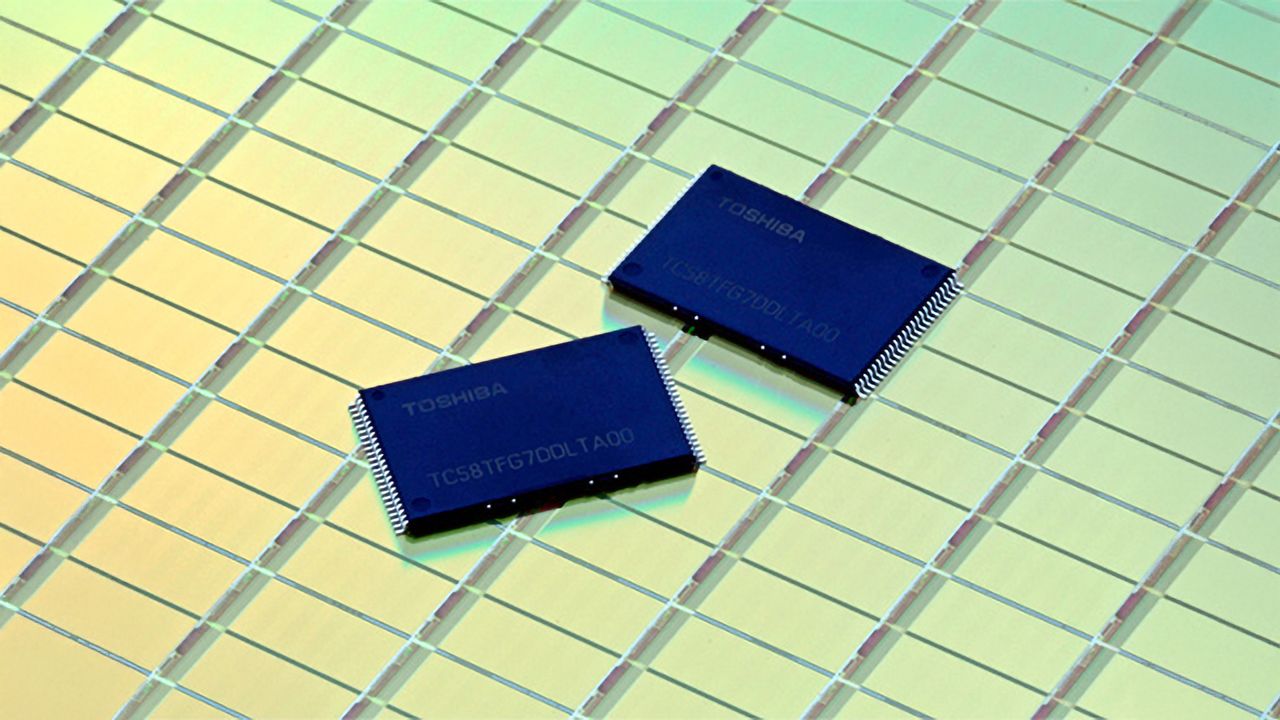
Toshiba.

Kioxia has notified its customers about its plans to discontinue production of its 2D NAND and 3rd Generation BiCS 3D NAND memory, reports TechNews.tw. Ceasing production of legacy types of flash memory is nothing new, but the noteworthy thing is that Kioxia will be ending the life of planar NAND memory, a type of memory that preceded 3D NAND and has been in production since the 1980s.

Kioxia is discontinuing a broad range of legacy NAND products, including planar floating-gate NAND built on 32nm (SLC that has been in production since 2009), 24nm (MLC that has been in production since 2010), and 15nm (MLC and TLC that has been in production since 2014) nodes, as well as early-generation 64-layer BiCS3 3D NAND (released around 2017). The phase-out spans all major cell types — SLC, MLC, and TLC — and covers virtually all delivery formats, including raw wafers and packaged solutions such as BGA, TSOP, eMMC, UFS, and SD cards, which indicates full retirement of older technology platforms rather than isolated SKUs.

The wind-down follows a standard multi-year EOL schedule: last-time-buy orders are accepted until September 30, 2026, while final shipments will continue through December 31, 2028, nearly three years from now. After that point, these products will be fully discontinued, which will mark Kioxia's exit from legacy planar NAND and early BiCS generations in favor of more advanced 3D NAND nodes.

At the same time, Kioxia's ceasing of 2D NAND production will also mark the end of planar NAND memory in general, a significant event for the industry, as this type of memory first entered production at Toshiba in circa 1987 and will be discontinued by its successor Kioxia in 2028, 41 years later.

Nowadays, 2D NAND is mostly used on legacy devices, including automotive, consumer electronics, embedded, and industrial applications, and some specialty storage devices with an extended life cycle. While pricing of outdated memory types is usually fixed to keep production economically viable for the manufacturer and buyers, it hardly makes a lot of sense for Kioxia to keep production capacities for 2D NAND amid skyrocketing demand from the AI sector. To that end, as long-term supply contracts with customers come to an end, Kioxia is announcing plans to cease production and shipments of 2D NAND.

Sign up to read this article
Read news from 100's of titles, curated specifically for you.
Already a member? Sign in here
Related Stories
Top stories on inkl right now
Our Picks
Fourteen days free
Download the app
One app. One membership.
100+ trusted global sources.