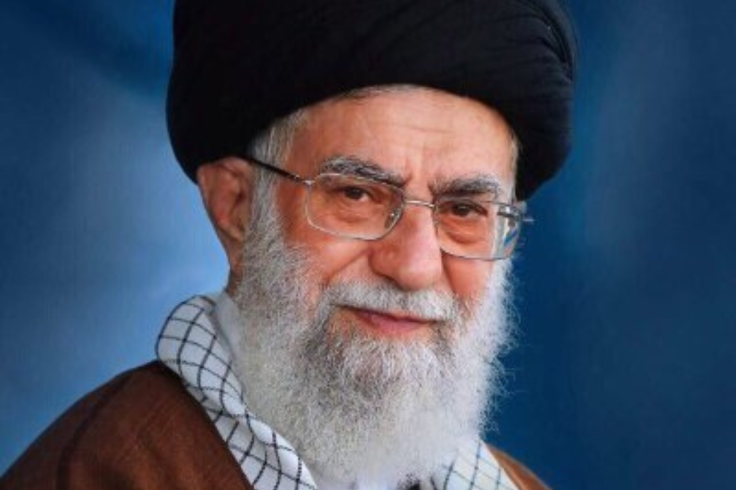
US President Donald Trump and Israeli officials have announced that Iran's Supreme Leader Ayatollah Ali Khamenei had been killed during joint US-Israeli strikes on Iran -- a claim that Tehran has forcefully rejected.
Trump took to his social media platform Truth Social to announce the reported death of Khamenei. In his Truth Social post, he wrote:

"Khamenei, one of the most evil people in History, is dead. This is not only Justice for the people of Iran, but for all Great Americans, and those people from many Countries throughout the World, that have been killed or mutilated by Khamenei and his gang of bloodthirsty THUGS...
"He was unable to avoid our Intelligence and Highly Sophisticated Tracking Systems and, working closely with Israel, there was not a thing he, or the other leaders that have been killed along with him, could do...
...This is the single greatest chance for the Iranian people to take back their Country... The heavy and pinpoint bombing ... will continue, uninterrupted throughout the week or, as long as necessary to achieve our objective of PEACE THROUGHOUT THE MIDDLE EAST AND, INDEED, THE WORLD!"
Israeli Prime Minister Benjamin Netanyahu also publicly stated that there were "many signs that [Khamenei] is no longer alive," following the strikes, adding that several senior Iranian leaders were "eliminated" during the operation, Reuters reported.
Iran strongly disputes the claims
In response to the reports, Iranian state-linked media and officials issued strong denials.
According to Al Jazeera, Iran's semi-official Tasnim and Mehr news agencies reported that Khamenei remains "steadfast and firm in commanding the field," dismissing the death claims.
Iranian authorities characterized the reports of his death as psychological warfare by Tehran's adversaries. Officials quoted by state media said the supreme leader is alive and continuing to lead, contradicting the statements from Washington and Jerusalem.
Ali Khamenei has served as Iran's Supreme Leader since 1989 and is the country's highest political and religious authority, exercising power above the elected president and parliament. Born in 1939 in Mashhad, he succeeded Ruhollah Khomeini after the Islamic Republic's founding leader died. As Supreme Leader, Khamenei acts as commander-in-chief of the armed forces and has the final say over Iran's defense, foreign policy, intelligence services and judiciary. He appoints the heads of key institutions, including the judiciary and state broadcasting authority, and directly or indirectly influences the powerful Guardian Council, which vets candidates for elections.
Over more than three decades in power, Khamenei has shaped Iran's regional and nuclear policies, backing allied groups across the Middle East and maintaining a confrontational stance toward the United States and Israel. He gives conditional approval to nuclear agreements, including the 2015 deal negotiated under then-president Hassan Rouhani, but relations with Washington deteriorate sharply after the US withdrawal from the deal in 2018 under Donald Trump. Domestically, he has overseen periods of unrest, including the 2009 Green Movement protests and the 2022 demonstrations following the death of Mahsa Amini, with authorities moving forcefully to contain dissent.