
Get all your news in one place.
100's of premium titles.
One app.
Start reading
Homes & Gardens
Homes & Gardens
Francesca Clarke

Keystone Planting is Changing the Way We Garden in 2026 – And It's Much Simpler Than You Might Think

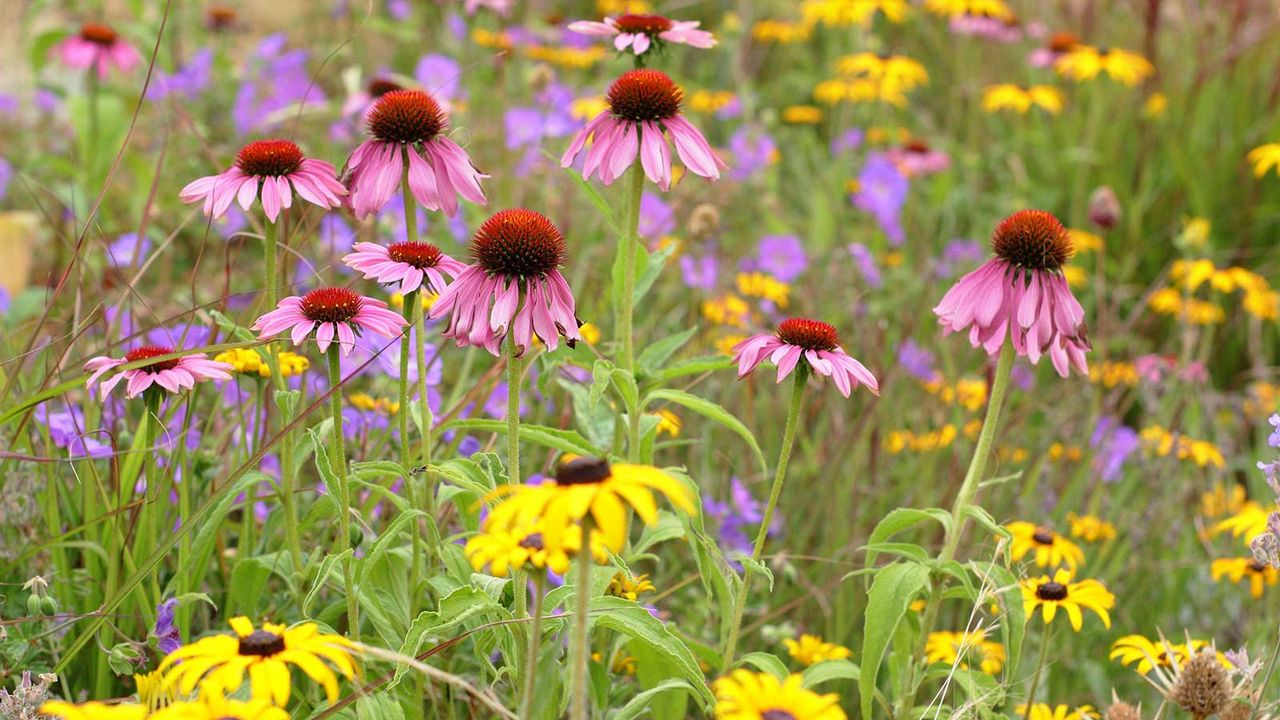
Flowering plants – echinacea and rudbeckia.

Keystone planting is all about designing your yard with the needs of your local ecosystem at its heart. Many garden trees and plants bring very little to the biodiversity party. Others, and here I'm mainly talking native species, are critical to the survival of local wildlife and, ultimately, the entire food chain. They're the vital pillars of our ecosystem.

This important approach to landscaping isn't necessarily about rewilding, or allowing your backyard to be reclaimed by nature. It's firmly rooted in common sense – planting the right plants for your zone in the right place. Not only will it bring all the wildlife to your yard, but it will also gift you with a climate-resilient outdoor space that thrives on neglect without the need for chemical intervention.

If you worry you don't have the knowledge for this new direction, which is one of the easiest of backyard ideas, there is always time to learn new skills. I guarantee this quick and simple crib sheet will have you rethinking your planting and embracing a brilliant and biodiverse way of gardening.

What is Keystone Planting?

(Image credit: Getty Images/Teddy Yaegar Photography)

As Mirela Bajic of House Designer explains, you needn't worry about compromising the aesthetics of your space if you're keen to incorporate keystone planting:

'Homeowners have started to realize that a beautiful garden and an ecologically useful garden do not have to be different things. This is also changing the way designers actually specify plants, moving away from purely ornamental choices toward plants that earn their place ecologically.

'Keystone planting doesn't mean a wild or messy garden. It's about choosing more carefully, not designing less.'

Of course those plants that are most beneficial to your particular wildlife will vary hugely, depending on where you live. Plants that draw in the pollinators in Florida won't thrive in northern regions of the US and vice versa. In the UK, wildlife-supporting native species are different again.

It's also important to bear in mind that plants can be beneficial for insects in various ways, as hosts and food sources for butterflies and moths, for example, as food sources for their caterpillars, or shelter over winter.

The Benefits of Keystone Planting

(Image credit: Getty Images/Vicki Jauron, Babylon and Beyond Photography)

It's a given that keystone planting in your backyard is a failsafe way to support your local ecosystem (which will in turn keep pests at bay). But did you know that by planting trees, shrubs and perennials that literally have their roots in local soil, you will make your life easier too?

Mirela is keen to stress that by no means do you need to start from scratch when considering introducing a few keystone species.

'Keystone plants are species that have a large ecological impact relative to their abundance. In garden design it means choosing plants that support the widest possible range of wildlife, particularly insects and pollinators.

'You don't need to redesign your whole garden to implement keystone planting. You can simply swap one ornamental shrub for a native alternative. Add a small wildflower patch in an existing border. Another tip is to leave ivy on a fence rather than cutting it back.'

So keystone planting is about a shift in thinking, towards native planting, rather than a whole new way of gardening. You will also find that your native species need much less, if any, pampering, as they are innately adapted to your particular soil and weather conditions. This means less watering, pruning and tidying for you.

Shop native plants at Nature Hills Nursery

Some of the Best US Keystone Plants

(Image credit: Getty Images/ Jacky Parker Photography)

Sunflowers (Helianthus)
Not just the tall single-flowered annual varieties, Helianthus is a genus that includes around 50 wild species native to North America. They support a vital network of birds, pollinators and insects with their seeds and pollen.

Shop 'Autumn Gold' helianthus at Burpee

Goldenrod (Solidago)
A pollinator magnet with more than 100 different US species, this is a vital plant in the US ecosystem, supporting migrating butterflies, moths and bees in late summer and into fall. It's South Carolina's state wildflower too.

Buy 'Fireworks' goldenrod at Nature Hills Nursery

Oak (Quercus)
Officially designated the National Tree of the United States in 2004, it has more than 60 native species and is an ecological powerhouse supporting hundreds of insect species with food and shelter. Remember it's huge, so only for sizeable backyards!

Shop oak trees at Fast Growing Trees

Hydrangeas (abrborescens and quercifolia)
The colorful mophead varieties are in fact from Asia and of far less importance in terms of biodiversity. Midwestern US natives oakleaf hydrangea (Hydrangea quercifolia) and smooth hydrangea (Hydrangea arborescens) are some of the best hydrangeas to grow, supporting a wide range of pollinators and wildlife.

Buy Hydrangea arborescens at Burpee

Shop oakleaf hydrangeas at Nature Hills Nursery

Black-eyed Susan (Rudbeckia)
Some of the best rudbeckias are included in around 30 species native North America (mainly central and eastern areas), supporting biodiversity as vital pollen sources for insects and food sources (the seedheads) for goldfinches and other birds.

Buy 'Goldsturm' Rudbeckia at Burpee

Cherries & plums (Prunus)
There are around 20 native cherry and plum species in the US, including American plum (Prunus americana), which thrives in eastern and central regions, and the beach plum (Prunus maritima), native to the Atlantic coast and famously resilient even in sandy and salt-laden coastal environments.

Browse cherry trees at Fast Growing Trees

Maples (Acer)
The red maple (Acer rubrum) is the most abundant tree in Eastern North America, but for the most fiery fall foliage – and maple syrup – try the sugar maple (Acer saccharum).

Browse maples at Nature Hills Nursery

Asters (Symphyotrichum)
There are a staggering 120 native species of aster in North America, making them a crucial keystone plant, providing vital late-summer nectar and pollen for pollinators (notably Monarch butterflies) and supporting more than 100 species of moth and butterfly caterpillar.

Find asters at Nature Hills Nursery

Milkweed (Asclepias)
A specialist insect magnet, milkweed is present in more than 100 native species across the US. It's also the exclusive host plant for monarch butterfly caterpillars. How to grow milkweed is an easy enough garden task.

Shop milkweed at Amazon

Birch (Betula)
Known as a pioneer species, there are around 12 native birch in the US, mainly in temperate northern zones. This pioneering quality means they thrive in disturbed ground, quickly colonising and improving shallow soils .

Crabapple (Malus)
A keystone species with a long season of wildlife interest, their spring flowers feed native butterflies and bees, the leaves host caterpillars and their long-lasting fall fruit are essential food for birds, deer and other mammals. Learning how to grow a crabapple is within the reach of any gardener.

Find crabapples at Fast Growing Trees

Lupine (Lupinus)
A staggering 150 native species exist in the US, mainly in western zones. They're vital for dozens of endemic and rare species of insects, and crucial atmospheric nitrogen 'fixers', which enrich the soil. Sundial lupine (Lupinus perennis) is the exclusive host plant for the caterpillars of the endangered Karner blue butterfly.

Shop lupines at Burpee

How to Introduce Keystone Favourites to Your Yard

(Image credit: Future)

So to the practical design elements involved in creating a harmonioius backyard with keystone planting. As always in garden design, less is more. By this I mean not fewer plants (cram in as many as you can – there's no limit to the number of plants you should include in your outdoor space!), but fewer species.

A garden with large, bold blocks of planting (like the simple three-plant formula for a more designed backyard) will be more calming and harmonious, leading the eye naturally through the whole space with long, slow pauses.

Then repeat your planting blocks throughout the space to create grounding visual links. Not only will this make your garen feel more coherent, it's also a boon for butterflies and bees, which makes it easier for them to find their favourite plants.

The species you turn to to create a beautiful yard majoring in keystone plants will depend on your area and its native trees, shrubs and perennials. Be sure to research your localized keystone species and make a list of your favourites – this way you'll support local species and have a garden full of thriving, easy-to-care-for plants.

'Homeowners are becoming more aware of biodiversity loss and want their gardens to contribute something,' says Mirela. With a changing climate and so much of our wildlife under threat, it's more important then ever to consider biodiversity in our backyards. Every space, large or small, makes a difference.

So whether you're adding a few sunflowers or swapping mophead hydrangeas for more beneficial arborescens or quercifolia species, every little helps – and you'll be tapping into a movement that landscapers and garden designers everywhere are picking up on with enthusiasm.

If you love inspiring garden ideas, outdoor advice, and the latest news, why not sign up for our newsletter and get the latest features delivered straight to your inbox?

Sign up to read this article
Read news from 100's of titles, curated specifically for you.
Already a member? Sign in here
Related Stories
Top stories on inkl right now
One subscription that gives you access to news from hundreds of sites
Already a member? Sign in here
Our Picks
Fourteen days free
Download the app
One app. One membership.
100+ trusted global sources.