As a filmmaker, Ken Burns sees himself as a uniter and not a divider—an admirable endeavor in these polarized times, but not always a successful one. His 2017 Vietnam series was a flawed attempt at uniting anti-war dissenters and pro-war hawks in an overall view of the Vietnam conflict as simply a noble mistake. Burns’ consensus-based approach to filmmaking too often relies on the patriotism-stirring power of myth rather than factual historical discourse. And yes, his upcoming PBS epic, Country Music, continues Burns’ life’s work of reinforcing American exceptionalism. Yet compared to his biased, constricted Jazz (2001), Burns’ eight-part, 16-hour extended history of country music finds the filmmaker-historian at his most even-handed, open-minded, and ideologically inclusive.
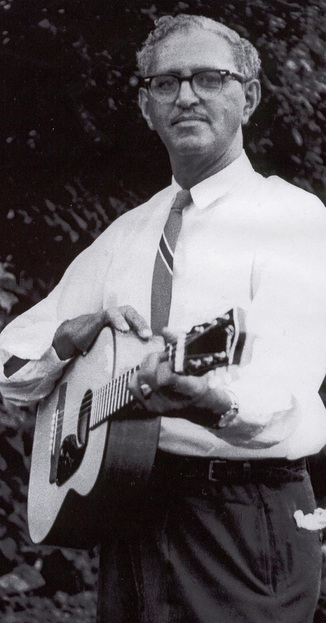
The series begins its wide chronological arc in 1927—when country music was essentially Appalachian hillbilly music—and ends somewhat arbitrarily in 1996, a time when popular country had inexplicably morphed into gentrified twang pop. All the familiar Burnsian tropes are in play: the endless celebrity talking heads; still photos coming to life through camera zooms and pans (aka the Ken Burns Effect); the hypnotic, droning voiceover of Peter Coyote. Despite overuse of his own documentary template, Burns still manages to be slightly subversive. Jazz’s gumbo-like mix of musical influences is no mystery to even the most untrained ear; fewer know that country also has diverse and tangled roots, a disparity the film seeks to correct. Just after Brownsville native Kris Kristofferson declares in the opening episode that country is “white man’s soul music,” Burns swiftly cuts to pathbreaking African American country singer Charley Pride, who proposes a more liberal definition: “Any song that’ll help you feel better.” With the recent “Old Town Road” controversy still fresh in mind, this acknowledgment is not only welcome, but necessary.