A security-first debut on the world stage
NEW YORK — Keiko Fujimori used her first address as Peru's head of state before the United Nations on Tuesday, Sept. 22, to cast the fight against organized crime as an outright "war." Fujimori, who took office on July 28 and has now governed for 57 days, was the second Latin American leader to speak on the opening day of the high-level debate, following Brazil's Luiz Inácio Lula da Silva, whose country traditionally leads off the session.
Her remarks revolved around three priorities: public safety, an overhaul of public schools and stronger democratic institutions, with nods to Inca history as a symbol of regional unity.
Fujimori ran through the illicit businesses that bankroll these groups — extortion, contract killings, the drug trade, illegal mining, contraband and human trafficking — and argued that tackling them country by country only hands criminals room to amass cash and firepower.
Her answer is a new legal category. She branded the networks "enemies of the democratic state and law-abiding citizens" and said an explicit designation, backed by a legal framework, would let the military support Peru's national police more forcefully whenever internal order is threatened.
The Shield of the Americas: the geopolitical play
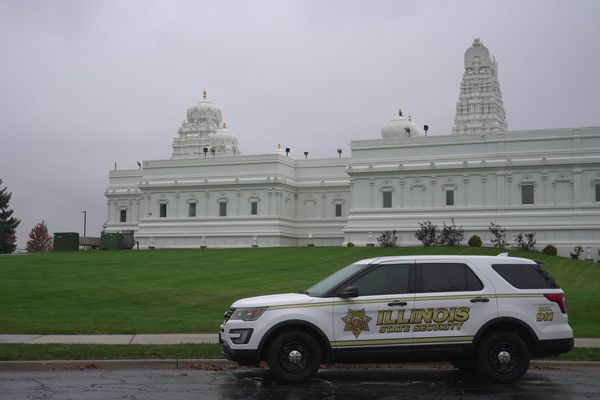
The speech also carried a message for Washington. Peru formally signed on to the Shield of the Americas this month after a visit to Lima by Marco Rubio, the U.S. secretary of state. The Trump-created coalition groups over 15 nations that coordinate against drug cartels and transnational crime rings, and its members were due to convene in New York that same afternoon.
Chile's José Antonio Kast, who spoke in the same session, likewise framed crime as a shared danger that requires governments to pool intelligence and police work, and he highlighted the Santiago Commitment, a regional pact Peru has also joined. Fujimori, however, went further by pushing the terrorism label, and Chile so far takes part in the Shield only as an observer.
Schools as a second front against crime
Fujimori warned that crackdowns alone will fall short and presented education as a way to keep children and teenagers from being recruited by gangs. The centerpiece of her reform, she said, will be a new academy to train school principals.
In that section she took aim at what she called "an ideological cultural agenda alien to our reality", blaming it for teachers losing authority in classrooms for fear of being reported. She did not specify which policies that agenda includes.
Soldiers, human rights and the weight of a family name
The president openly defended the soldiers and police officers who fought insurgent groups in the 1980s and 1990s, saying that more than three decades after terrorism was defeated, some remain on trial even though, in her view, their due-process rights were violated. The passage is politically loaded in a country where the Fujimori name remains tied to her father Alberto Fujimori's government in the 1990s.
She also urged the UN to act independently and transparently, without ideological bias, protecting the rights of farmers, women, children, police and troops alike, and she drew a line: supporting a nation, she said, does not mean replacing its institutions.
After reaffirming Peru's commitment to the UN Charter, Fujimori closed with a defense of political diversity. "The world does not require identical democracies, it requires legitimate democracies," she said, before championing each people's right to choose its own path.
Slipping approval at home
The international debut comes as her standing at home erodes. A Datum survey released Thursday, Sept. 17, found her approval fell from 60% in August to 42% in September, while disapproval climbed from 24% to 44%, meaning critics now outnumber supporters.
Her trip opened Monday with a meeting with Mónica Juma, head of the UN Office on Drugs and Crime (UNODC), followed by talks with Dominican President Luis Abinader, who proposed taking bilateral ties to a higher level and swapped invitations with her for official visits. Fujimori will stay in the city through Thursday, Sept. 24, with meetings aimed at drawing investment and broadening international cooperation.
What it means for Peruvians in the United States
For the Peruvian community living in the U.S., the speech clarifies where the new government stands: Lima is betting on a tighter security partnership with Washington, and its entry into the Shield of the Americas is likely to shape the bilateral agenda for years. The open question is whether the terrorism label Fujimori championed in New York becomes actual legislation and measurable results against the extortion and contract killings that hit families back home.