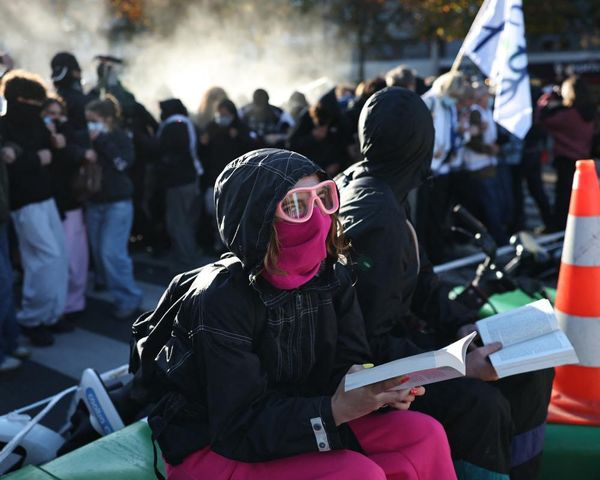
At least eight journalists have been detained while covering Just Stop Oil protests in recent weeks. Their press credentials ignored, the journalists (including an LBC reporter, a documentary filmmaker and a photographer) were held for hours, fingerprinted and DNA-swabbed. Their phones and cameras were confiscated and – in at least one case – a journalist’s home was searched.
Reasons for arrest and detention included “conspiracy to commit a public nuisance”, despite journalists taking no part in any aspect of the protests. This flies in the face of the UK College of Policing’s policy. The college explicitly briefs its officers against such interference with the media in the pursuit of reporting news, advising that “facilitation of frontline media reporting during dynamic operations should be anticipated and planned for”.
So what explains the detention of reporters at recent protests – and what are the wider implications? Hertfordshire Constabulary initially said the protests were “fluid and fast-moving” and insisted that there were valid grounds to detain journalists “for questioning in order to verify their credentials”. But, following widespread condemnation from government ministers, Hertfordshire promised an investigation but also implied that not all journalists belong to “legitimate media”, and argued that those covering the protests were “part of the problem”.