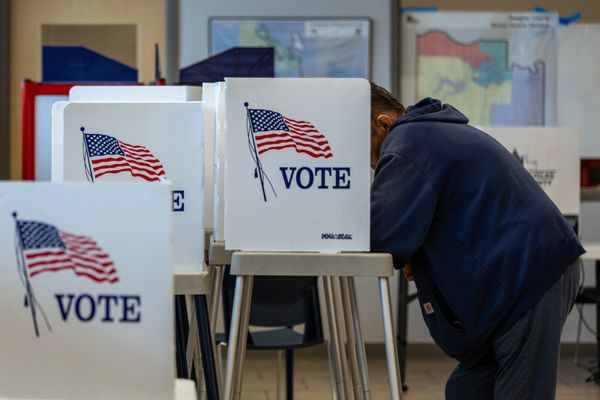
On Sunday, the people of Ecuador will vote in a referendum to decide whether or not to destroy my home. I am not speaking of the house that my family and I built by hand, but of the land of my ancestors, the territory and its guardians: the trees, the rivers and jaguars, the people who live there, the soil where my grandmother is buried, the reservoirs of knowledge and medicine, our spirits and those of the forest.
Perhaps you have never heard of the Yasuní national park in the Ecuadorian Amazon. If you were to walk there with me, I could teach you to listen to the wind, to interpret the songs of birds and read the leaves and the bark of trees. But to give you an idea of the place in the language you understand, I’ll tell you that Yasuní, an area of one million hectares, is one of the most biodiverse places on Earth. There are more tree species in a single hectare of Yasuní than across Canada and the United States combined. Yasuní is also the home of the Tagaeri and Taromenane communities: the last two Indigenous peoples living in voluntary isolation in Ecuador.