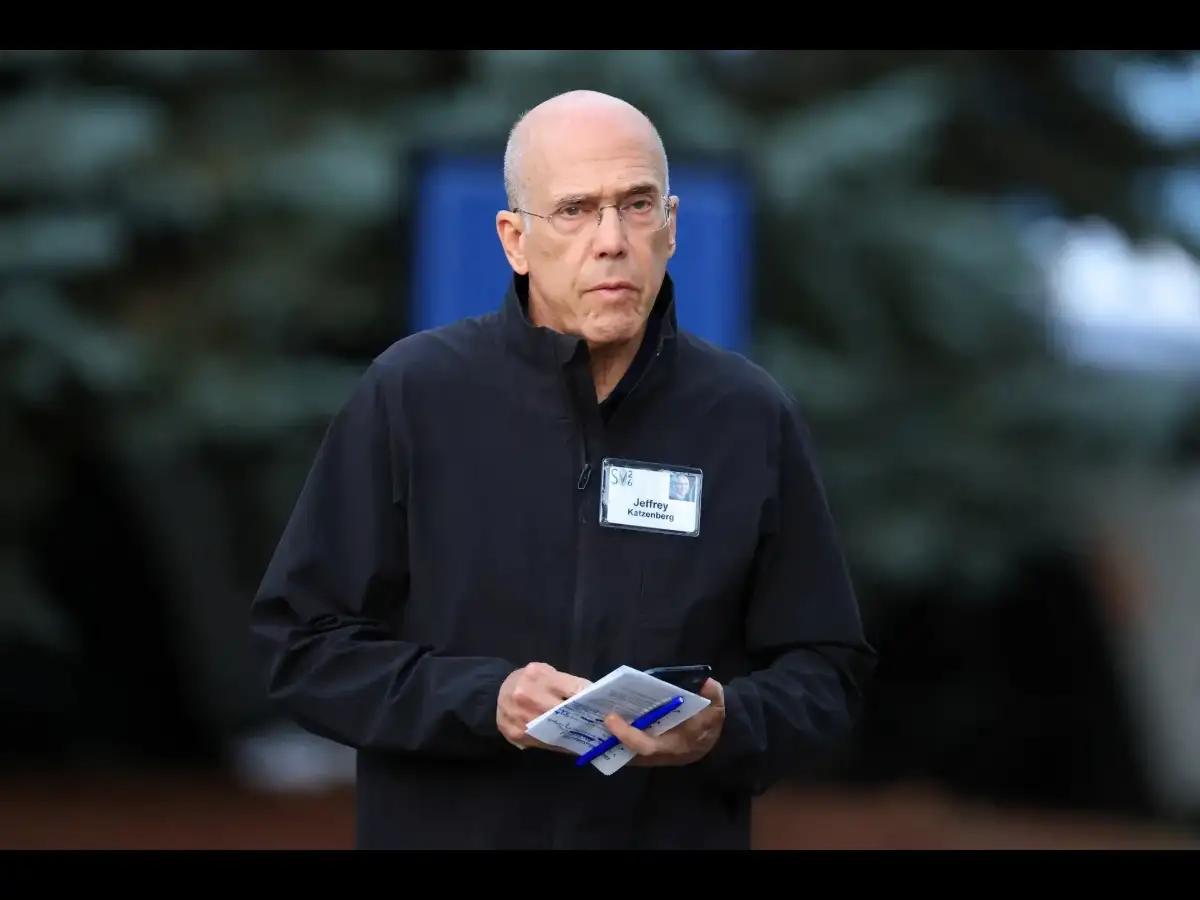
Hollywood legend Jeffrey Katzenberg, who helped lead the revival of Disney animation and co-founded DreamWorks, is optimistic about artificial intelligence (AI). Dismissing fears surrounding the technology, he said AI could help studios make more films and lead to new forms of storytelling.
In a lengthy post on X, Katzenberg wrote, “As the barriers and the costs come down, more films will get made, not fewer. Studios will get to take more risks. There will be more seats at the table, and very soon entirely new forms of storytelling.”

Katzenberg argued that animation was dismissed as a niche part of the entertainment business in the 1980s.
“Today it is one of the most beloved and profitable forms of storytelling in the world. In live action, filmmakers like Steven Spielberg, James Cameron and Peter Jackson embraced new visual tools not as shortcuts, but as instruments, and expanded cinema in the process,” he wrote.
Katzenberg compares AI resistance with the phonograph
Katzenberg compared the current resistance to AI with protests against the phonograph in the early 1900s.
In 1906, American composer John Philip Sousa published an essay titled The Menace of Mechanical Music . He warned that the phonograph could become “a substitute for human skill, intelligence and soul.”
“Sousa's fight was not really about the machine, it was about money. The machines were playing his compositions, and the men who built them weren't paying him a cent. His campaign helped create the Copyright Act of 1909. He did not stop the technology. He changed the terms under which it could use his work,” Katzenberg wrote.
He also pointed to the arrival of sound in movies about a century ago, when tens of thousands of musicians lost their jobs.
“The work of one composer and one orchestra was recorded for a film that went into thousands of theaters,” he wrote.