Get all your news in one place.
100's of premium titles.
One app.
Start reading
Latin Times
Latin Times
Politics
LatinTimes Staff Reporter

Judge Ends Trump Administration's Antisemitism Case Against Harvard

US President Donald Trump speaks alongside Dr. Ben Carson (L), his nominee for Secretary of Housing and Urban Development, Alveda King (2nd R), niece of civil rights icon Dr. Martin Luther King, Jr., and his daughter, Ivanka Trump (R), following a tour of the Smithsonian National Museum of African American History and Culture in Washington, DC, February 21, 2017. / AFP / SAUL LOEB (Credit: credit should read SAUL LOEB/AFP via Getty Images)

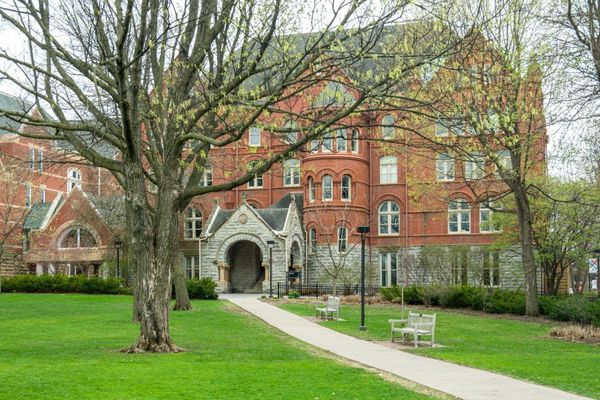
A federal judge in Boston has shut down the Trump administration's civil rights lawsuit against Harvard University, ruling that the antisemitism cited by government lawyers wasn't recent or widespread enough to prove the school is currently breaking federal law. Handed down Thursday, the dismissal is the clearest legal defeat the administration has suffered yet in its year-long standoff with the Ivy League school.

Why the judge said the case ran out of time

U.S. District Judge Richard G. Stearns, appointed by President Clinton, granted Harvard's request to toss the suit in a compact, four-page order. His reasoning centered on timing: nearly every incident the Justice Department pointed to happened during the 2023–24 school year, with only three more recent episodes, all from March 2025, added to the mix. Stearns found that even after prosecutors updated their complaint in June with additional allegations, it still didn't show wrongdoing happening in the present day. The government had formally warned Harvard about the alleged violations back in June 2025, and nothing in the case, he found, pointed to problems after that notice went out. He wrote that the incidents were "too isolated and episodic" to support the claim that the school remains out of compliance, according to NBC News.

A separate rebuke: rejecting the government's legal theory

Beyond the timing problem, Stearns pushed back on a broader argument the Justice Department had made — that a university could essentially never clear itself once federal officials had flagged a compliance problem, since any reasonable school would immediately start fixing things and could therefore always claim it was already in the process of complying. The judge called that reading a misunderstanding of what these enforcement cases are supposed to achieve: Congress designed them to push institutions toward compliance, not to punish schools indefinitely, as Harvard Magazine reported. By that logic, the outlet noted, Harvard's adoption of new protest guidelines, disciplinary reforms and the International Holocaust Remembrance Alliance's antisemitism definition already counted as a form of success for the government's underlying goal, even without a courtroom win.

What the government accused Harvard of — and the dollar figures in dispute

The Justice Department filed suit in March, arguing Harvard had shown "deliberate indifference" toward Jewish and Israeli students who were harassed, intimidated and in some cases physically confronted during campus protests that followed Hamas's October 7, 2023, attack on Israel. The financial stakes were substantial, though outlets describe them differently. Harvard Magazine reported the suit sought to recover more than $1 billion in grants already awarded to the university, on top of cutting off all future federal funding. CNN, by contrast, reported the government was trying to halt $2.6 billion in existing grants and separately force Harvard to repay an unspecified sum in past grant money.

How both sides answered the ruling

Harvard's attorneys had told the court the lawsuit was simply the latest move in what they called "the Government's ongoing campaign of retaliation" against a university that refused to bend to White House demands. A Harvard spokesperson declined to discuss Thursday's ruling directly. On the government's side, Assistant Attorney General for Civil Rights Harmeet Dhillon said officials disagreed with the outcome and were "assessing next steps," while stressing that the Civil Rights Division's antisemitism casework continues elsewhere in the country, per CBS News. Outside the courtroom, more than 100 Jewish faculty and staff at Harvard had already gone on record months earlier calling the lawsuit an overreach that risked doing more harm than good to Jewish life on campus, a letter that ultimately drew roughly 120 signatures, according to the Harvard Crimson. Legal scholars were split on the case's merits: Cornell labor law professor Risa Lieberwitz framed the lawsuit as a new strategy by the administration to pressure the university into capitulating, rather than a conventional civil rights case, per the Boston Globe.

One skirmish in a much bigger legal war

Thursday's outcome resolves only one front of Harvard's sprawling legal fight with Washington. A different judge, Allison Burroughs, previously sided with Harvard after the administration tried to freeze billions in research funding; that ruling is now being appealed to the First Circuit, the Harvard Crimson noted. Separately, courts have also blocked government attempts to bar Harvard from enrolling international students, a dispute that remains unresolved, according to PBS NewsHour. The Justice Department is additionally pursuing a lawsuit demanding Harvard turn over applicant-level admissions data, and in July it opened a new compliance review into whether Harvard's China-linked financial aid programs unfairly favor foreign students over American ones, according to the Harvard Crimson's coverage of that probe and a broader rundown from Higher Ed Dive. Notably, the dismissal came just a day after three dozen universities, including fellow Ivy League schools Brown, Columbia and Cornell, filed a brief backing Harvard in the separate funding-freeze appeal, a sign of how closely watched the broader fight has become, per the Jewish Telegraphic Agency.

What comes next

Legal analysts note the Justice Department retains the option to appeal Thursday's dismissal, according to Inside Higher Ed, though as of Thursday evening no formal notice of appeal had been reported. For now, Harvard has cleared one legal hurdle in a fight that still includes a funding appeal, an international-enrollment dispute, an admissions-data lawsuit and a fresh financial aid probe — meaning Thursday's win narrows, but doesn't come close to ending, the university's exposure to the administration.

Sign up to read this article
Read news from 100's of titles, curated specifically for you.

Already a member? Sign in here
Related Stories
Top stories on inkl right now
One subscription that gives you access to news from hundreds of sites
Already a member? Sign in here
Our Picks
Fourteen days free
Download the app
One app. One membership.
100+ trusted global sources.