Get all your news in one place.
100's of premium titles.
One app.
Start reading
The Conversation
The Conversation
Michelle Grattan, Professorial Fellow, University of Canberra

Jim Chalmers blames likely interest rate rise on Middle East war

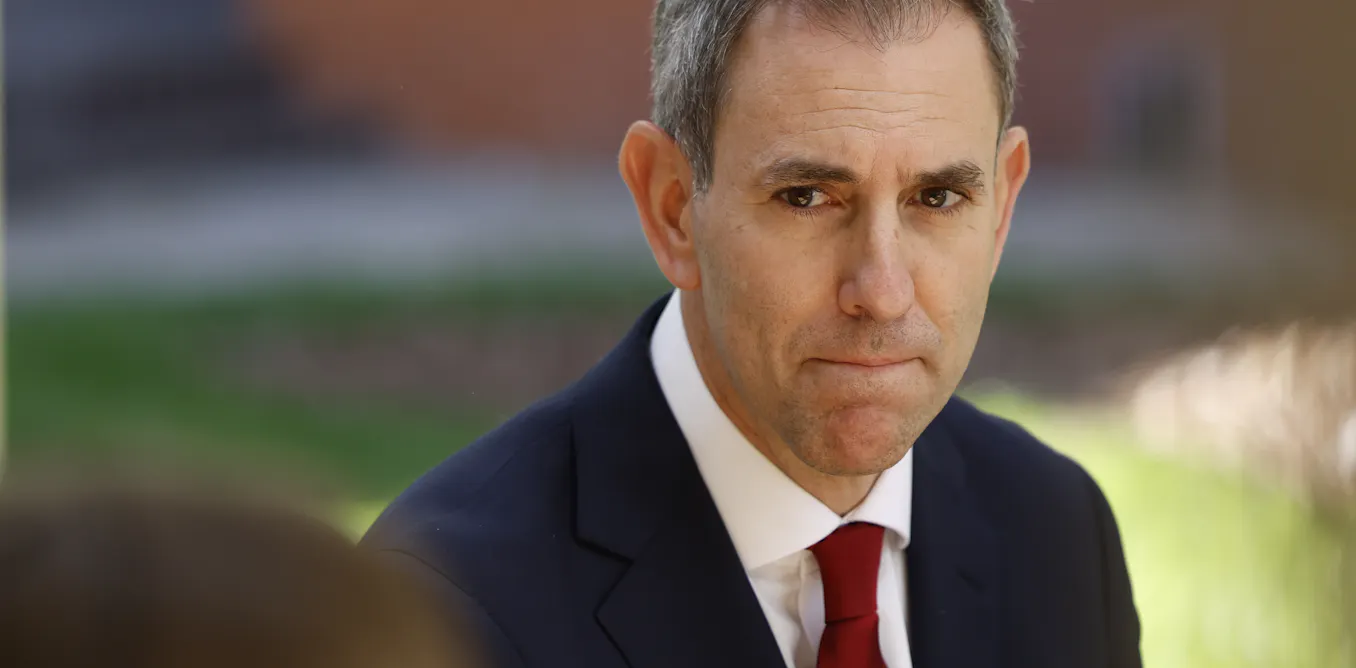
Treasurer Jim Chalmers has prepared the way for Tuesday’s expected interest rate rise by pointing to the inflationary pressures from the ongoing Middle East conflict.

Chalmers said Monday that while he wasn’t going to predict the decision of the independent Reserve Bank, there was a near-universal expectation by economists and markets that rates are going up around the world and potentially in Australia, too.
“We will see much more pressure on inflation from developments in the Middle East in particular,” he said.

“Across the major advanced economies, there is an expectation of higher interest rates […] as a consequence of higher inflation coming from principally oil prices but with other considerations and factors, as well.”

The interest rate decision will be followed by the latest inflation figures on Wednesday. “What everybody expects there is that headline inflation will come up because of global oil prices flowing through to petrol prices here in Australia,” Chalmers said. “That’s a big driver of the inflation we’re seeing.” Headline inflation is currently 3.5%.

If rates do rise on Tuesday, that will be the fourth increase this year.

Chalmers said he understood the extra pressure the rate rises are putting on Australians. He added “until we get that inflation number down back towards more normal levels in the target range, then there will continue to be pressure on real wages, wages growth itself.”

The Commonwealth Bank declared in its note to clients: “all steam ahead” for a rate rise. “We now expect the RBA to hike the cash rate by 25 [basis points] to 4.60% at its 28‑29 September meeting,” the bank said.

Its previous call had been for a rise in November, but it said there had been a build up of factors suggesting an earlier increase in recent weeks, including “oil prices and the conflict in the Middle East”.

All four major banks are predicting a Tuesday rise.

The government on Monday also announced the final budget outcome for the 2025-26 financial year has come in at a deficit of $22.3 billion – $6 billion better than the budget estimate of $28.3 billion.

Receipts were up $4.6 billion, while outlays were $1.4 billion under what had been budgeted in May due to under-spending in areas including aged care, the Pharmaceutical Benefits Scheme and child care.

Chalmers stressed the revenue improvements were not from commodity prices or wage earners’ taxes, but from higher-than-anticipated investor and superannuation income.

The boost in revenue put receipts at 24.1% of GDP.

The growth in real government spending was 4.3%, down from 5.5% the previous year. But it had risen as a proportion of GDP from 26.2% to 26.9%.

Chalmers acknowledged there was more work to be done to contain government spending, while lauding what the government had done so far.

Shadow Treasurer Tim Wilson said, however, that Chalmers could not “kick his spending addiction”, which “keeps fuelling inflation and higher interest rates.”

This article was originally published on The Conversation. Read the original article.

Sign up to read this article
Read news from 100's of titles, curated specifically for you.
Already a member? Sign in here
Related Stories
Top stories on inkl right now
One subscription that gives you access to news from hundreds of sites
Already a member? Sign in here
Our Picks
Fourteen days free
Download the app
One app. One membership.
100+ trusted global sources.