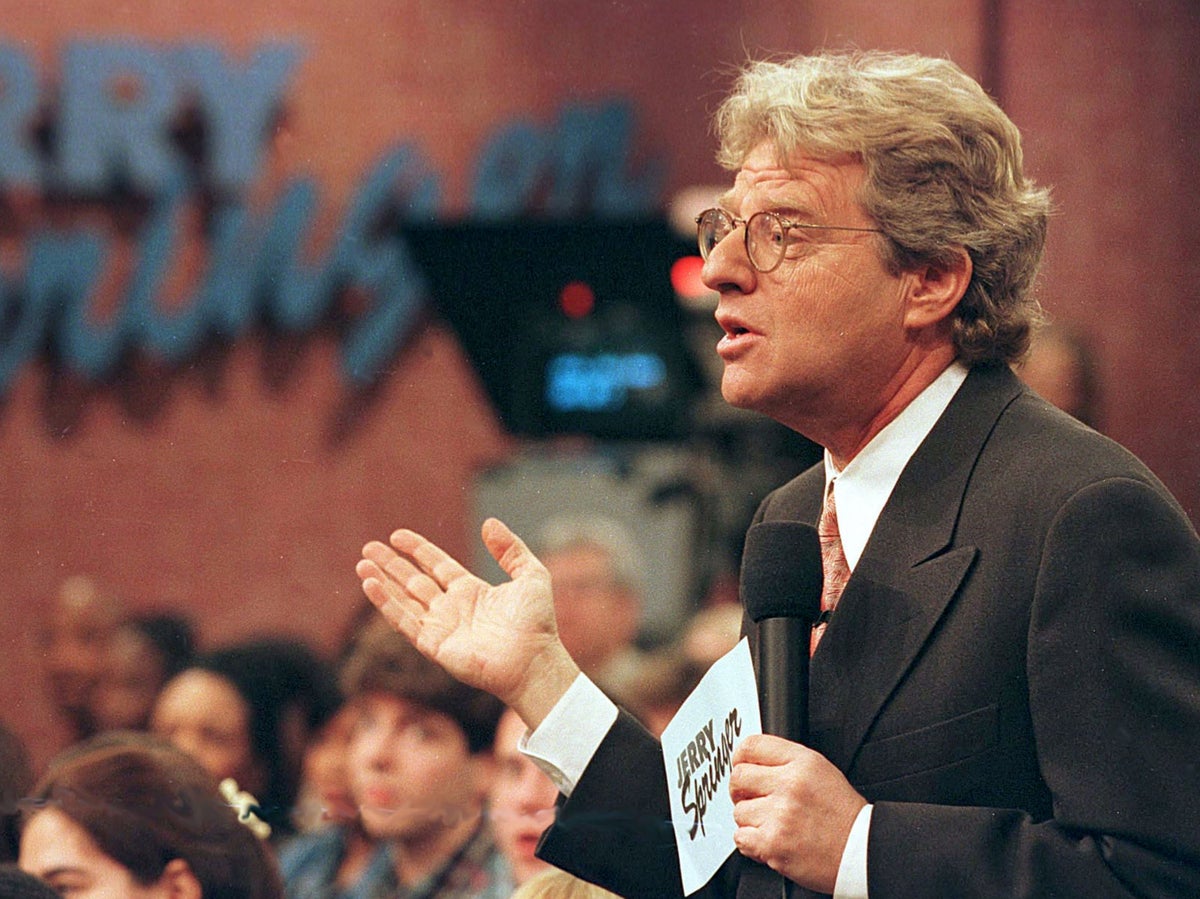
The debate on Jerry Springer’s legacy began long before his death on Thursday at the age of 79-years-old. Obituaries for the particular brand of exploitative reality television that dominated the late 1990s featured him so prominently that they might have served as his own.
The former mayor of Cincinnati turned talk show host brought a steady dose of violence into the living rooms of American homes every afternoon, and became a cultural phenomenon in the process. But even as academics, television writers and commentators argued over his place in American cultural history, Springer seemed to bristle at suggestions of his own significance.