Get all your news in one place.
100's of premium titles.
One app.
Start reading
Tom’s Hardware
Tom’s Hardware
Technology
Anton Shilov

Jensen says Nvidia now has 'zero percent' market share in China — says US export policy 'has already largely backfired'

Nvidia.

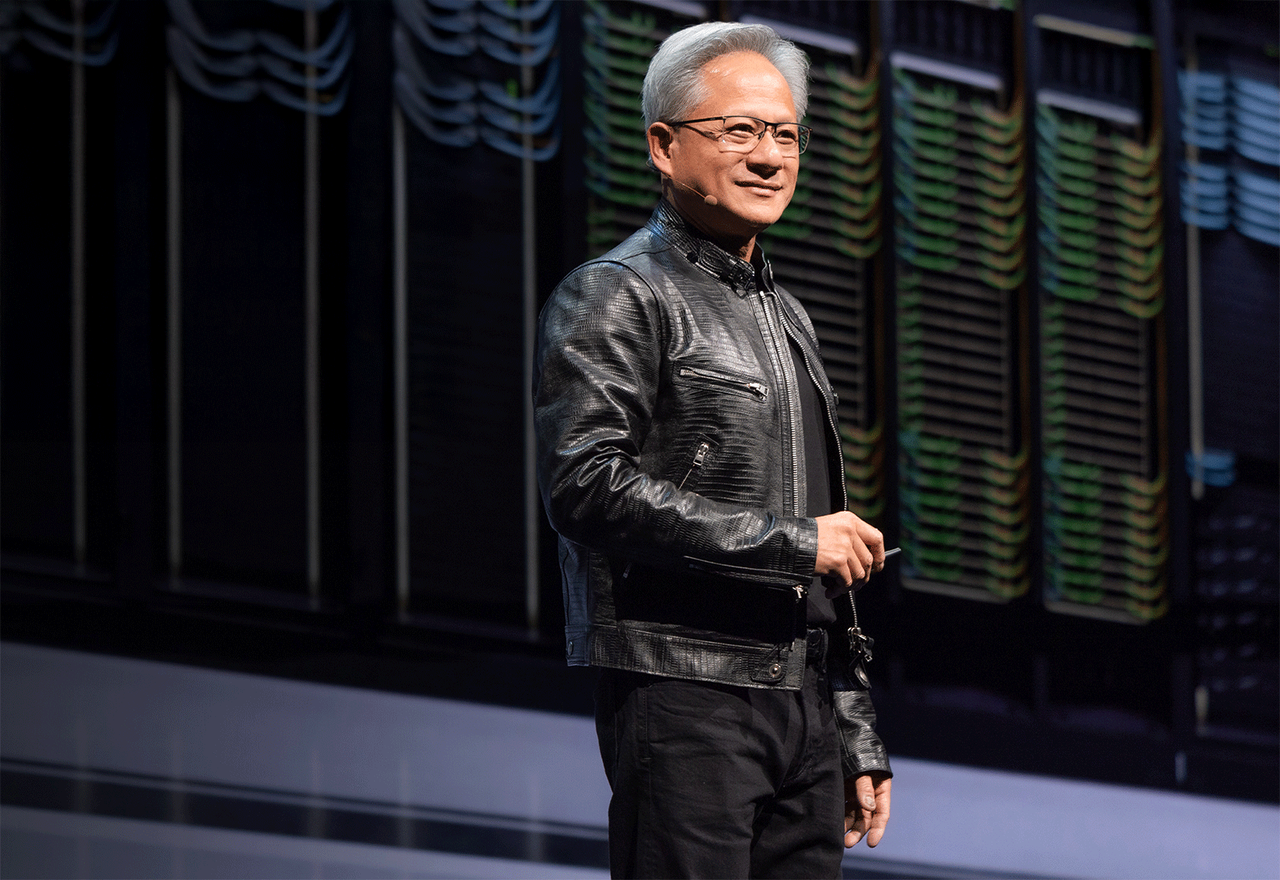
Nvidia CEO Jensen Huang said that the company's market share of AI accelerators in China has now dropped to 0%. The drop is staggering, given that the company owned the lion's share of China's AI accelerator market just two years ago.

"In China, we have now dropped to zero," Huang said in an interview with the Special Competitive Studies Project, a bipartisan initiative by American lawmakers aimed at ensuring long-term competitiveness of the U.S. "Conceding an entire market the size of China probably does not make a lot of strategic sense, so I think that has already largely backfired. Maybe it made sense at the time, but I think the policy really needs to be dynamic and needs to stay with the times."

"I think it would be fairly safe to say that having American chip companies and other companies in China makes a lot of sense."

Earlier this year, tech research firm Bernstein estimated that Nvidia’s share of China’s AI GPU market could fall from 66% in 2024 to roughly 8% in the coming years, both due to restrictions imposed by the U.S. government and because domestic vendors are moving to cover up to 80% of demand. According to Huang, this happened much later, though again, he talks only about Nvidia's direct sales to Chinese customers.

Meanwhile, Huang warns that even without leading AI GPUs and software stacks developed in America, China remains a formidable competitor when it comes to frontier AI models.

"American companies win around the world," Huang said. "The argument there is that across the five-layer cake, there's one particular layer that is too important because in the others, China can get ahead. They have cheaper energy. They have incredible talent. So, they [have] the number of science and math experts, and as a result of that, the number of AI researchers in China is quite extraordinary, it's one of their national treasures."

Given the situation, Huang also contends that U.S. export controls may be strategically counterproductive. He argues that conceding a market of that scale accelerates China's push toward self-sufficiency, while continued participation of American companies in that market would help extend the global reach of the American AI technology stack.

Indeed, Chinese developers are increasingly relying on local hardware, with companies like Huawei, Cambricon, Moore Threads, and MetaX advancing both silicon and software. In software — the so-called CUDA moat in particular — remains the main frontier of American AI technology in China that local companies have yet to conquer.

Ultimately, Huang warns that fear-driven narratives and export controls could slow the deployment of AI more broadly as China and other regions embrace it more aggressively as an economic tool. Long-term leadership will depend less on restricting global rivals and more on ensuring that the American AI ecosystem dominates globally, according to Huang.

Sign up to read this article
Read news from 100's of titles, curated specifically for you.
Already a member? Sign in here
Related Stories
Top stories on inkl right now
One subscription that gives you access to news from hundreds of sites
Already a member? Sign in here
Our Picks
Fourteen days free
Download the app
One app. One membership.
100+ trusted global sources.