Get all your news in one place.
100's of premium titles.
One app.
Start reading
The Independent UK
The Independent UK
Maroosha Muzaffar

Japan says it’s time for ‘taboo-free’ discussions about acquiring nuclear weapons

Japan’s defence minister renewed calls for opening a debate on acquiring nuclear weapons, saying Tokyo could not afford to rule out security options as tensions with China, Russia and North Korea continued to intensify.

“The idea that we aren’t even allowed to have a discussion on this matter is a bit at odds with my sense of crisis,” Shinjiro Koizumi said in a TV interview on Monday.
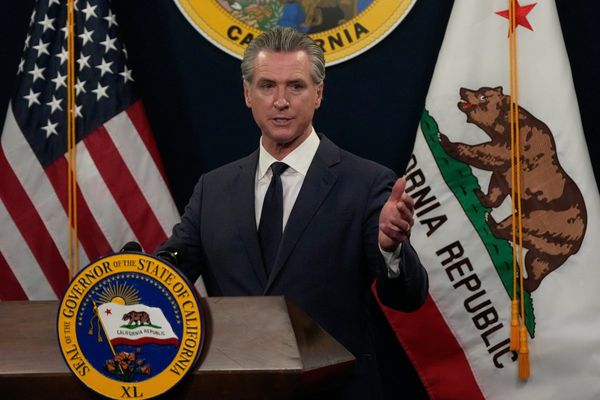
He argued that Japan should discuss its nuclear policy “without taboos”, including the possibility of revisiting its long-standing non-nuclear principles and of acquiring nuclear-powered submarines.

The principles, adopted in 1967, commit Japan to not possessing or producing nuclear weapons, or permitting their introduction to its territory.

Mr Koizumi said the government wasn’t currently committing to any policy, but that options shouldn’t be excluded before they were properly debated. At a press conference on Tuesday, he stressed the need to explain the changing security environment to the public, particularly as Japan was the only nation ever to suffer nuclear attacks in wartime. Japan was attacked with atomic bombs by the US towards the end of World War II, causing unprecedented death and destruction in Hiroshima and Nagasaki.

Mr Koizumi argued that Japan should “carefully explain” changes in the global security situation as well as the actions of neighbouring countries so that the public could share his government’s assessment of the risks.

“I believe it’s safe to say that there are absolutely no grounds for optimism regarding the security environment surrounding Japan,” he said.

Pointing to the nuclear capabilities of China and Russia and the expanding nuclear arsenal of North Korea, he asked whether Japan could ensure peace by simply avoiding discussion of topics it found difficult.

Mr Koizumi cited France’s attempt to strengthen its nuclear deterrent and Finland’s decision to amend laws to permit the stationing of nuclear weapons on its territory as examples of a wider shift in security policy.

Finland is joining France’s “Forward Nuclear Deterrence Initiative”, which seeks to strengthen Europe’s ability to deter threats through closer cooperation around French nuclear capabilities.

“The world is now shifting toward this kind of phase, and within that context, decisions are being made without any taboos,” he said. “Japan must possess the capabilities to firmly counter threats directed at us.”

Mr Koizumi’s comments come as the government prepares to revise three key national security documents by the end of the year. The review may include discussion of the nation’s non-nuclear principles.

Discussions are picking up in particular around the third principle, which prohibits Japan from allowing nuclear weapons to be introduced on its territory. The discussions became more pronounced during this year’s Hiroshima and Nagasaki commemorations. Prime minister Sanae Takaichi said that Japan maintained the principles and reaffirmed commitment to a world without atomic weapons. But when asked whether the principles would be explicitly included in the three strategic documents due to be revised by the end of the year, she declined to comment.

Nagasaki mayor Suzuki Shiro, in contrast, described nuclear weapons as an “absolute evil” at the same commemoration, warning against relying on nuclear deterrence and calling on the federal government to uphold the non-nuclear principles.

The issue of nuclear-powered submarines is also moving closer to the mainstream of Japan’s defence debate.

Mr Koizumi said earlier this month that Tokyo wasn’t ruling out acquiring such vessels, shortly after a US navy official expressed support for the idea.

Mr Koizumi’s comments came as the United Nations warned of a deteriorating global nuclear security environment.

UN secretary general Antonio Guterres told a high-level meeting in New York on Tuesday that the world was experiencing its most dangerous nuclear period since the Cold War.

“We meet at the most dangerous nuclear moment since the end of the Cold War,” Mr Guterres said, warning that nuclear arsenals were being expanded and modernised.

He cited the failure of the latest review conference of the Treaty on the Non-Proliferation of Nuclear Weapons to reach a consensus.

“These are not abstract diplomatic setbacks,” Mr Guterres said. “They increase the risks of arms racing, escalation, and catastrophic miscalculation.”

He called on nuclear-armed states to return to dialogue and stressed that nuclear war couldn’t be won and must never be fought.

Japan’s ambassador to the UN, Kazuyuki Yamazaki, said Tokyo was committed to the Comprehensive Nuclear-Test-Ban Treaty and its early entry into force. He also said Japan would continue its effort to pass the lessons of Hiroshima and Nagasaki to future generations.

Prime minister Sanae Takaichi attends a memorial ceremony on the 81st anniversary of the US dropping an atomic bomb on Hiroshima (AFP/Getty)

Stephen Nagy, professor of politics and international studies at International Christian University in Tokyo, noted the growing discussions about nuclear weapons reflected a broader change in Japan’s security environment.

“The world’s only nation to suffer atomic bombing in war codified its ‘nuclear allergy’ into the Three Non-Nuclear Principles of 1967 – no possession, no production, no introduction of nuclear weapons, and positioned itself as the moral centre of the global disarmament movement,” he said.

“That allergy is now showing signs of remission, and the cure has been administered not by Tokyo but by Beijing, Pyongyang, and Moscow.”

Sign up to read this article
Read news from 100's of titles, curated specifically for you.
Already a member? Sign in here
Related Stories
Top stories on inkl right now
One subscription that gives you access to news from hundreds of sites
Already a member? Sign in here
Our Picks
Fourteen days free
Download the app
One app. One membership.
100+ trusted global sources.