
Get all your news in one place.
100's of premium titles.
One app.
Start reading
The Conversation
The Conversation
Kevin C. Taylor, Director of Religious Studies and Instructor of Philosophy, University of Memphis

Japan's 'waste not, want not' philosophy has deep religious and cultural roots, from monsters and meditation to Marie Kondo's tidying up

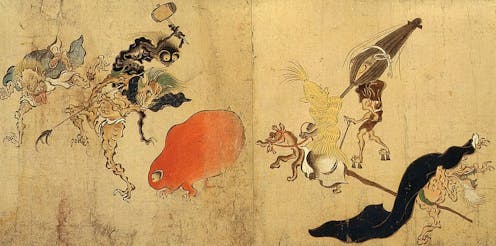
Monsters and spirits –including 'tsukumogami,' which are made of everyday objects – in the 'Hyakki-Yagyō-Emaki' scroll, painted between the 14th and 16th centuries. Wikimedia Commons

The word “waste” is often frightening. People fear not making the most of their time, whether at work or at leisure, and failing to live life to the fullest.

Warnings against waste run especially deep in Japanese culture. Many Americans are familiar with the famous decluttering technique of organization guru Marie Kondo, who wrote “The Life-Changing Magic of Tidying Up.” Travelers to Japan may hear the classic expression “mottainai,” which means “don’t be wasteful” or “what a waste.” There are even gods, spirits and monsters, or “yokai,” associated with waste, cleanliness and respect for material goods.

Sign up to read this article
Read news from 100's of titles, curated specifically for you.
Already a member? Sign in here
Related Stories
Top stories on inkl right now
One subscription that gives you access to news from hundreds of sites
Already a member? Sign in here
Our Picks
Fourteen days free
Download the app
One app. One membership.
100+ trusted global sources.






