Get all your news in one place.
100’s of premium titles.
One app.
Start reading
Euronews
Euronews
Euronews

Japan’s long game: Investment and resilience in an uncertain world

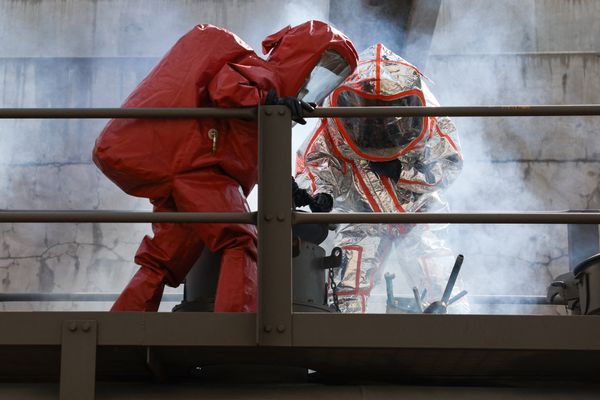
In this context, resilience has become a practical priority for governments and businesses. On Wednesday January 21, Euronews hosted a high-level debate, Partnering with Japan: Strategic Investment for Enhanced Resilience.

Senior figures from business and policy in Japan and Europe exchanged views on three broad themes: Japan’s strengthening of national resilience through strategic investment; how public-private partnerships can facilitate risk management and innovation; and, finally, Japan’s role in a geopolitical context. Together, these discussions looked at how investment decisions made today can shape economic security in the years ahead.
A sound economy and a different approach

Yoshito Hori, founder and president of GLOBIS University and founding partner of GLOBIS Capital Partners, opened by providing some context around Japan’s economy. He noted that the Nikkei index has “doubled in three years and tripled in five years,” adding that “companies have been making record profits for five consecutive years.”

Labour market conditions also signal a shift after decades of stagnation. “Unemployment right now is about 2.6 per cent… and wages are up by 5 per cent,” he said, adding that Japan is finally emerging from a prolonged period of deflation. “We have been suffering… deflation for about 30 years, but now… the BOJ is raising interest rates.”

Taken together, he said, these indicators show that “the Japanese economy is sound.”

Hori argued that Japan’s industrial strategy differs from those pursued by other advanced economies. Rather than relying on a top-down model, he described Japan’s approach as “bottom-up… more of a consensus and ecosystem approach”. This involves building a consortium of industry leaders to share research and strengthen entire sectors.

Economic security as a source of growth

Kumiko Pivette, geopolitical risk advisory lead at PwC Japan, said a “notable” feature of the current agenda is that economic security is being framed as “growth opportunities” rather than purely defensive measures.

She explained that the strategy distinguishes between traditional “growth investment” and what she described as “crisis management investment”. According to Pivette, this second category is about preparing for risks that extend beyond national borders. Japan, she said, aims to take a leading role in addressing “economic security challenges, food security, energy security… health and agriculture securities,” turning preparedness into “a growth engine”.

Europe’s view on resilience

From a European policy perspective, Jan-Hein Chrisstoffels, senior research fellow at the Clingendael Institute, argued that Japan’s outlook appears stronger still when set against the current geopolitical landscape. He pointed to the growing use of trade and economic measures as tools of coercion, noting that “our economic interdependencies now have proven to be vulnerabilities.”

Chrisstoffels outlined three “avenues out of there”: continued support for the free-trade system; stronger protection against coercion and overcapacity; and “seeking security through strategic investment.” He added that Japan and Europe are well placed to work together, saying they are “ideally positioned… to take this leadership role when the US steps back.”

Zsolt Darvas, senior fellow at Bruegel, reinforced the message that resilience has already been tested. Despite global shocks, he said, “overall exports are still doing very well,” suggesting that “these two economies are rather resilient”.

From prediction to cooperation

Pivette also described how Japanese companies are adapting to geopolitical risk. Businesses once treated politics and commerce as largely separate, she said, but increasingly find themselves “in the middle of conflict between nations”.

The invasion of Ukraine marked a turning point. “That was the wake-up call,” she said, prompting a shift away from trying to predict single outcomes. “It’s not about the crystal ball… it’s about the scenario planning.”

As the discussion concluded, panelists returned to the importance of cooperation. Pivette summed it up succinctly: “dialogue and collaboration” are essential, because “no one state can establish… economic security standing alone.”

That emphasis on partnership – between government and business, and between Japan and Europe – emerged as the central condition for turning strategic ambition into lasting resilience.

Sign up to read this article
Read news from 100’s of titles, curated specifically for you.
Already a member? Sign in here
Related Stories
Top stories on inkl right now
One subscription that gives you access to news from hundreds of sites
Already a member? Sign in here
Our Picks
Fourteen days free
Download the app
One app. One membership.
100+ trusted global sources.