
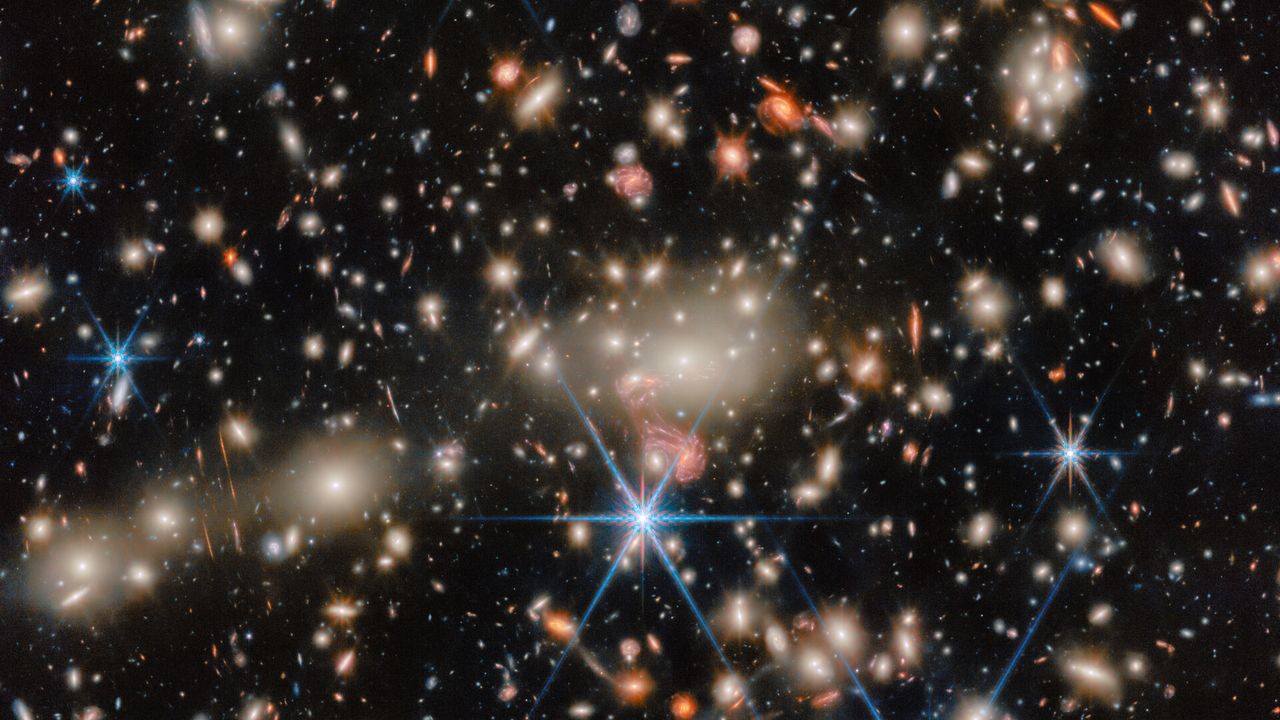
Astronomers have spotted an intriguing triple-galaxy system, nicknamed "The Stingray," that dates to when the universe was just over 1.1 billion years old. A new analysis of the celestial sea creature has revealed an object that may provide clues about the nature of mysterious cosmic objects dubbed "little red dots" (LRDs).
LRDs were first observed in 2022 by the James Webb Space Telescope (JWST). Astronomers initially proposed that these compact red objects, which seem to permeate the very early universe, could be galaxies that host actively feeding black holes known as active galactic nuclei (AGNs). Alternative LRD theories involve ancient supermassive stars on the verge of collapse and exotic black hole stars.