Get all your news in one place.
100's of premium titles.
One app.
Start reading
LiveScience
LiveScience
Brandon Specktor

James Webb telescope spots Milky Way's long-lost 'twin' — and it is 'fundamentally changing our view of the early universe'

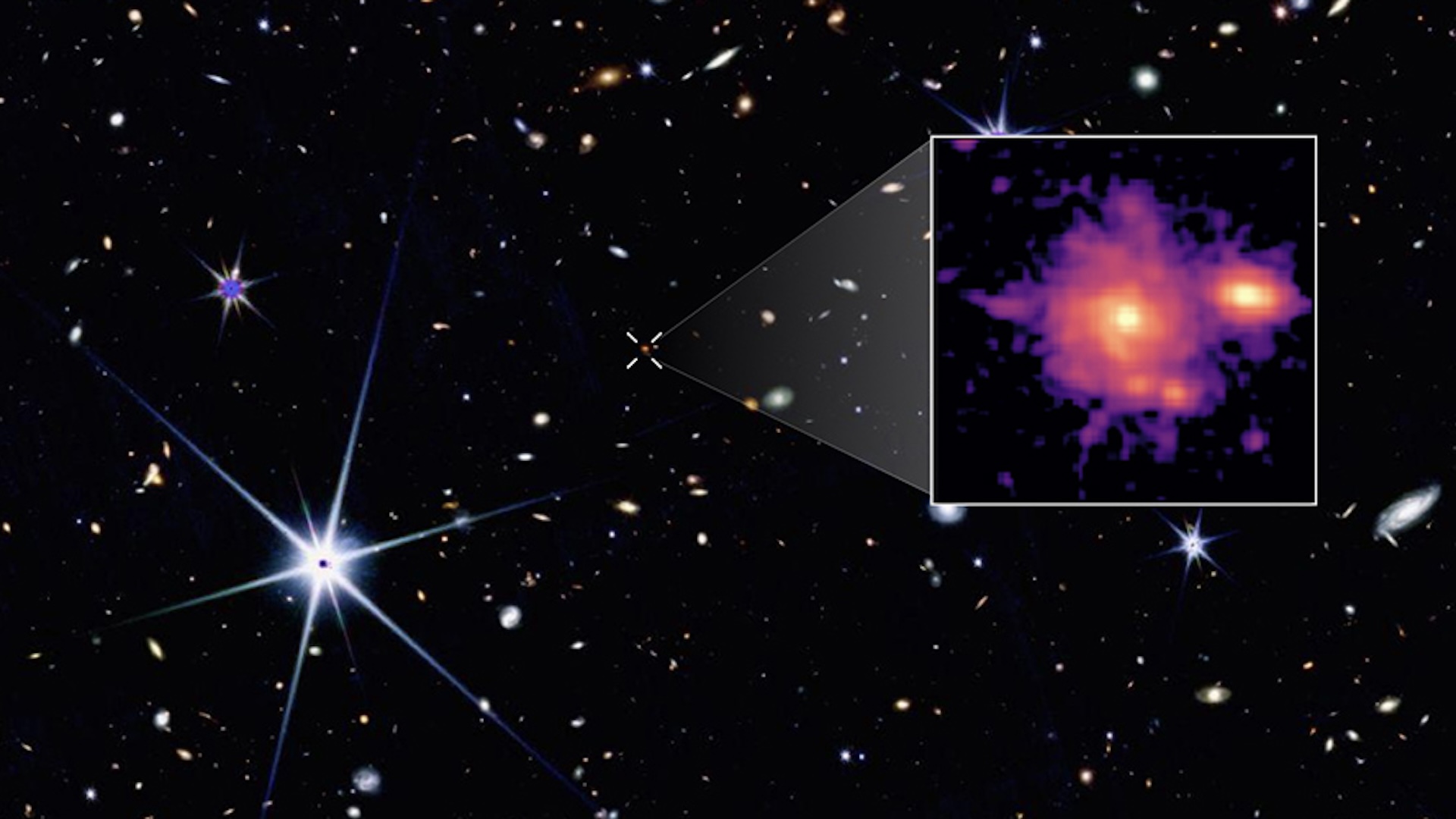
A photo of distant stars and galaxies, with an inset showing a galaxy similar to the Milky Way.

When astronomers used the James Webb Space Telescope (JWST) to peer deep into the early universe, they made a serendipitous discovery: a galaxy that appears to be the Milky Way's ancient twin sibling waving its spiral arms back at us.

In new images that capture light emitted just 1 billion years after the Big Bang, when the universe was roughly one-fourteenth its current age, the newly discovered galaxy appears fully formed, with a central bulge of old stars, a vibrant disk of stellar newborns, and two distinct spiral arms. Given its recognizable features and impressive size, the researchers have dubbed this galaxy the most distant Milky Way "twin" ever observed.

Sign up to read this article
Read news from 100's of titles, curated specifically for you.
Already a member? Sign in here
Related Stories
Top stories on inkl right now
One subscription that gives you access to news from hundreds of sites
Already a member? Sign in here
Our Picks
Fourteen days free
Download the app
One app. One membership.
100+ trusted global sources.