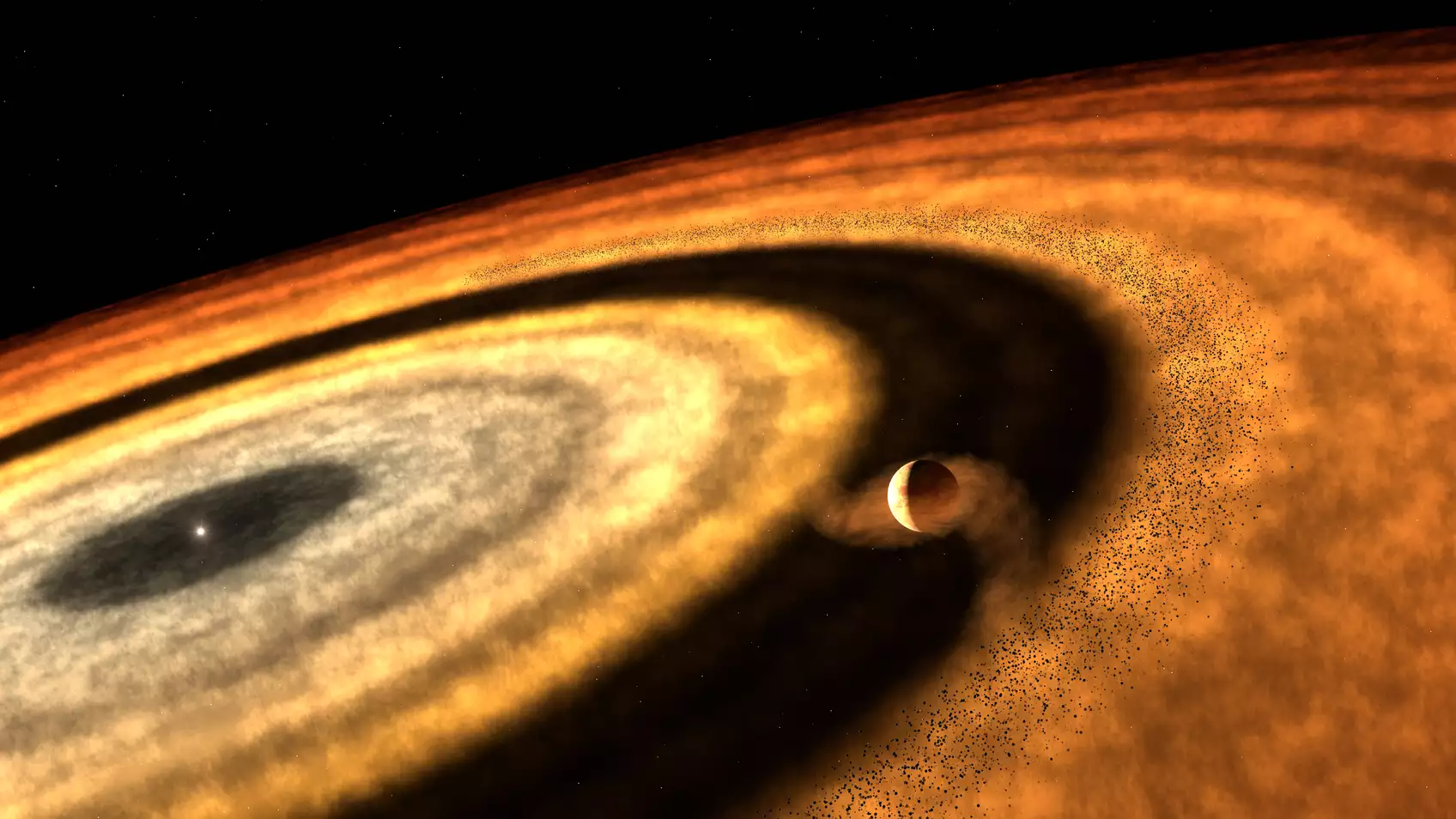
Astronomers using NASA's James Webb Space Telescope (JWST) have identified several surprising molecules in the scorching clouds of a "hellish" alien world. One of the compounds has never been seen in any planetary atmosphere before.
The exoplanet, dubbed WASP-121b, is a gas giant, around 1.2 times more massive than Jupiter and roughly 1.8 times as wide, that was first discovered in 2016. It is located approximately 880 light-years from the solar system and orbits extremely close to its home star, circling the alien sun every 30.5 hours. Its extreme proximity to the star means that it is "tidally locked," similar to how the moon is trapped around Earth, where one side of the planet constantly faces the star while the other is always pointed away. If it were to get any closer to the star, the planet would likely be ripped apart.