Get all your news in one place.
100's of premium titles.
One app.
Start reading
LiveScience
LiveScience
Stephanie Pappas

James Webb telescope solves 20-year-old Hubble conundrum — and it could finally explain why the universe's oldest planets exist

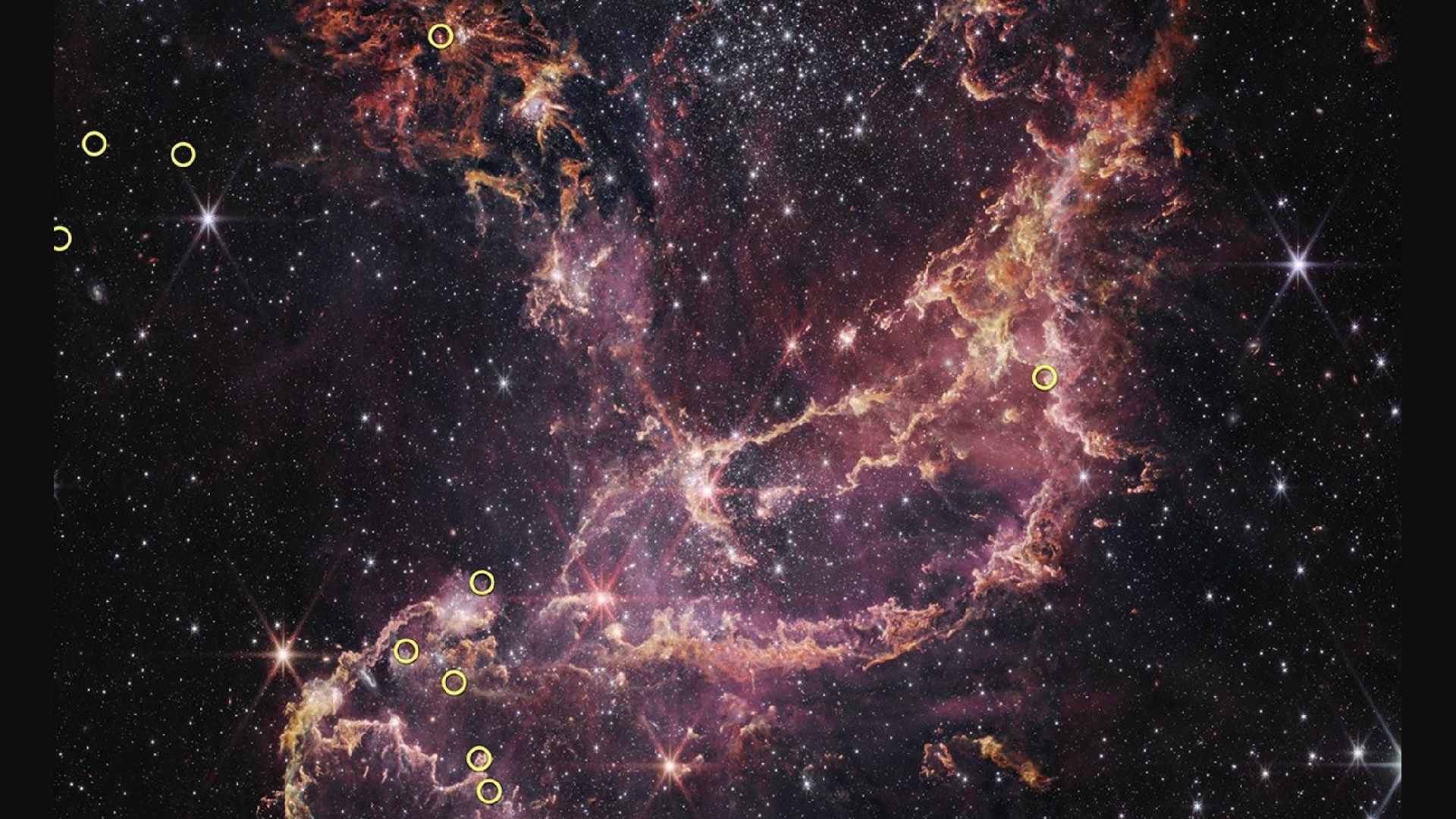
An image of star cluster NGC 346 with new stars circled.

The James Webb Space Telescope (JWST) has just solved a 20-year-old mystery about how ancient stars could host massive planets.

In the early 2000s, the Hubble Space Telescope observed the oldest planet ever, an object 2.5 times as large as Jupiter that formed in the Milky Way 13 billion years ago, less than a billion years after the universe was born. The discovery of other old planets soon followed. This puzzled scientists, as stars in the early universe should have consisted mostly of light elements like hydrogen and helium, with almost none of the heavy elements — things like carbon and iron — that make up planets.

Sign up to read this article
Read news from 100's of titles, curated specifically for you.
Already a member? Sign in here
Related Stories
Top stories on inkl right now
One subscription that gives you access to news from hundreds of sites
Already a member? Sign in here
Our Picks
Fourteen days free
Download the app
One app. One membership.
100+ trusted global sources.