
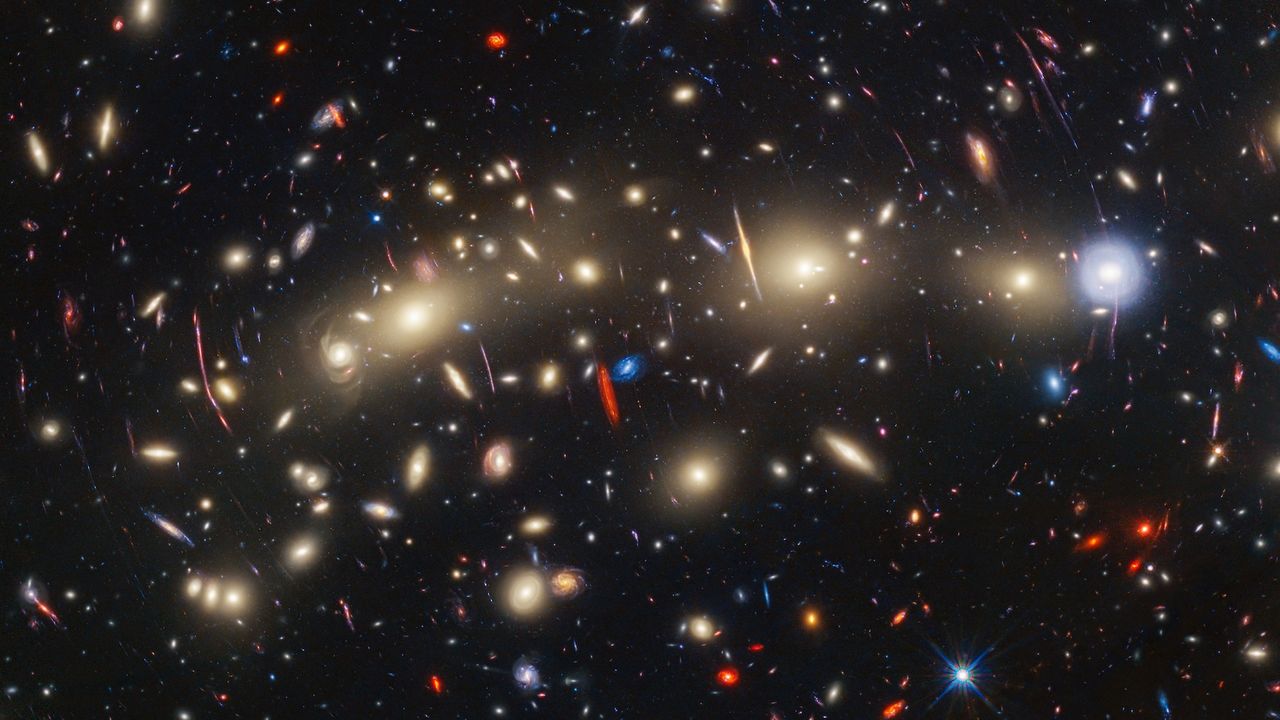
Astronomers using the James Webb telescope may have discovered some of the universe's first stars, and they may offer clues to how galaxies form. Using the James Webb Space Telescope (JWST) and a phenomenon first predicted by Albert Einstein, the scientists spotted the early stars, known as Population III stars, in a distant cluster called LAP1-B, located 13 billion light-years from Earth. They described their results Oct. 27 in The Astrophysical Journal Letters.
Population III stars, sometimes called dark stars, are theorized to be some of the first stars that formed after the Big Bang about 13.8 billion years ago. According to this theory, hydrogen and helium combined with dark matter, creating gargantuan stars a million times the mass of the sun and a billion times as bright as our star.















