
Get all your news in one place.
100's of premium titles.
One app.
Start reading
LiveScience
LiveScience
Briley Lewis

James Webb telescope detects light from a small, Earth-like planet — and finds it's missing its atmosphere

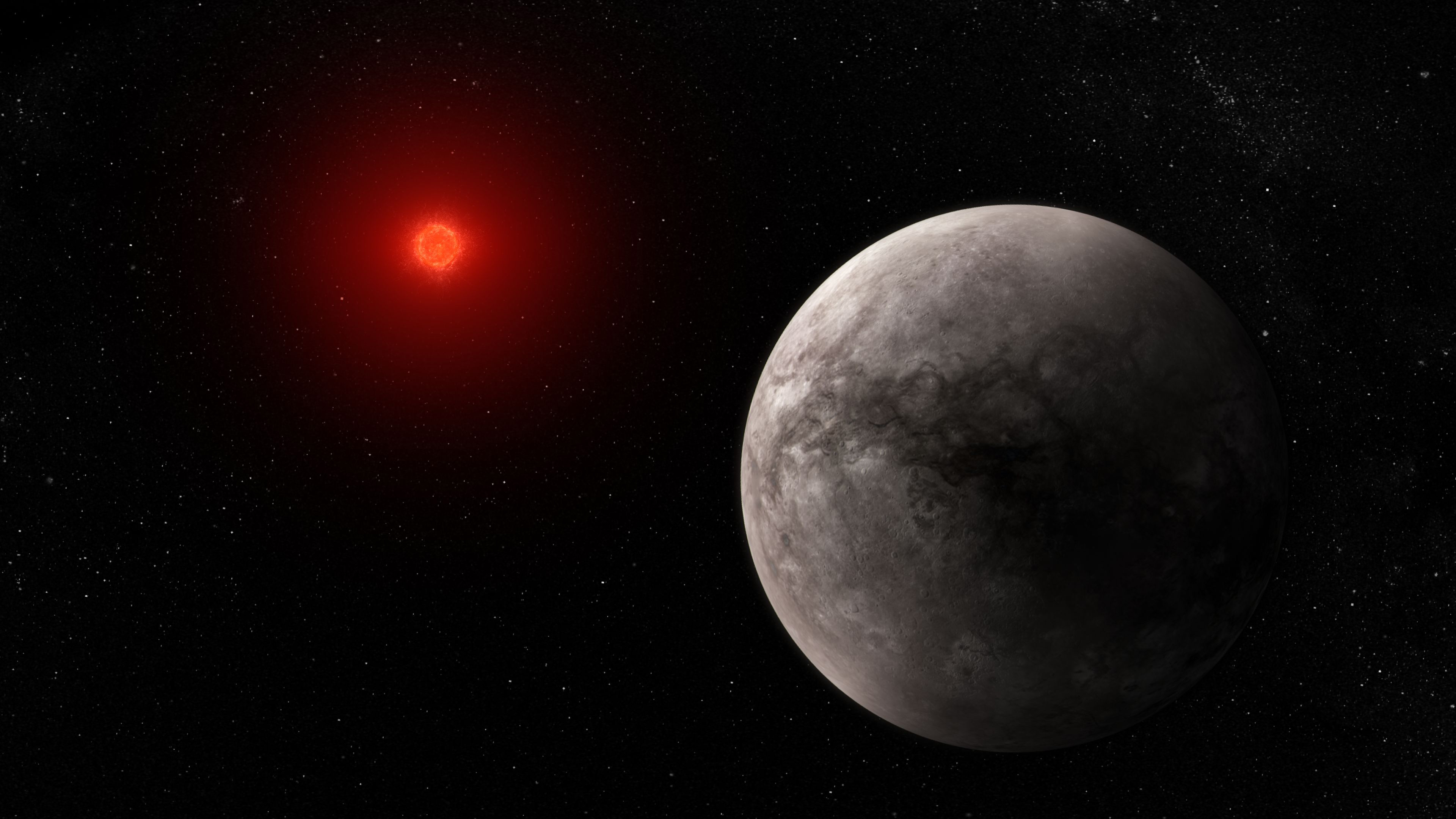
An illustration of a rocky, Earth-like planet soaking up heat from its small red sun

Five years ago, NASA's infrared Spitzer Space Telescope helped discover a family of seven rocky exoplanets orbiting the same star, known as TRAPPIST-1. Now, NASA's new infrared powerhouse — the James Webb Space Telescope (JWST) — measured the temperature of one of those worlds, TRAPPIST-1b, in new research published in the journal Nature. 

The bad news: The Earth-like planet is almost certainly uninhabitable.

Sign up to read this article
Read news from 100's of titles, curated specifically for you.
Already a member? Sign in here
Related Stories
Top stories on inkl right now
One subscription that gives you access to news from hundreds of sites
Already a member? Sign in here
Our Picks
Fourteen days free
Download the app
One app. One membership.
100+ trusted global sources.