
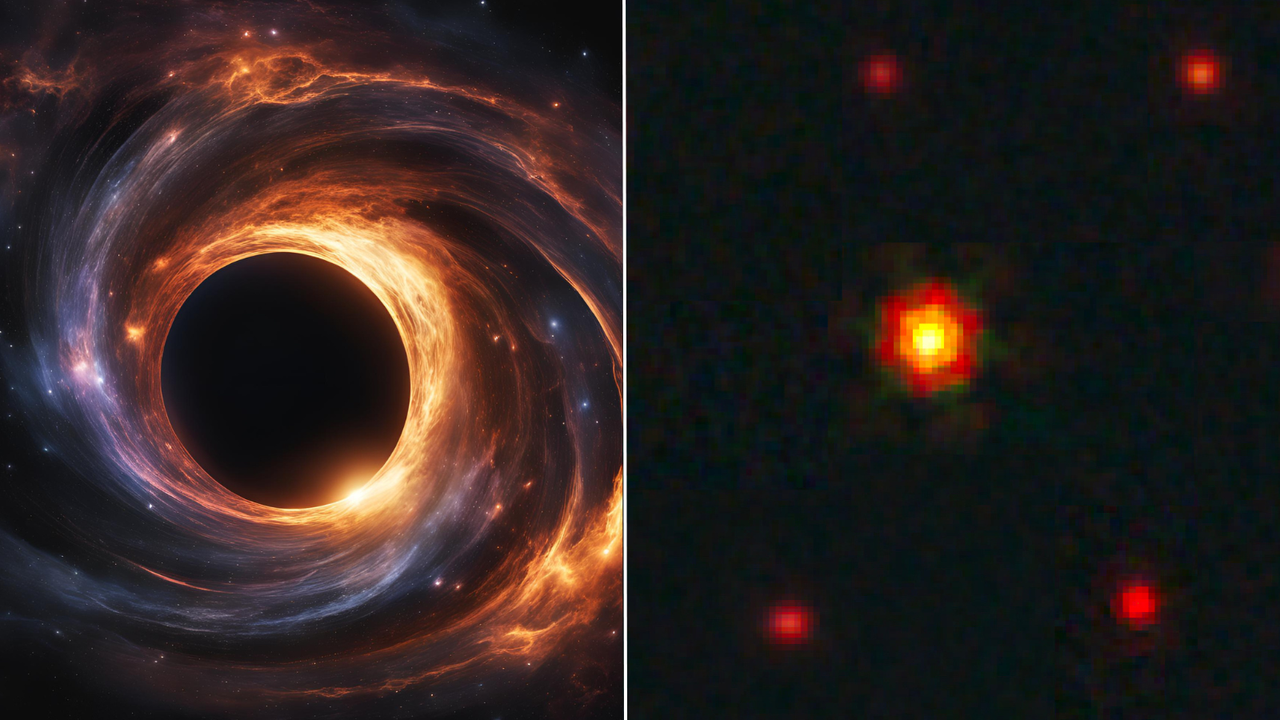
Using the James Webb Space Telescope, astronomers have discovered a ravenous supermassive black hole that existed during a period of the cosmos called "cosmic noon" that occurred around 4 billion years after the Big Bang. The discovery could further shine light on the mystery of how supermassive black holes grow to sizes of millions and even billions of times that of the sun.
This black hole is part of a collection of objects the James Webb Space Telescope (JWST) has been discovering in the early cosmos called "little red dots," mysterious specks of light that were only recently discovered thanks to the incredibly powerful infrared eye of this $10 billion space telescope. However, with a mass equivalent to 100 million times that of the sun, there is really nothing "little" about this black hole at all, with the discovery team dubbing it "BiRD," which stands for Big Red Dot.