
Get all your news in one place.
100's of premium titles.
One app.
Start reading
Space
Space
Science
Robert Lea

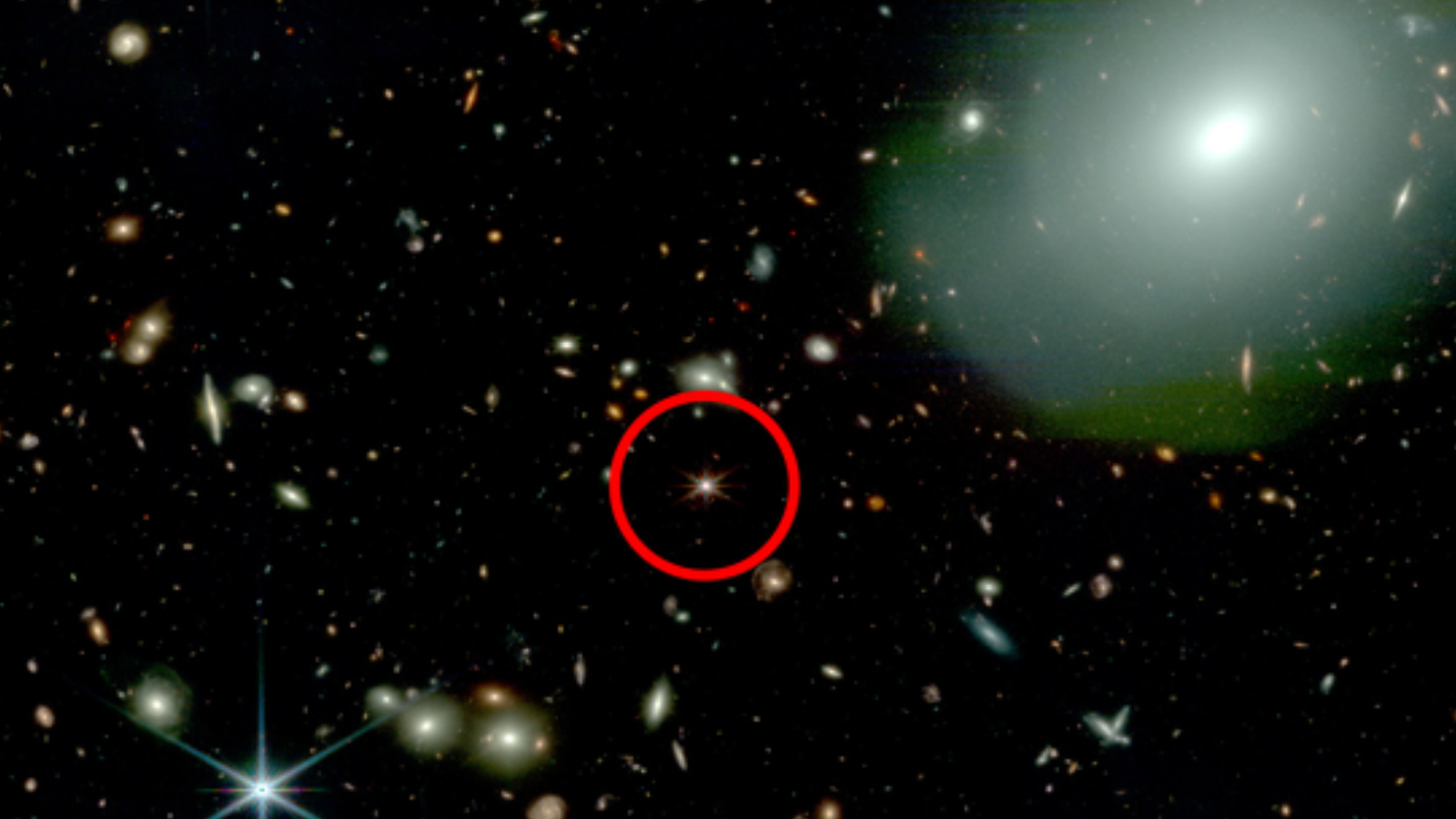
James Webb Space Telescope sees lonely supermassive black hole-powered quasars in the early universe

Green, yellow, gold and silver blobs against a black background.

Using the James Webb Space Telescope, astronomers have peered back 13 billion years to discover surprisingly lonely supermassive black hole-powered quasars. 

The James Webb Space Telescope's (JWST) observations are confusing because isolated black holes should struggle to gather enough mass to reach supermassive status, especially just a few hundred million years after the Big Bang. The discovery further muddies the waters when it comes to the puzzle of how some black holes grew to masses equivalent to millions or even billions of suns when the universe was less than a billion years old.

Sign up to read this article
Read news from 100's of titles, curated specifically for you.
Already a member? Sign in here
Related Stories
Top stories on inkl right now
One subscription that gives you access to news from hundreds of sites
Already a member? Sign in here
Our Picks
Fourteen days free
Download the app
One app. One membership.
100+ trusted global sources.