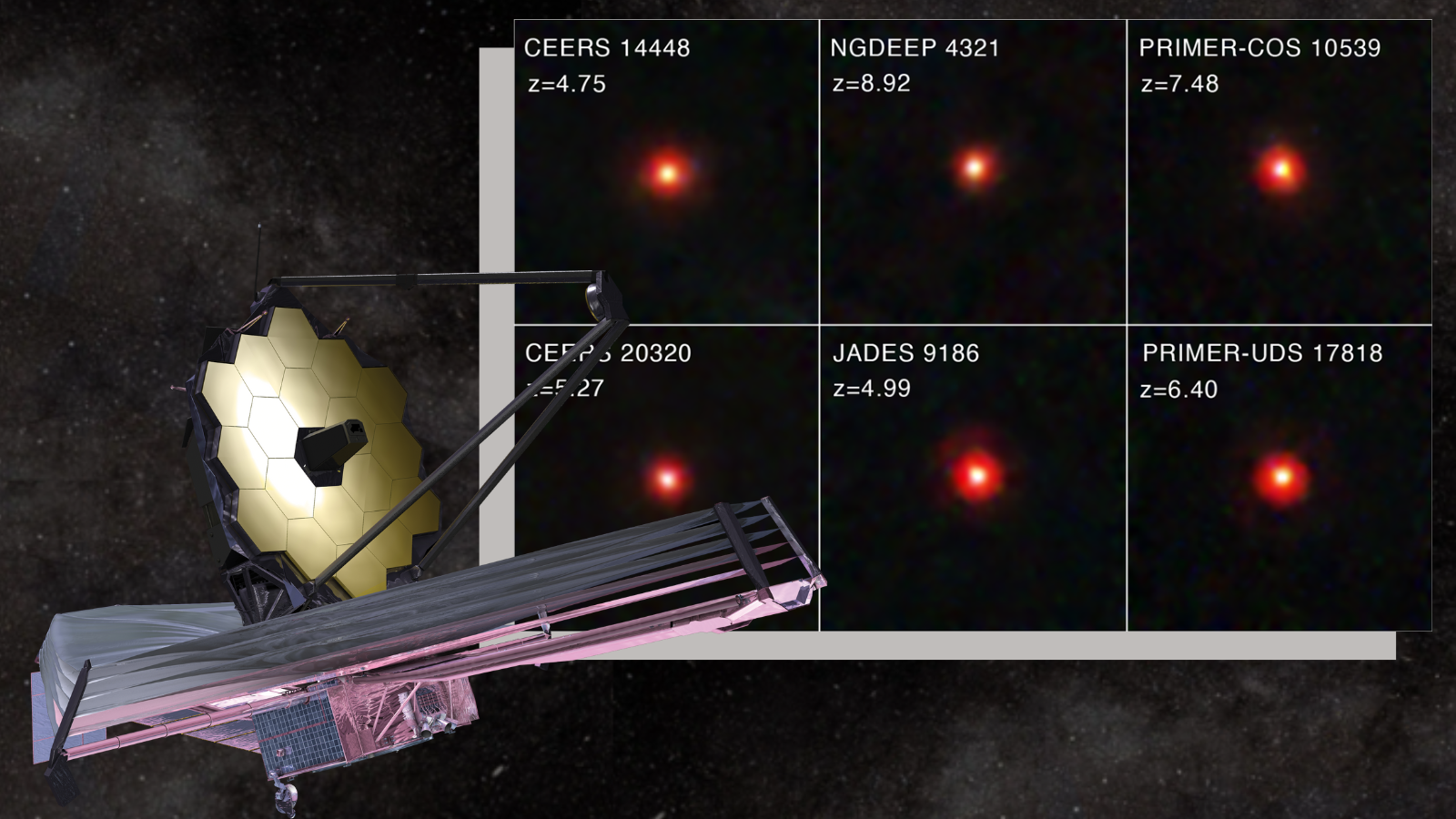
Astronomers may have "saved cosmology" by gathering the largest sample yet of some of the most ancient galaxies ever seen, the so-called "little red dots" observed by the James Webb Space Telescope (JWST).
The team behind this research found the majority of the ancient galaxies in their sample — which existed earlier than 1.5 billion years after the Big Bang — seem to host rapidly feeding, or "accreting," supermassive black holes.
The research should put an end to claims that the JWST has "broken cosmology" with its detection of shockingly bright early galaxies that seemed to contain more stars than would be expected so early in the universe's history. Instead, this new survey suggests that much of the light from these little red dots comes from the turbulent conditions generated by the feasting cosmic titans at their hearts.