
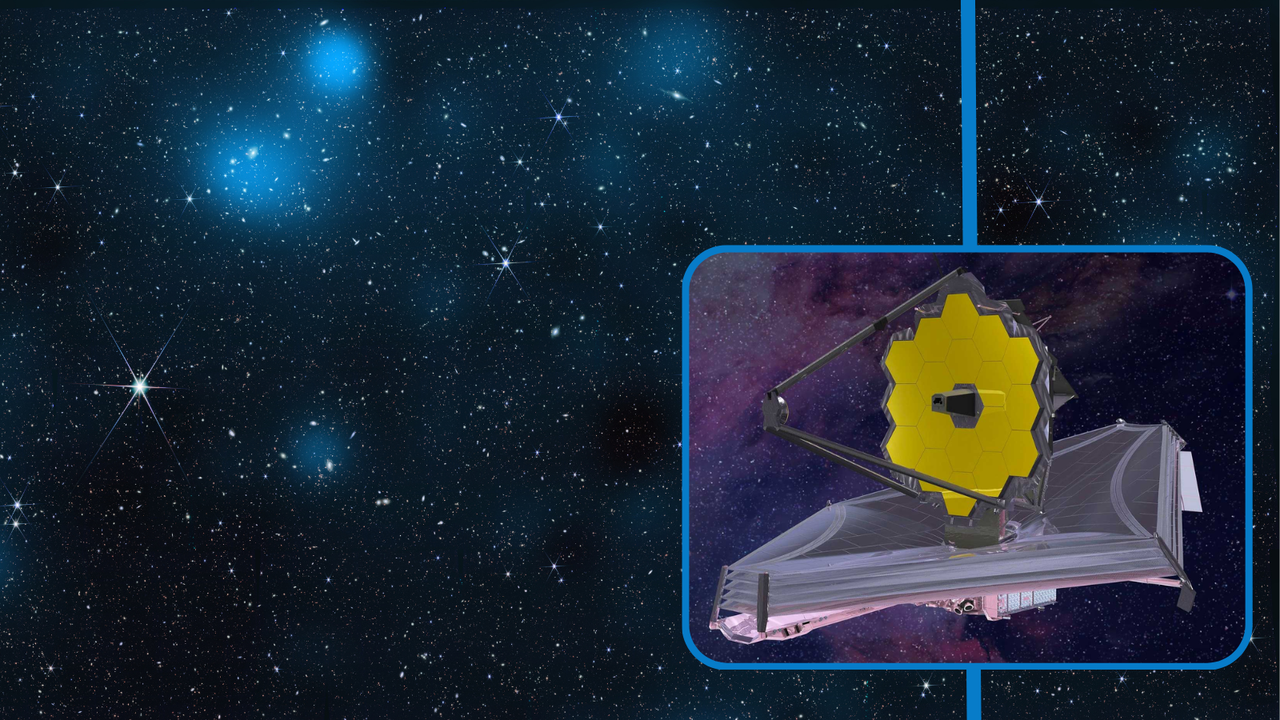
Using the James Webb Space Telescope, astronomers have built a detailed map of dark matter, showing the density of this mysterious stuff across a field of view that encompasses around 800,000 galaxies.
Dark matter is so puzzling to scientists because it doesn't interact with electromagnetic radiation, or simply light,, and is thus effectively invisible to us. This tells researchers that dark matter isn't just difficult-to-see ordinary matter made up of protons, neutrons and electrons, which are particles that do interact with light. Hence, the search for particles that could comprise dark matter has been a complicated one. To make matters even more complex, these particles appear to outweigh particles that comprise ordinary matter in the cosmos by a ratio of five to one.