
Get all your news in one place.
100's of premium titles.
One app.
Start reading
Space
Space
Science
Sharmila Kuthunur

James Webb Space Telescope images bacteria-size dust grains — they'll likely turn into exoplanets

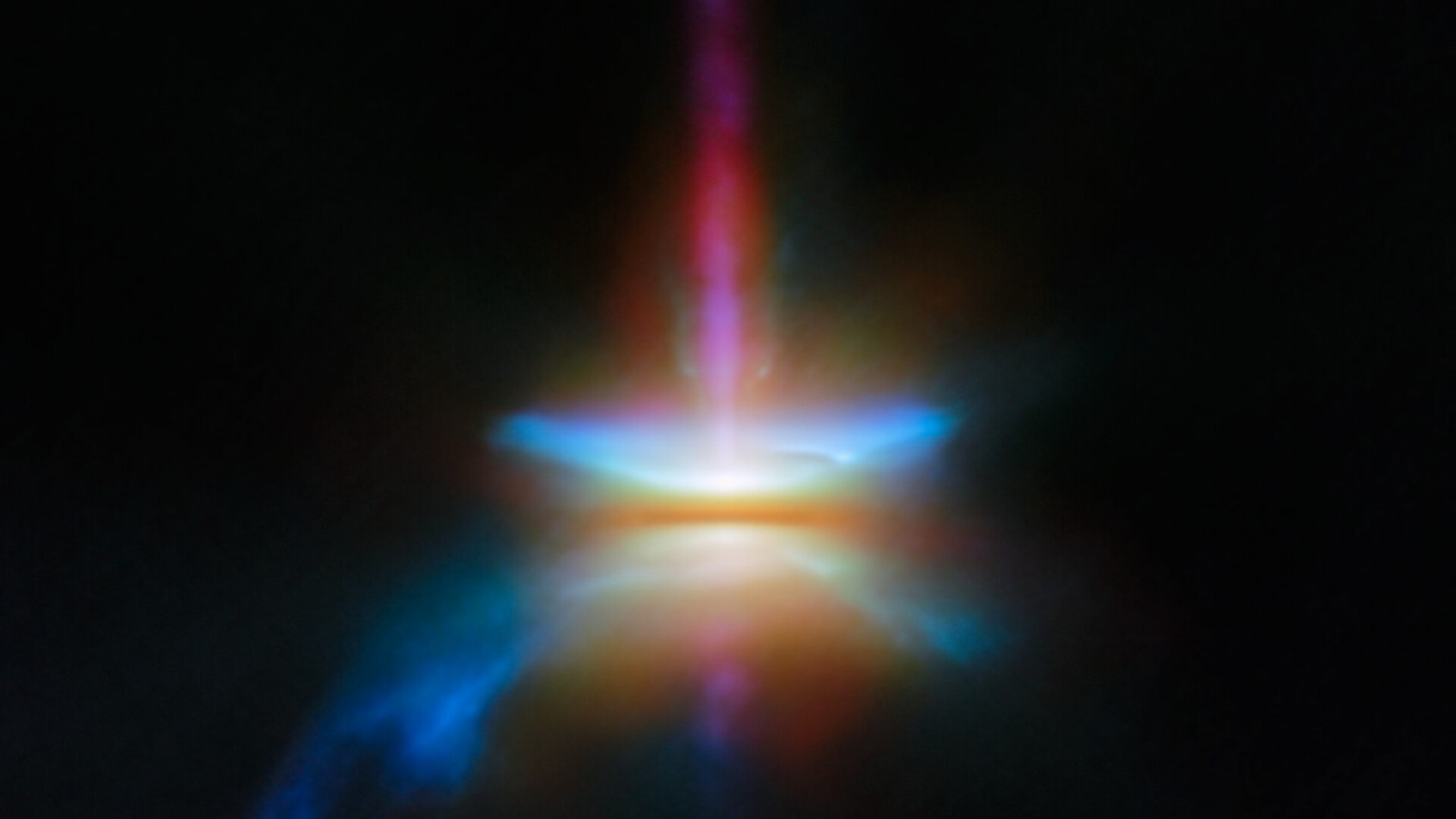
Two glowing blue disks sandwich an orange disk and there's a pink jet flowing vertically through the entire thing.

The image above may look similar to a combat scene in an Avengers movie, but it's actually a uniquely lit-up view of the dust and gas around a distant newborn star.

Captured by the James Webb Space Telescope (JWST), this celestial spectacle, known as Herbig Haro 30 or HH 30, highlights a luminous region around a star only half a million years old residing in the constellation Taurus. While the young star itself is obscured by the dense dust disk that embeds it, the intense winds and fast-moving jets it blasts into space collide with the sparser gas and dust above and below the disk, creating shockwaves that heat the material, causing it to glow.

Sign up to read this article
Read news from 100's of titles, curated specifically for you.
Already a member? Sign in here
Related Stories
Top stories on inkl right now
One subscription that gives you access to news from hundreds of sites
Already a member? Sign in here
Our Picks
Fourteen days free
Download the app
One app. One membership.
100+ trusted global sources.







