
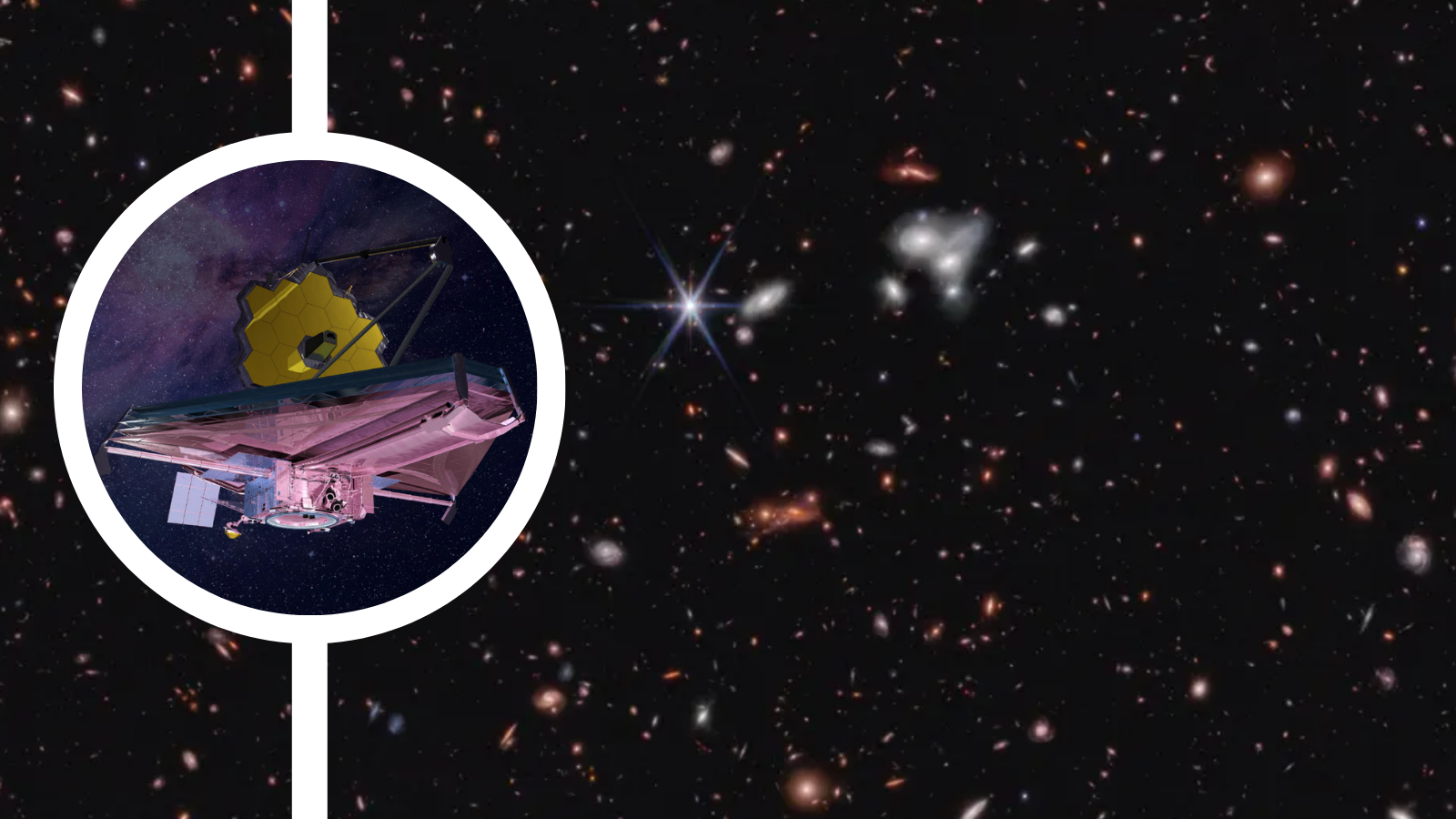
Astronomers have used the James Webb Space Telescope (JWST) to peer back in time over 10 billion years, observing an early era in cosmic history. In doing so, the team from the University of Kansas (KU) found ravenous black holes at the hearts of galaxies during "cosmic noon" experiencing a wild growth spurt.
Cosmic noon is a mysterious period of the universe's evolution, around 2 billion to 3 billion years after the Big Bang, when galaxies like the Milky Way were rapidly forming stars in a process called "starburst." This growth through star formation was so intense that the team behind this research thinks half of all stars seen in modern galaxies originated during cosmic noon.
The team conducted the MIRI EGS Galaxy and AGN (MEGA) survey with the James Webb Space Telescope to better understand this crucial epoch in the universe's 13.8-billion-year history.