
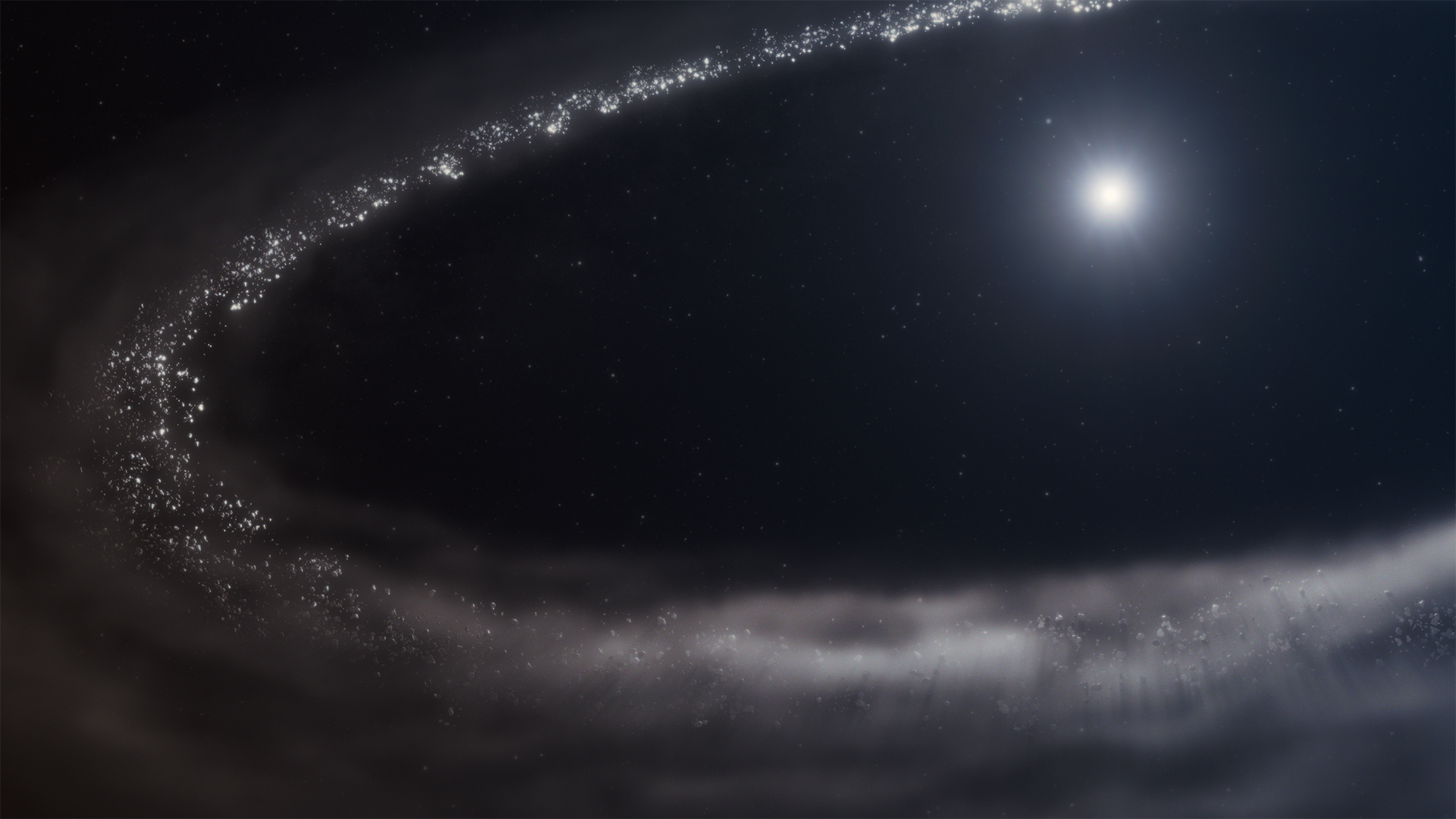
At long last, particles of water–ice have been discovered in the frozen Kuiper Belt of another star. The discovery, made by the James Webb Space Telescope, is a major step forward in filling in gaps in our understanding of how exoplanets develop.
Like the Kuiper Belt in our solar system, this extraterrestrial debris disk is likely filled with comets, dwarf planets and a lot of water-ice particles chipped off larger bodies as the result of collisions. The debris disk, also like our Kuiper Belt, is made up of remnants of a larger disk that once encircled the star — called HD 181327 — and probably gave birth to planets. To be clear, however, no planets in the region have been detected thus far.