
Get all your news in one place.
100's of premium titles.
One app.
Start reading
Space
Space
Science
Conor Feehly

James Webb Space Telescope could soon solve mysteries of the Milky Way's heart

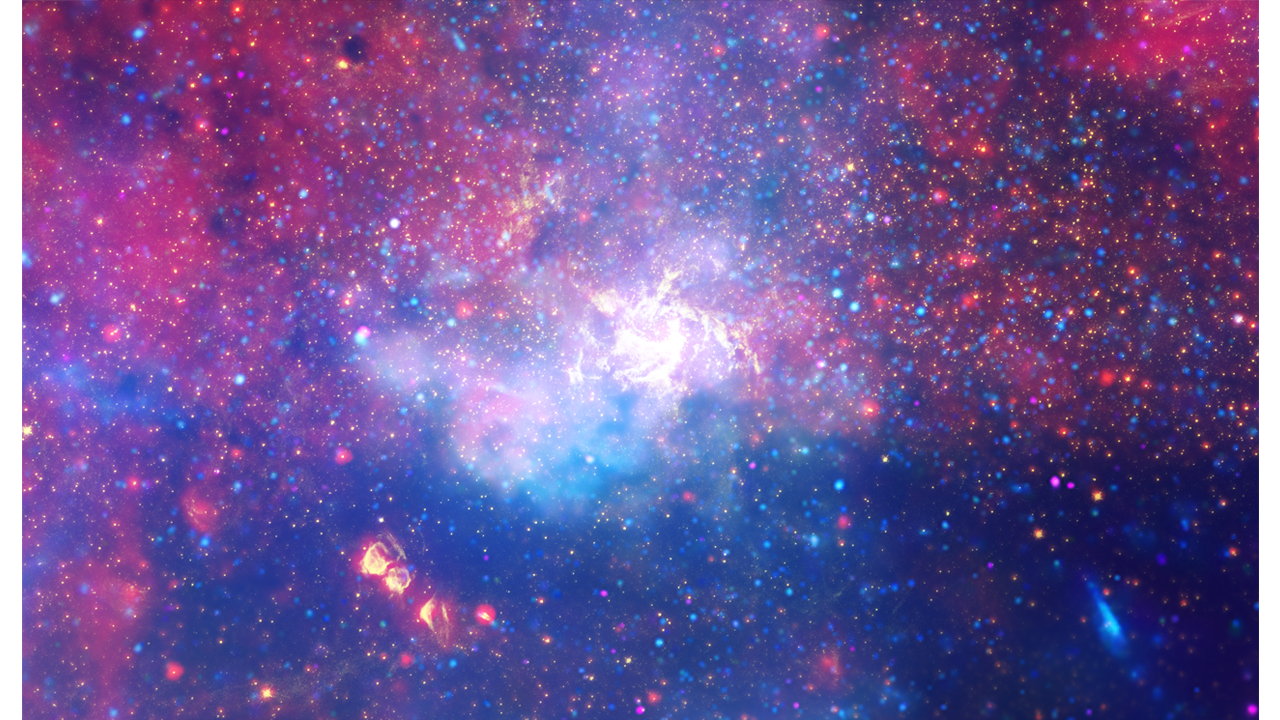
Annotated telescope image shows a tapestry of colors in shades of blue, purple, red, yellow, and white. Overlaid on the image are three sets of labels. In the upper right corner is the name of the object, Center of the Milky Way Galaxy, and the name of the telescopes used to capture the image: Chandra X-ray Observatory, Hubble Space Telescope, and Spitzer Space Telescope. At the center is a label that points to the smaller, amorphous region in white that reads, Sagittarius A-star.

Ever since astronomers first laid their eyes on the sparkling spiral arms of our home galaxy, the Milky Way, they have wondered what processes might drive the evolution of these massive, star-studded structures. Presumably, those same processes are why we see such a stunning diversity of galactic neighborhoods in the observable universe, which contains an estimated 2 trillion galaxies with unique sizes, shapes and compositions. 

So, in an effort to further our understanding of galactic evolution, over 100 astronomers from over 80 institutions around the world have called for the James Webb Space Telescope (JWST) to conduct a multi-epoch, large-area, multi-wavelength survey of the Milky Way’s innermost regions. Decoding the dynamics of the Milky Way's heart, or Galactic Center (GC), should shed light on what happens in many other galaxies in our universe, too.

Sign up to read this article
Read news from 100's of titles, curated specifically for you.
Already a member? Sign in here
Related Stories
Top stories on inkl right now
One subscription that gives you access to news from hundreds of sites
Already a member? Sign in here
Our Picks
Fourteen days free
Download the app
One app. One membership.
100+ trusted global sources.