The life sentence given to the killer of Henry Nowak is being considered amid outrage over the 18-year-old’s treatment by police officers as he lay dying.
The finance student was handcuffed after being fatally stabbed with a ceremonial knife in Southampton on December 3 2025 by 23-year-old Vickrum Digwa, who falsely accused him of being drunk and launching a racist attack.

With the harrowing case prompting widespread anger, Home Secretary Shabana Mahmood will address it in a Commons statement later on Tuesday.
On Monday, Digwa was jailed for life to serve a minimum of 21 years for stabbing Mr Nowak with a ceremonial knife with a 21cm blade prosecutors said was a kirpan, which he carried as part of his Sikh religion.
Body-worn camera footage from the incident appeared to show Mr Nowak, who had received two stab wounds on the back his legs and a fatal wound to his heart, pleading, “I’ve been stabbed” and “I can’t breathe” while being handcuffed.
Digwa, his father Moga Singh, 52, and brother Gurpreet Digwa, 27, are to appear in court to face multiple weapons charges on Tuesday afternoon.
There have been calls for a review of the laws around religious defences to carrying weapons, with an expert describing the case as a “watershed moment for the Sikh community” on their responsibilities under the law.
Digwa’s relatives have apologised to Mr Nowak’s family and for bringing the Sikh community into “disrepute”.
Police watchdog investigators will meet the murder victim’s family amid fury over his treatment by officers.
His father Mark Nowak, speaking after Digwa was sentenced on Monday, compared the treatment of his son with that of his killer.
He told journalists that Digwa “was afforded decency. He was believed. He was not handcuffed when arrested. He was not handcuffed when transported to the police station. As far as we understand, he was never handcuffed at all.
“And, as Vickrum Digwa himself told the court, while under arrest for Henry’s murder, police even took him to the kitchen so he could choose his food.
“The contrast is unbearable.”
He also said: “We do not want his death to be used to create further division, hatred or tension.”
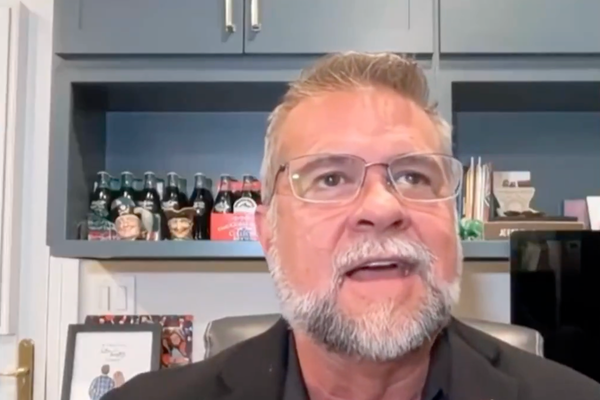
Despite his plea, Nigel Farage said people should respond with “pure cold rage” to Mr Nowak’s treatment, which he said was evidence of a “two-tier culture”.
Mr Nowak was “actually treated in a way that meant an accusation of a racial slur was treated more seriously than an act of murder”, the Reform leader said in a video statement on Tuesday.
He said he had asked Attorney General Lord Hermer to review the life sentence with a minimum of 21 years given to Digwa as being unduly lenient.
Mr Farage said: “Henry’s family have responded to this in just the most extraordinarily dignified way.
“But I suggest the rest of us respond to this with pure cold rage.
“This is wrong. All the values and standards of living in a free country where everybody is judged equally before the law have been trashed and thrown away.”
He said there needs to be an end to “anti-white prejudice” and a recognition that “white lives matter just as much as black lives”.
The attorney general’s office is considering the jail sentence given to Digwa after being urged to review it.
A spokesman for his office said: “We have received multiple requests for Vickrum Digwa’s sentence to be considered under the unduly lenient sentence scheme.
“The law officers have 28 days from sentencing to carefully consider the case and make a decision.”
Conservative leader Kemi Badenoch accused Mr Farage of deepening divisions as she argued that police should treat everyone equally regardless of race.
She told ITV’s Good Morning Britain: “Nigel Farage is taking sides.
“I’m not taking sides. I’m saying enough of this. We need to stop this racialising of our society…
“No two-tier policing, no believing that racism only happens to ethnic minorities. It happens to everyone. And the police need to be trained like that, not with the terrible anti-racism training, which is just reverse racism and reverse discrimination.”
The officers who were called to the murder scene are still being treated as witnesses by watchdog the Independent Office for Police Conduct (IOPC).
Mr Nowak’s father on Monday said officers involved in the case are still on duty, and one was allowed to resign before they had given a full account to the IOPC.
IOPC director Derrick Campbell said: “We acknowledge that this case has raised questions about the actions of the attending officers and we are aware that a few minutes of police body-worn footage has been issued by the force following the conclusion of criminal proceedings.
“As part of our ongoing investigation we are reviewing a large amount of police body-worn footage, which we need to consider in context with other evidence we have obtained, including reviewing material presented during the murder trial, as we establish the full circumstances.
“Now that criminal proceedings have concluded, we are planning to meet with Mr Nowak’s family and provide them with updates about our investigation.”
Meanwhile, Digwa’s family said they were “deeply sorry for the pain and suffering the Nowak family has had to endure”.
In a statement issued through Sikh PA, a charity which seeks to represent the Sikh community in the media, the unnamed family members also said: “We apologise to the Sikh community for our son’s actions which have unfairly brought the community into disrepute.
“We ask that this tragedy is not used by anyone to inflame division or hostility towards any community.”
The statement came as the murderer’s mother, Kiran Kaur, awaits sentencing for assisting an offender by taking the knife used to kill the 18-year-old back to the nearby family home.
Hampshire and Isle of Wight police and crime commissioner Donna Jones said she would write to the Prime Minister to request a national review of the laws concerning the carrying of bladed articles under religious exemptions.
“Central to this incident is the fact that Vickrum Digwa was able to carry a knife in public because there is an exemption for those who observe the Sikh faith to carry ceremonial daggers,” she said.
Gurnam Singh, a professor of sociology at the University of Warwick, who gave expert evidence on Sikh traditions during the trial, told the Press Association the murder had prompted a “wider safeguarding discussion” among Sikhs and that it was “a bit of a watershed moment for the Sikh community to really take stock”.