Get all your news in one place.
100's of premium titles.
One app.
Start reading
Tom’s Guide
Tom’s Guide
Technology
Dan Bracaglia

It's time for a Fitbit Ring — 3 reasons why Google should make an Oura Ring alternative

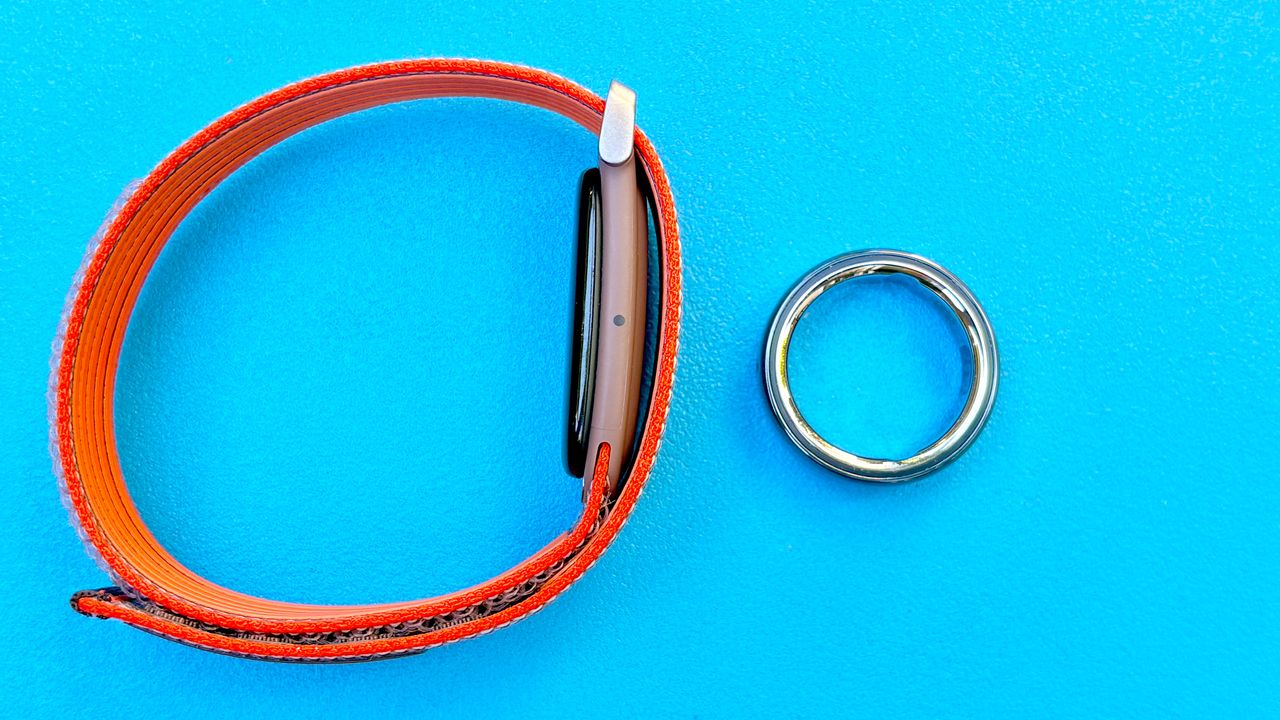
Close-up of the Fitbit Air and Oura Ring 4 Ceramic against a blue background.

Google should capitalize on the recent success of the screen-free Fitbit Air fitness tracker and launch a Fitbit-branded smart ring to take on the Oura Ring 5, Samsung Galaxy Ring, and other major players in the space.

I review wearable tech for a living, and Google has never been in a more prime position to debut a finger-based holistic wearable to rival the best smart ring out there. Here are the three biggest reasons why.

1. Screen-free wearables are having a moment

(Image credit: Dan Bracaglia/Tom's Guide)

The $99 Fitbit Air debuted just a few months ago to mostly positive reviews, including from me; I even picked it as one of the best fitness trackers in 2026. Not only that, I’m wearing one as I type this. That’s how much I dig Google’s latest tracker.

Moreover, Fitbit isn’t the only major tech brand doubling down on screenless wearables. Oura just refreshed its flagship model with the Oura Ring 5; Garmin is rumored to be imminently launching a Fitbit Air alternative, potentially called the Garmin Cirqa; and the Whoop 5.0 remains a super-popular tracker for hardcore and pro athletes.

IMHO, Google should take everything that makes the Fitbit Air great — the affordable price, comfortable design, solid battery life, easy-to-digest holistic insights, etc. — and reconfigure it into a smart ring.

The Fitbit Air already significantly undercuts the competition, Whoop, by a massive margin in terms of cost (an annual Whoop membership starts at $199). A Fitbit smart ring could potentially do the same versus Oura (the Oura Ring 5 starts at $499).

2. Google wearables are already subscription-optional, unlike the Oura Ring

(Image credit: Future)

Another major advantage Google has over both Oura and Whoop is a subscription-optional approach to health and fitness tracking. Take the Fitbit Air, for example: $99 gets you the device and access to all the tracker’s core holistic data via the Google Health app for no additional charge.

Want next-level AI-backed insights? Google Health Premium is optional at $9.99 per month or $99 per year. The premium service also includes access to “The Coach,” Google’s personalized AI trainer. Not sure if these insights/tools are right for you? Most Google wearables come with a free Premium subscription demo to try before you buy.

3. Fitbits work with Android and iOS, unlike the Galaxy Ring

(Image credit: Dan Bracaglia/Tom's Guide)

This one applies less to the Oura Ring, which plays nicely with both Android and iOS devices. However, the Samsung Galaxy Ring — which is arguably the next-best smart ring to anything named Oura — is Android-only.

The fact that Fitbit wearables also work with both operating systems — and presumably, a Fitbit Ring would too — gives Google a potentially major advantage over Samsung in terms of acquiring new customers.

Then again, recent rumors suggest that a Samsung Galaxy Ring 2 is in the works, and that iPhone compatibility isn’t out of the question. That said, a refresh of the Galaxy Ring in 2026 seems unlikely, which is all the more reason for Google to roll out a Fitbit Ring sooner rather than later.

What do you think? Would you be interested in a Google/Fitbit Ring? Let me know in our poll below.

More from Tom's Guide

Sign up to read this article
Read news from 100's of titles, curated specifically for you.
Already a member? Sign in here
Related Stories
Top stories on inkl right now
One subscription that gives you access to news from hundreds of sites
Already a member? Sign in here
Our Picks
Fourteen days free
Download the app
One app. One membership.
100+ trusted global sources.