During the four years that he spent working as the sporting director as Hearts, Joe Savage encountered numerous children from refugee, asylum seeker and ethnic minority communities who had aspirations to become professional footballers one day.
Savage, who has also worked in talent identification and recruitment with Hamilton Academical in Scotland and Norwich City and Preston North End in England, was invariably impressed with their mentality and ability when he did so.
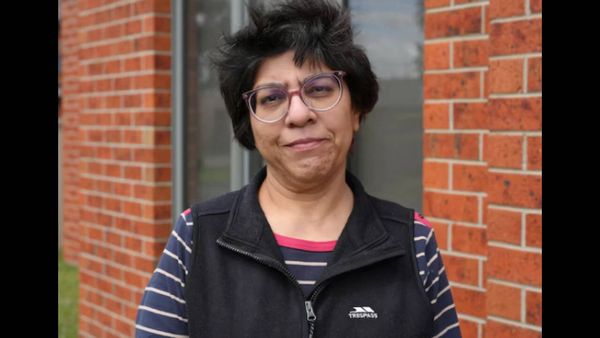
“Kids who have come over to this country with their families and had ambitions to play the game for a living have always got great attitudes in my experience,” he said.
“They want to adapt, they want to do the very best they can. They listen to everything you say and they are often extremely polite. I have seen boys turn up with barely a bit of clothing on their back who have been desperate to play football and to do well.
Read more:
- He plays Total Football: Why the SFA appointed ‘the Belgian Simeone’ Scotland manager
- SFA warned taking on ‘vengeful’ FIFA president could cost Scottish football millions
- Call to increase funding for refugee football - and boost Scotland's World Cup hopes
“Athletically, too, they always seem to be better, to be bigger, stronger and quicker. Gordon Strachan got a hard time a few years ago when he was Scotland manager when he said that the players in his team were ‘genetically behind’ other international sides. But he was telling the truth. It’s a fact.”
So why have so few kids from displaced backgrounds managed to force their way into the first teams at senior clubs in this country in recent years never mind the national team if they have got so many positive attributes?
Most of the leading countries at the World Cup in Canada, Mexico and the United States this summer fielded players who were refugees. Why did Scotland not have any New Scots in their squad at the finals? For Savage, the reason is obvious.
“Football costs so much to play now,” he said. “It is becoming more and more of a middle-class sport. It's becoming too expensive for kids from working-class or low income families to play the game now. It is a real worry for me.
“When I was a kid it cost a few quid to play for my local club. Now, though, parents are having to fork out £30 or £40 a month just for subs. That is before they pay for boots, strips, shin guards, travel and everything else that goes along with it.
“I think that football is now an elite sport and that is really affecting the ability of boys and girls from migrant backgrounds to get involved in it.
“I am sure if you sat down with refugee parents and asked them why they aren’t taking their kids along to local boys’ clubs and girls’ clubs a lot of them would say, ‘Because it’s far too expensive’.
“If they have got, say, three kids then that is £160 a month they are having to shell out. Boots are around £100 these days, strips are the same. It costs a lot of money.
“That is just in boys’ club football, at grassroots level, as well. I know families in Glasgow who have young kids who are travelling through to Edinburgh four times a week to train and to play in the pro-youth set-up. The cost of that adds up. They say to me, ‘Joe, this is killing us, it is costing a fortune’.”
Migration Policy Scotland have estimated that 45 per cent of families whose parents who were born outside of the United Kingdom are living in poverty in this country.
Read more:
- Brexit stopping Scottish football clubs tapping into refugee talent like Euro rivals
- The system is broken: David Duke on why Street Soccer Scotland offer refugees hope
- SFA official's 'sinister' plot to ban Rangers great from football for life revealed
A Scottish Refugee Council survey has also found that 97 per cent of people who are seeking asylum are surviving on a weekly income of £40 and are technically destitute.
Savage continued, “The other thing that is a major issue for me is that there are no football pitches for kids to play on for free any more. Invariably, when you drive past your local school they have locked the gates.
“When I was a kid there were five-a-side pitches, 11-a-side pitches, wee astro pitches, all over the place. But there is nothing like that any more. If you go to Germany, say, it is completely different. There are hundreds of pitches and they are all open for kids to play on.
“Every time I drive past a school there are padlocks on the gates. Kids get locked out. I do understand that neds will try to get on to pitches and set fire to them or wreck them in some way. But you can’t tar everyone with the same brush. Lots of kids will be desperate to go out there and play and can’t do that.
“I live near to the Jock Stein pitches in Hamilton. They are locked, but fortunately somebody has cut a hole in the fence so kids can get through and play. Every time I go past there are 20 to 30 boys and girls out there. It is always full of kids who are buzzing to be out playing. It is great to see.
“Our weather is usually terrible, but we only have three full-size indoor football pitches in Scotland. In Iceland they have seven of them. But, again, if you want to play on them here it costs around £10 per person. If a kid’s parent isn’t working then that means that he or she can’t play on them.
“We like to say that we are encouraging kids to play, but for me we’re still not doing enough. It's becoming too complicated and too expensive for kids from low income backgrounds to play football when it really shouldn't be and that is perhaps preventing boys and girls from refugee communities from getting involved.”
Savage knows that many of Scotland’s senior clubs - including his old employers Hearts - run laudable schemes which encourage refugees and asylum seekers to play football.
He is also well aware that both the Scottish government and the SFA provide funding so that kids from those communities can participate in sporting activities. However, he still believes that more should be done.
“If kids who come to our country want to play football then we should absolutely be embracing that,” he said. “I think Scotland as a nation is very accepting of refugees. I am not very political, but I do think that anybody who says ‘all migrants are bad’ just because one of them commits a crime is wrong in the head.
“I personally have always come away with a good impression of these kids. I've never thought they had a bad attitude or came from a bad culture. More often than not, they turn up early, are really keen to listen and learn and are hungry to do well. They have good technical and physical attributes. They are good on the ball, they can run.
“So why are more of them not establishing themselves in professional teams? I think the rising cost of playing football is a major problem. It is increasingly expensive. I do think that we could do far better when it comes to encouraging them.”