
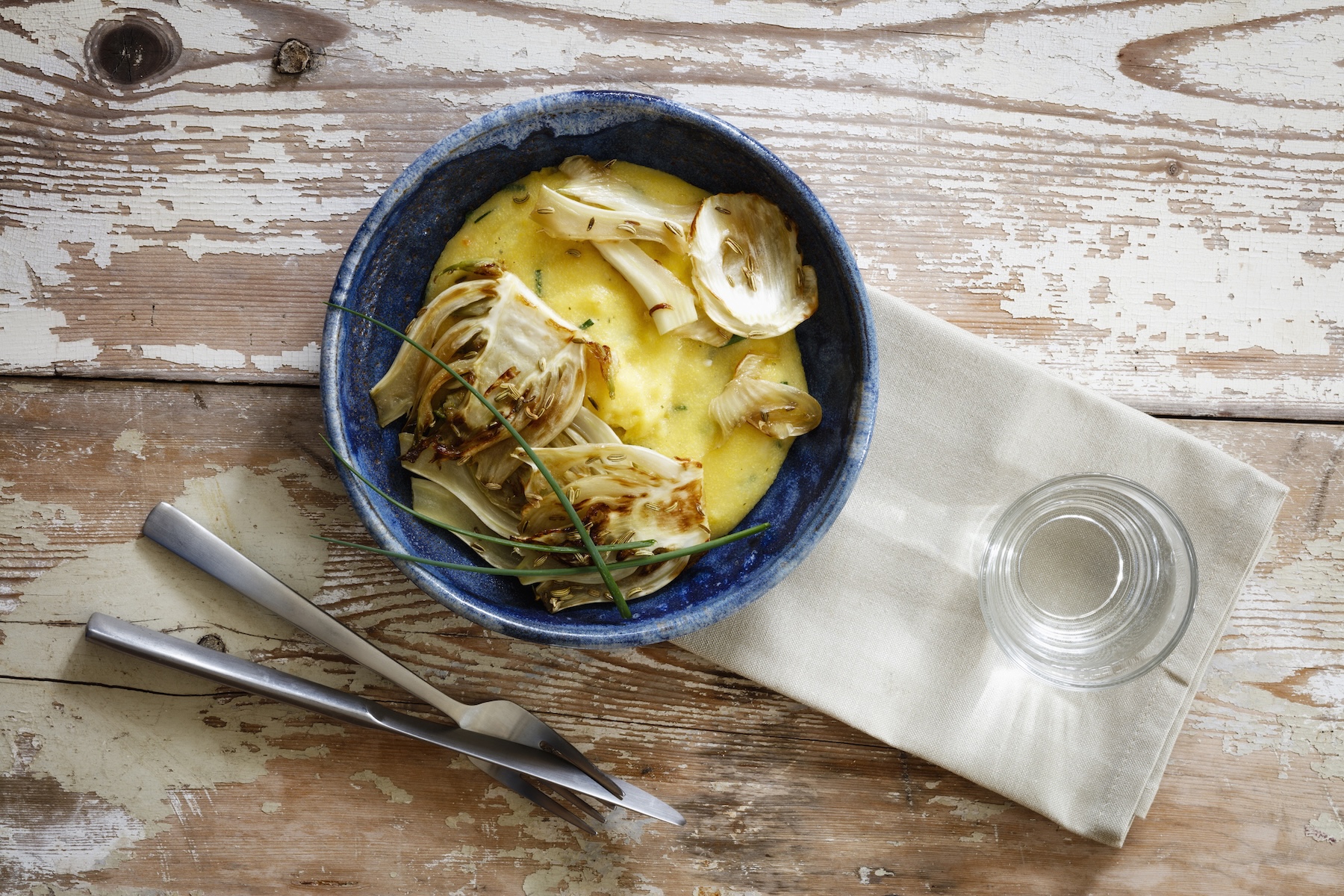
On a cold winter night, Italian food often appears in its most familiar forms: a steaming bowl of pasta, a bubbling pan of baked ziti, a long-simmered sauce meant to thaw you from the inside out. But the version of Italian cuisine most Americans reach for in winter — heavy on red sauce, overflowing plates, indulgence as comfort — is only a narrow slice of a far deeper, more practical tradition.
Italian cuisine, in reality, is one of the most regionally specific, seasonal, and resource-driven food cultures in the world. Its reputation for coziness isn’t accidental; it’s the result of centuries of people cooking with what they had, where they lived. Out of necessity, they learned how to cook with restraint while still providing warmth; survival, not indulgence. Nowhere is that more evident than in Italy’s central and northern regions, where mountain cooking, preservation, and harsh winter shaped a cuisine far removed from the checkered-tablecloth stereotype.










