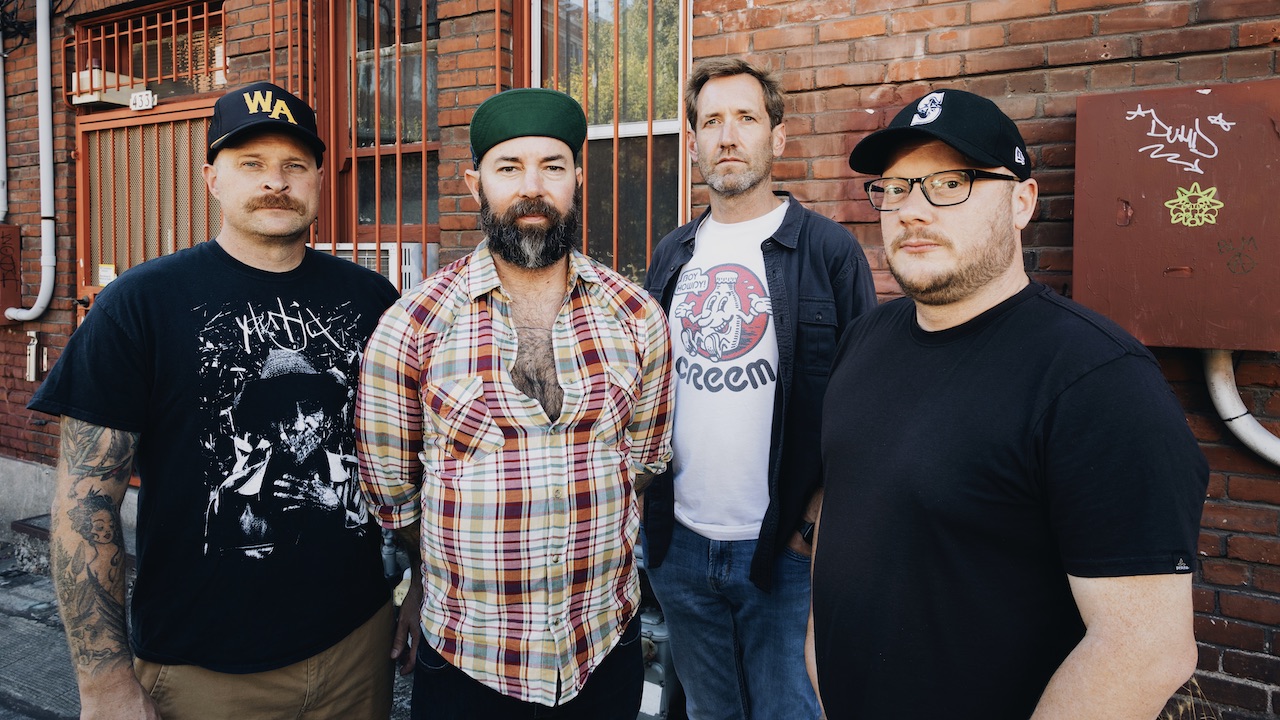
Some bands, it seems, can only be spoken about in hushed tones and reverential terms. Normally these are the artists who influenced a genre to the point where they basically invented a new one, or whose creative lifespan was so short but memorable that they left people wondering if there was any hope of a revival.
Botch did both of these things. A quartet of self-described "misfits" from Tacoma, Washington, with just two albums and three EPs they unintentionally changed the shape of punk to come for the next two decades.
After they split in 2002, peers such as Converge and The Dillinger Escape Plan went on to dominate 21st century underground hardcore hit lists, but Botch were never forgotten. Mainly because, once you've heard it, their music becomes strangely unforgettable. Awash with odd time signatures and arriving in multiple parts, these are songs that seem to scramble up the walls and across the ceiling of any room they're played in, coaxed into a form you half-recognise with surreal songs titles and the band's trademark oddball humour.
Post-split, band members branched out into forming new acts – from the leftfield, lighter fare of Minus the Bear and Roy to the more familiar gnarl of Narrows and These Arms Are Snakes. But these acts' antecedent was never allowed to be forgotten, to the point where, when Botch re-emerged with a new song One Twenty Two in 2022, to mark a reissue of their career-high We Are the Romans album, a deafening buzz quickly followed.
Now we are in the midst of the band's first ever reunion tour, which will also be their last ever reunion tour. Before it passes through the UK and Europe in March 2024, Louder sat down with vocalist Dave Verellen and guitarist Dave Knudson to ask them to take stock of their legacy and reflect on how they've changed, while the songs (thankfully) remain the same.