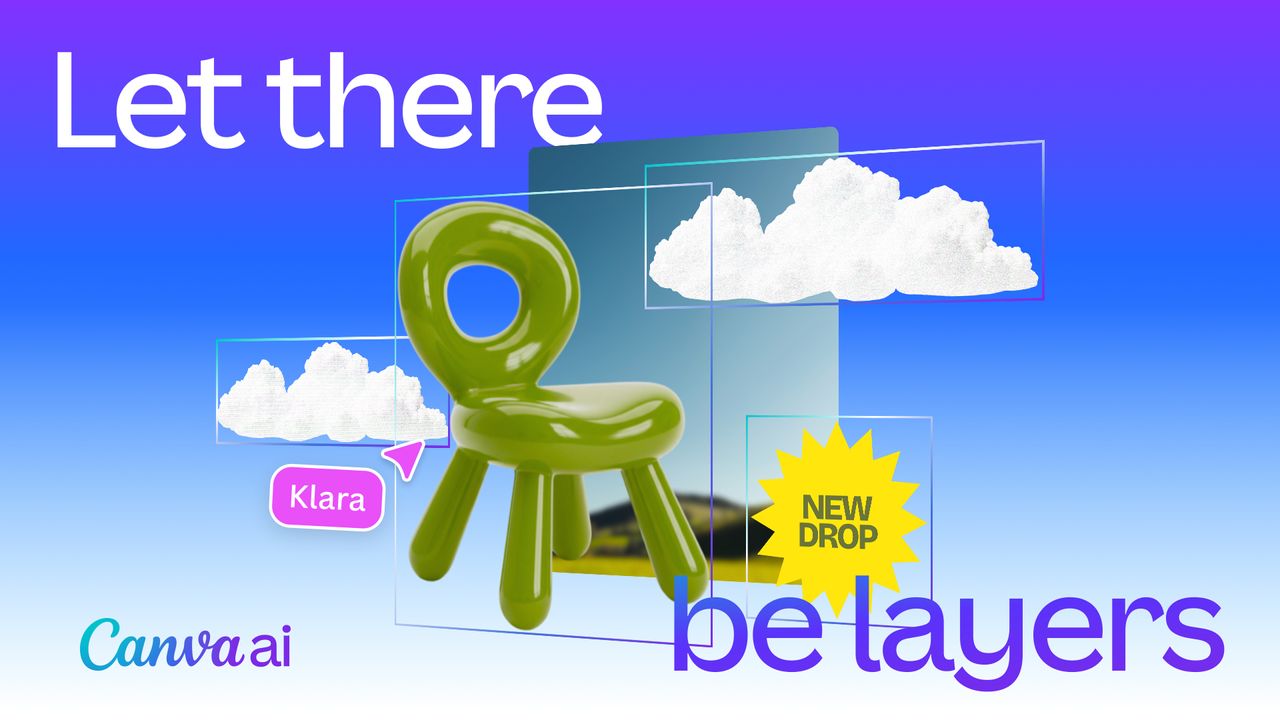
Free-to-use online graphic design app, Canva, has launched a tool that could revolutionize traditional, layer-based editing. Dubbed Magic Layers, this AI-powered feature can break down any flat image into a series of layers, in a bid to provide the user with more editing freedom. Magic Layers is available in public beta right now.
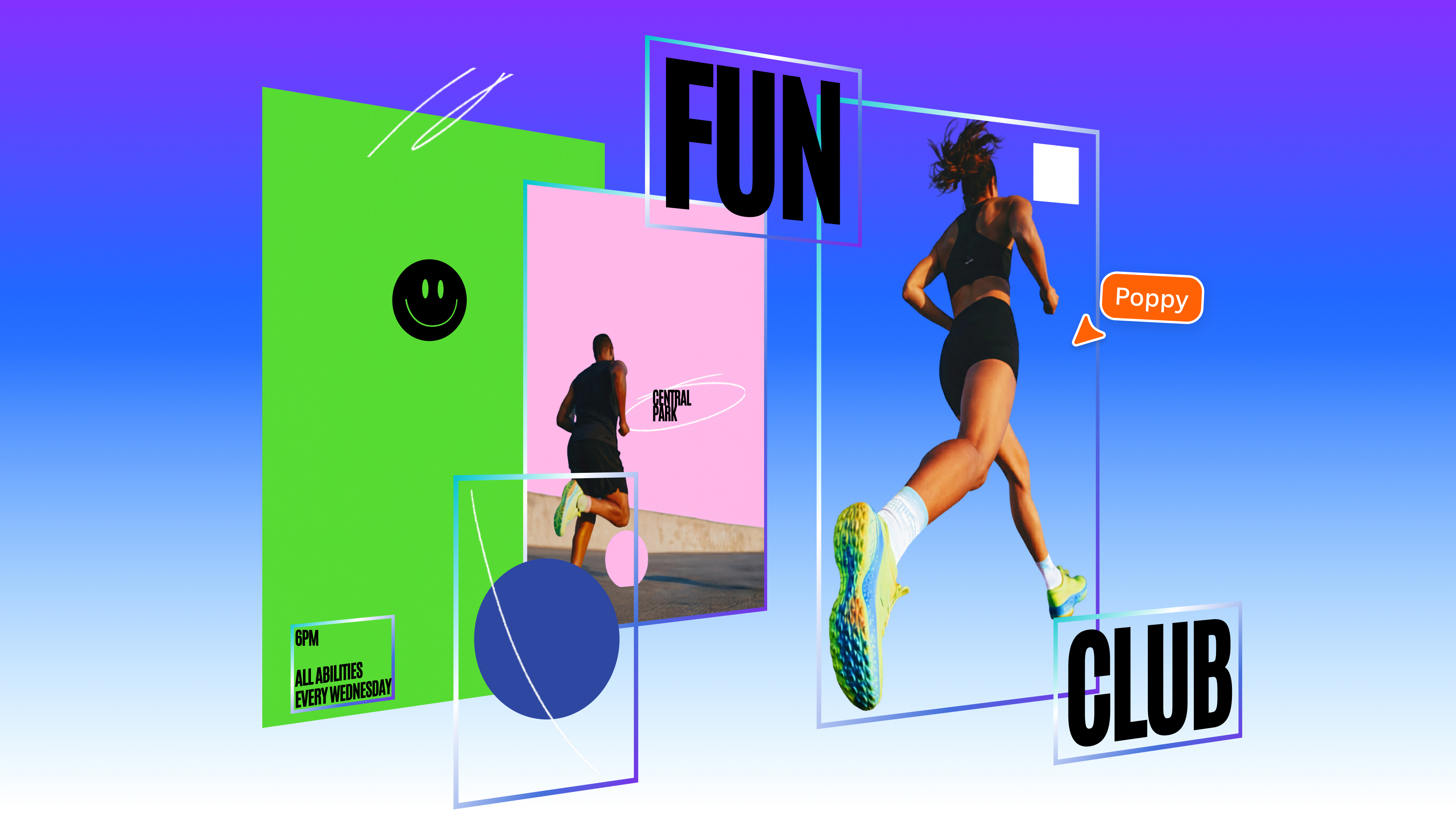

Canva, which also owns Photoshop alternative layer-based editing software, Affinity, has said that its Magic Layers tool “bridges the gap between AI-generated content and true creative control”. This is because the tool uses AI to break down a flat image into layers, which can then be edited in a traditional manner. Once you’ve uploaded an image, it’s broken down into individual, movable objects: layers.
This means that layouts are preserved, text is fully editable, and you can output the image in various formats. You can also combine Magic Layers with Canva’s AI by generating a fully editable design with movable elements. Magic Layers currently supports PNG and JPG files, but more formats are in development.

Co-founder and CPO of Canva, Cameron Adams, said: “There’s been an explosion of AI-generated content that has, until now, been a dead end. You’d get a finished image you couldn’t edit, refine, or make your own. We think AI should spark creation, not stop it”.
As for how this impressive-sounding technology works, I’m sure the technicalities would go over my head, but Canva has explained in simple terms that what separates Magic Layers apart is its ability to intelligently identify objects.
Whereas a traditional vector tool simply traces shapes, Magic Layers identifies what those shapes represent and their relationship with the rest of the image. This is all possible thanks to the Canva Design Model, which is Canva’s proprietary foundation model.
You might also like...
Check out the best photo editing software and the best photo organizing software. For more software editing news: You can now tell Photoshop’s AI Assistant what to do with your voice! Firefly gains raft of GenAI tools.