Get all your news in one place.
100's of premium titles.
One app.
Start reading
Latin Times
Latin Times
National

'It Is Not a Weapon, It Is a Phone': Influencer Anna Bensi and her Mother Lose Their Freedom After Recording Official in Cuba

Cuban influencer Anna Bensi and her mother were found guilty and handed two years of restricted freedom in a case that began with a cellphone video and has since drawn support from Cuban stars, religious leaders, U.S. lawmakers and Washington's diplomatic mission in Havana.

Bensi, whose full name is Anna Sofía Benítez Silvente, and her mother, Caridad Silvente, were found guilty of "acts against personal and family privacy" by the Municipal Popular Court of Havana del Este on Oct. 1.
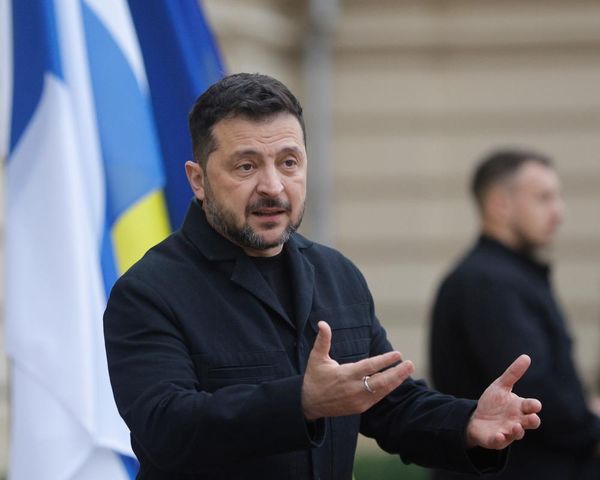
The 21-year-old content creator has become an increasingly visible critic of conditions in Cuba, while her prosecution has transformed her into a rallying point for figures including Cuban musician and "Patria y Vida" co-writer Yotuel Romero, singer La Diosa, Diana Fuentes and several Cuban-American members of Congress.

The case stems from a March 10 encounter at the family's home in Alamar, Havana, when a Ministry of the Interior officer arrived in civilian clothes to deliver Bensi a State Security summons.

Bensi and her mother recorded the encounter. The video was later published online, leading to a complaint over the dissemination of the officer's image without his consent.

Bensi was prosecuted under Article 393 of Cuba's Penal Code, which covers acts against personal and family privacy, image, voice, identity and personal data, including certain forms of dissemination through social media.

But Bensi and her supporters argue that the prosecution is about far more than privacy. "It is not a weapon, it is a phone," she told reporters ahead of Thursday's proceeding. "We don't agree with the political system," she added. "And that is not a crime."

Yotuel, La Diosa and Cuban Artists Back Anna Bensi

As Bensi's court date approached, prominent Cuban artists and entertainers began using their platforms to draw attention to her case.

Yotuel Romero, the Cuban musician and activist who co-wrote the Grammy-winning protest anthem "Patria y Vida," was among those publicly supporting Bensi.

Singer Dianelys Alfonso Cartaya, better known as La Diosa, made an emotional appeal urging Cubans not to abandon the young influencer as she prepared to appear in court. "No la dejes sola," or "Don't leave her alone," La Diosa said, arguing that Bensi was speaking publicly about problems affecting Cubans beyond her own family.

Cuban singer-songwriter Diana Fuentes also spoke out, questioning why Bensi and her mother were facing prosecution after recording plainclothes officials who appeared at their home. She called the situation "outrageous" and said the two women deserved "justice, guarantees and freedom."

Other Cuban personalities who have publicly expressed support include comedian and actor Andy Vázquez, influencer Kristoff Kriollo, Claudia Artiles, actress Claudia Valdés and comedy duo Los Pichy Boys.

Writer Amir Valle has also defended Bensi, arguing that the prosecution cannot be separated from the increasingly critical content she has posted online.

U.S. Lawmakers and Embassy Enter the Case

Bensi's case has also reached Washington.

Republican Florida Reps. María Elvira Salazar, Mario Díaz-Balart and Carlos Giménez publicly condemned the proceedings against Bensi and her mother ahead of the verdict. "Anna and Caridad are not alone. The world is watching," Salazar wrote.

Díaz-Balart called for an end to what he described as political persecution, while Giménez demanded freedom for the two women.

The U.S. Embassy in Havana also weighed in on the day of the trial with a pointed message: "Thinking differently is not a crime." The embassy's involvement did not begin this week. U.S. chargé d'affaires Mike Hammer visited Bensi and her mother at their Havana home in April after restrictions had already been imposed on them.

Human rights organizations have also followed the case. Amnesty International previously highlighted Bensi while raising concerns about pressure on Cuban content creators and their relatives.

Religious Leaders Show Up Outside Court

One of the most striking displays of support Thursday came from inside Cuba. Around 30 representatives of Cuban religious communities gathered outside the Havana del Este courthouse, where they sang and expressed solidarity with Bensi and her mother.

Bensi is Baptist, and religious leaders Arturo Leal and Bárbaro Marrero were permitted to accompany the women during the proceedings.

Reports indicated that Christians from several denominations expressed support, an unusual show of religious solidarity surrounding the prosecution of a social-media personality.

Bensi also said Christian activist David Espinosa Martínez was detained after attempting to accompany them to court. Other activists and independent journalists reported surveillance, detentions or restrictions on their movements surrounding the proceeding.

The Cuban Observatory for Human Rights characterized the measures as an operation intended to prevent activists, independent journalists and religious representatives from reaching the courthouse.

What Does Anna Bensi's Sentence Mean?

Despite some descriptions of Thursday's decision as "house arrest," the punishment announced in court was two years of limitation of liberty, a specific sanction under Cuban law that does not necessarily mean Bensi and her mother will spend two years confined inside their home.

The measure allows them to remain outside prison but subjects them to judicial restrictions and supervision. Among other requirements, a person serving the sanction must appear before authorities when summoned, cannot change residence without authorization and faces restrictions on leaving the province.

Bensi's attorney, Roberto Ortega, said the defense must still receive the court's written judgment. Once it is delivered, the women will have a limited period in which to appeal.

The Cuban government has defended the legal basis underlying the case. The Interior Ministry has argued that recording a person and disseminating that person's image without consent are separate issues under Cuban law and has rejected descriptions suggesting Bensi was prosecuted simply for filming an official.

Bensi and her supporters contend that recording government officials carrying out official duties is an exercise of freedom of expression and that her prosecution reflects a broader crackdown on dissent.

Thursday's ruling does not necessarily end the case. Bensi and her mother have been subject to restrictions since March, but their attorney has indicated that the defense intends to challenge the decision once it receives the full written judgment.

And as she walked into court Thursday, Bensi made clear why she believes the case has resonated far beyond her own social-media following.

"It is not a weapon," she said. "It is a phone."

Sign up to read this article
Read news from 100's of titles, curated specifically for you.
Already a member? Sign in here
Related Stories
Top stories on inkl right now
One subscription that gives you access to news from hundreds of sites
Already a member? Sign in here
Our Picks
Fourteen days free
Download the app
One app. One membership.
100+ trusted global sources.